
Android XR spent its first year in an awkward spot. The platform had a shipping headset in the Galaxy XR, a general availability SDK, a Gemini integration story, and no consumer glasses that anyone outside a demo booth could actually put on. XREAL's AURA reservation page has quietly turned into the closest thing the ecosystem has to a public demand figure, and as of August 20 that figure is 10,000.
ArAugust 24, 2026
XREAL Sold 2,000 AURA Founder Passes in 36 Hours and Still Has Not Named a Price
By Jordan Kuo
Staff Writer, VR.org
Advertisement

XREAL confirmed the milestone on Thursday, called it an "exciting signal" of demand, and said it would share more on pricing and availability soon. The price is still the same sentence it has been since reservations opened in June: no more than US$1,500 before tax.
Two of the three tiers are gone
The reservation page is structured as a ladder, and reading which rungs have sold out is more informative than the headline count. The $299 Founder Priority Pass was capped at 2,000 units globally, carried a guaranteed earliest-batch delivery and a numbered Founder identifier, and XREAL's page now reports that all 2,000 were reserved inside 36 hours. The $99 Launch Credit tier, which converted a $99 deposit into $199 against the final purchase, is also marked sold out. What remains is the $199 Priority Deposit, fully refundable, applied to the purchase at launch.
Refundable deposits are close to the cheapest commitment a company can ask for, so 10,000 reservations is not 10,000 units sold, and anyone who watched the Magic Leap One preorder cycle should discount the number accordingly. The Founder line is the one worth sitting with. Two thousand people paid $299 apiece, in a day and a half, for hardware with no announced price, no announced ship date beyond "Fall 2026," and no retail units in anyone's hands. That is not a normal preorder signal for AR glasses, a category where the last several years have mostly produced developer kits and press embargoes.
The qualifier that showed up is "base model"
When VR.org covered the reservations opening in June, the $1,500 ceiling read as one number attached to one product, and the comparison that mattered was Snap, whose Specs opened preorders at $2,195. The current FAQ phrases it differently. It now says the final retail price of the base model will not exceed US$1,500, excluding tax.
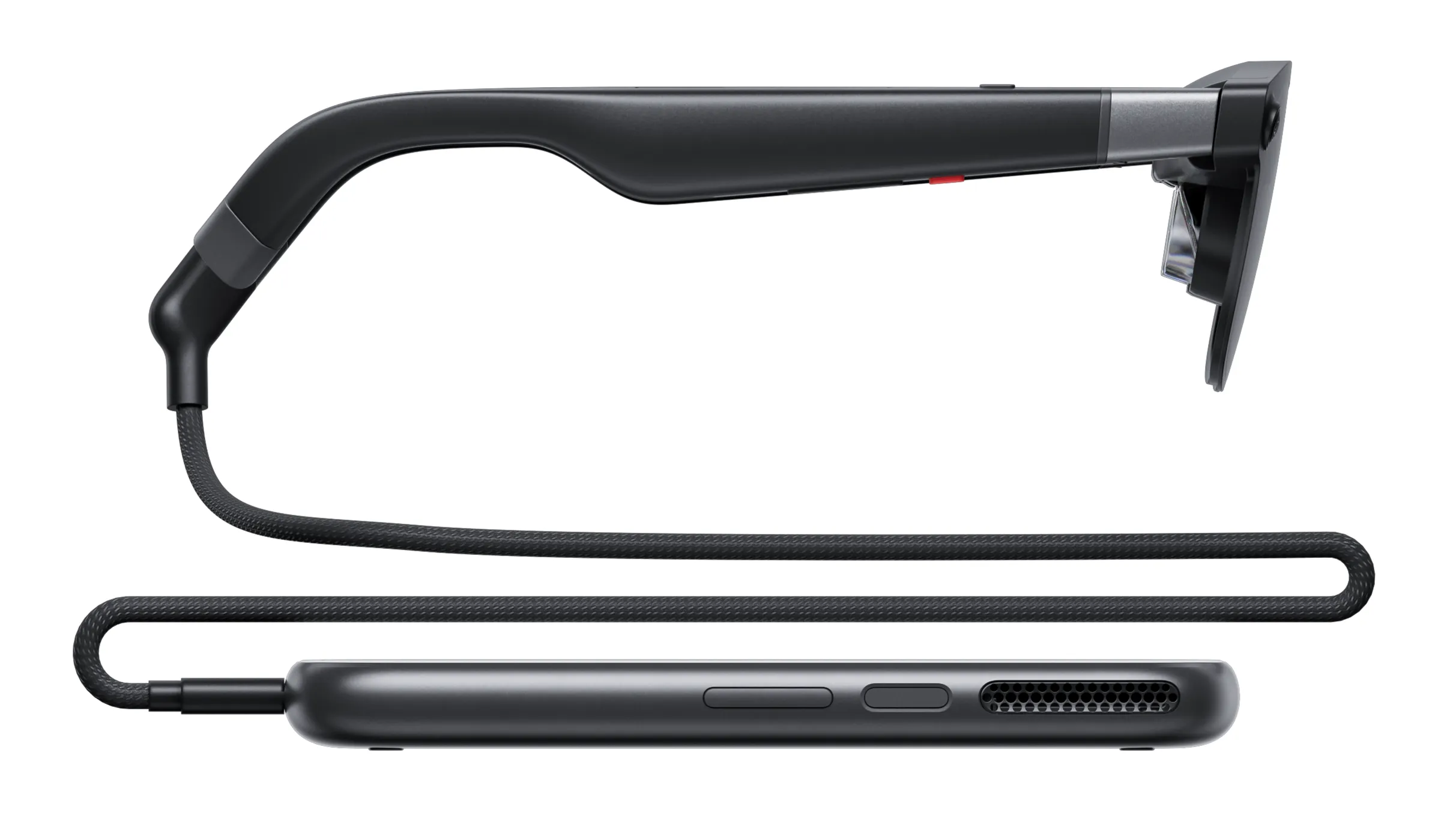
Scroll to the spec table and the reason is sitting there. The compute puck is listed in two configurations, 12GB of memory with 256GB of storage and 16GB with 512GB. A ceiling that binds only the base configuration is a floor for everything above it, which is standard practice for phones and laptops and worth naming plainly before the launch coverage starts quoting $1,500 as the price of the thing.
The launch map moved, and Canada came off it
Launch region lists are boring until they change. The list published when reservations opened covered the United States, United Kingdom, Canada, Japan and South Korea. The list on the page today runs to 28 entries and is heavily weighted toward the European Union, adding Germany, France, Spain, Italy, the Netherlands, Poland, Sweden, Portugal, Ireland, Finland and more than a dozen others. Canada is not among them.
Advertisement
XREAL has published no explanation for the change, and launch region lists shift for regulatory, certification and distribution reasons all the time, so this is a thing to watch rather than a conclusion to draw. Canadian buyers who put down a deposit in June on the strength of the earlier list should read the current page before the price announcement rather than after it. Refunds are available before final purchase confirmation, which is exactly the window that matters here.
What the developer surface actually looks like
Applications for the Android XR Developer Catalyst Program, which is how the free AURA dev kits are allocated, closed on June 30, and XREAL says selected developers are being contacted by email. For everyone building outside that program, the shipping picture is ordinary Android XR: Google Play on day one with Maps, Chrome, YouTube, Photos and Gemini, plus what XREAL counts as more than 100 apps built specifically for XR.
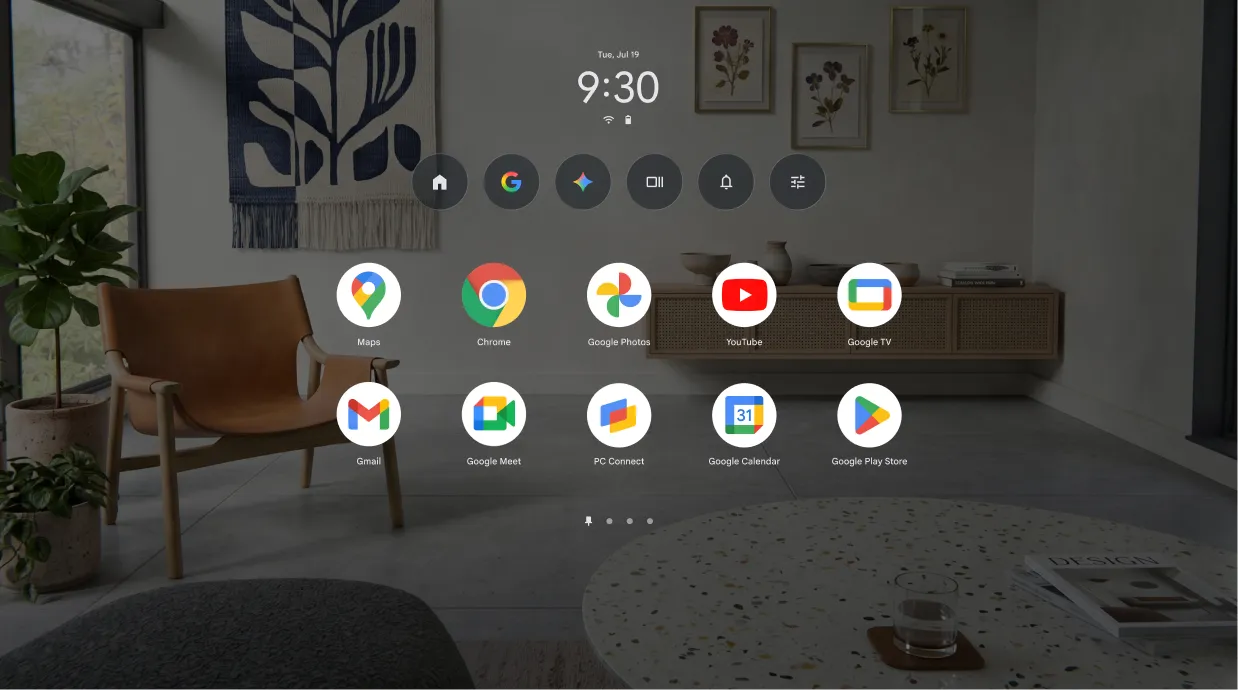
Input is where the porting work lives. AURA natively takes hands, voice and a touchpad on the puck, and supports Bluetooth keyboards, mice and game controllers as external accessories, so an app designed around a six-degree-of-freedom motion controller has no obvious home here and an app designed around a cursor and a keyboard does. The second USB-C port on the puck accepts DP Alt Mode input from a PC, laptop or handheld console, which means the glasses function as a private display with no Android XR involvement at all. That is the hedge XREAL has built into every product it has shipped, and it is a large part of why its display glasses sold when nobody else's did.
The hardware sheet under all of this: X Prism optics at a 70 degree field of view, Sony micro-OLED panels at 1920 by 1200 per eye with refresh up to 120Hz, five levels of electrochromic dimming, audio tuned by Bose with a four-microphone array, two world-facing tracking cameras for 6DoF anchoring and hand tracking, and two IPD fit sizes covering 60 to 72 millimeters. The puck runs the Snapdragon Reality Elite platform on a 4,455 mAh battery, charges at up to 65W, and unlocks with a fingerprint button.
September is going to compress all of this quickly. Pico shows the Space Pro in Beijing on September 2, Meta Connect runs September 23 and 24, and XREAL has committed to naming a price before AURA ships this fall. The demand question looks answered enough to proceed. The pricing question is the one that decides whether Android XR's second year starts with a glasses device people buy or a glasses device people read about.
Correction, October 7, 2026: This article said XREAL added a "base model" qualifier to its US$1,500 price cap after reservations opened, and that Canada was removed from the launch-region list. Neither changed. The Internet Archive's copy of XREAL's reservation page from June 17, 2026, the day after reservations opened, already carries the base-model wording and the same 28-entry region list without Canada. Canada was named as a first-wave market in XREAL's June 16 press release and is one of the four opening markets XREAL confirmed on October 7, as our report on the final price sets out. The article also described the Android XR SDK as generally available. Google's developer site lists it at Developer Preview 4.
Advertisement