
It starts before the hour is up. A little pressure on my face first, then my neck joins in, and by that point I am doing math on how much of the level is left. That is my Quest 3 with Meta's Elite Strap on it, the upgrade that exists to fix exactly this. The strap helps. It does not fix it. I have played straight through two hours plenty of times anyway, and I felt every one of them.
HardwareSeptember 26, 2026
My Quest 3 Wears Out Its Welcome Inside an Hour, and Headsets Still Aren't Cooked
By Evan Marcus
Co-Founder, VR.org
Advertisement
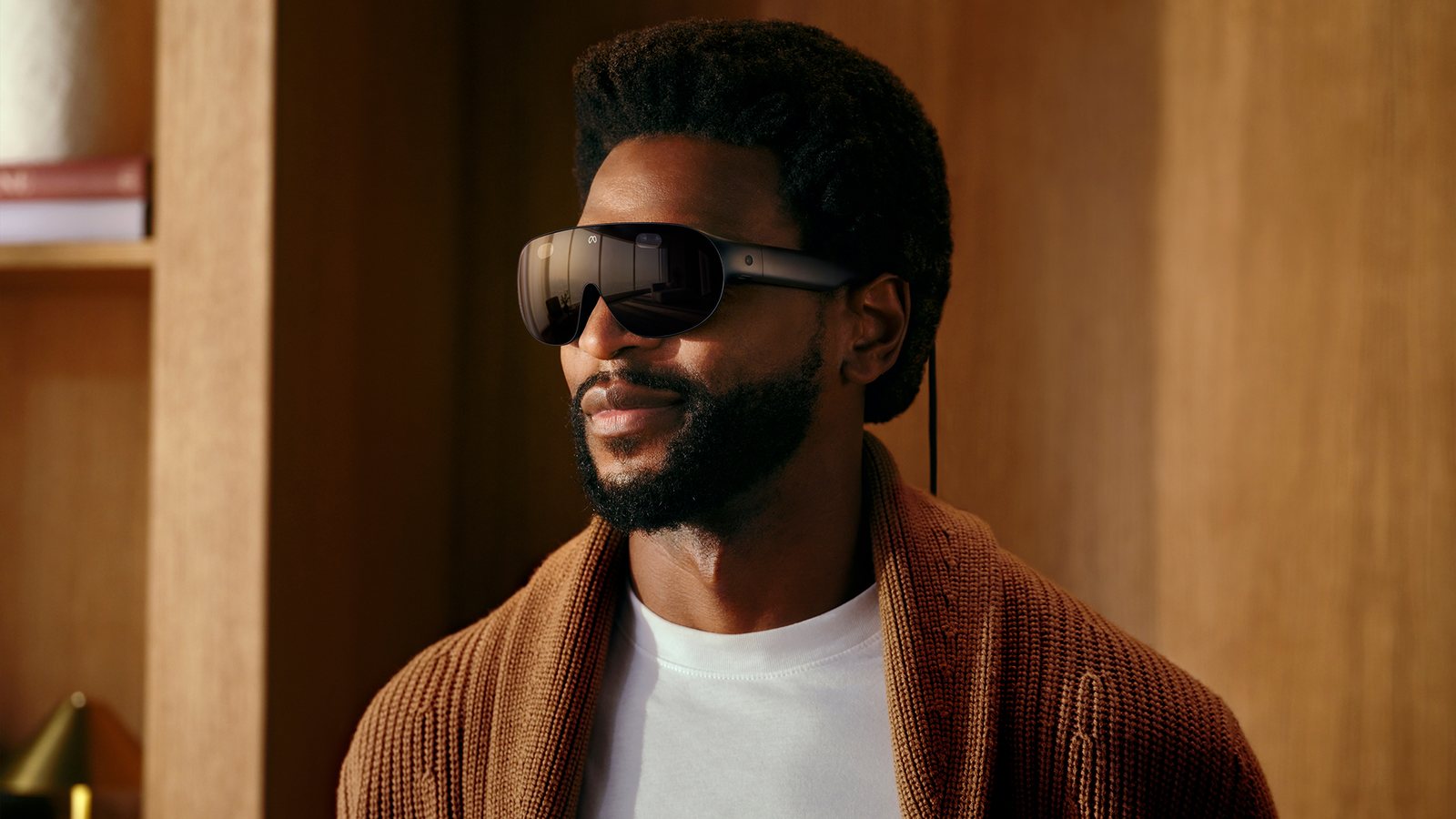
So when Gizmodo's James Pero declared yesterday that VR headsets are "so cooked," I did not roll my eyes. His case is the weight. Meta VR Glasses come in at about 100 grams, and in his words, "Meta VR Glasses are not a headset." Then he asks the question I have been chewing on since Wednesday's keynote: "Where do headsets fit in when you can do all of this stuff in a pair of glasses?"
The game room. That's where.
Headsets are not cooked. They just lost every job except the one I bought mine for.
Fifty-six grams in four years
I have worn most of the last decade of this hardware, so start with my own face. The original Quest weighed 571 grams in 2019. Quest 2 brought that down to 503 a year later. Then Quest 3 went back up to 515, twelve grams heavier than the headset it replaced, and I bought one anyway.
Four years of Quest hardware took 56 grams off my face. That is a little over half of what Meta says the entire pair of VR Glasses weighs.
PC VR never helped much. The Valve Index was 809 grams, a number I brought up in May next to the 440 grams of Valve's Steam Frame, strap and battery included. PS VR2 is about 560, hung off a halo band that rests on your forehead. Steam Frame is the only headset in years that moved the number by a lot, and it is shipping right now. It is hard to call a category dead in the same month Valve started selling one.
The cable is back
The 100 grams is the glasses. The system is about 400. Meta's announcement says VR Glasses are five times lighter than Quest 3 "primarily because of their two-part system," with compute, battery and storage moved into a puck that clips to a pocket or a bag. UploadVR puts that puck at 300 grams, connected by a thin fiber optic cable.
Every session I ever did in an Index was a session tied to a PC, and the entire pitch of the first Quest in 2019 was cutting that cord and putting the computer, the battery and everything else on your head instead, which makes it a little funny that seven years later Meta is running a cable again. The far end just fits in a jacket pocket now.
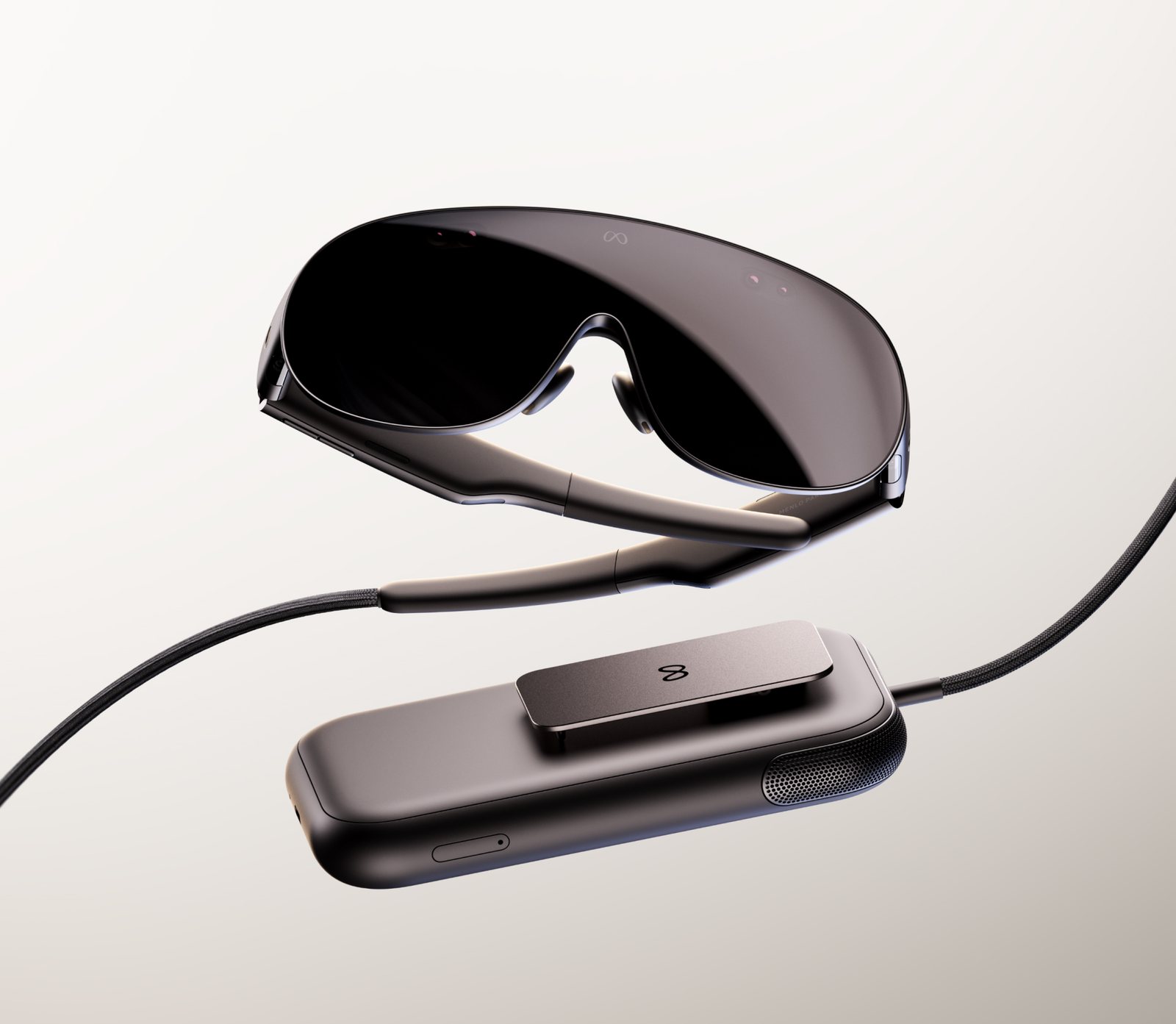
For a movie on the couch I would take that trade without a second thought. For Beat Saber, with a tether running down my chest to my jeans while my arms go everywhere, I would want to try it before I believed it.
What a hundred grams costs
Field of view first. Meta quotes 70 degrees horizontal by 66 vertical, against roughly 110 by 96 on Quest 3. Scott Hayden wore them at Connect for Road to VR's hands-on and called the view "noticeably smaller than Quest 3's 110-degree FOV." In a movie, a smaller window at 37 pixels per degree is simply a better window. In a game where something is coming at you from the left, it is a smaller world.
Then the controllers, which are not in the box. Touch Plus controllers are sold separately, or you can pair the ones off a Quest 3 you already own. Meta's plan is hands. Its announcement promises "more than 75 games at launch that you can play solely with hand gestures," Nina found that the Horizon Store will put hand-tracked titles first for owners without controllers, and Beat Saber is getting a whole hand-tracked mode so it can be one of the 75.
Advertisement
Seventy-five is a real number. It is also not where the games I have lost the most nights to live. Batman: Arkham Shadow was built around a controller in each hand, and so is nearly everything in my library I would call a favorite. Xbox Cloud Gaming covers flat games on a big virtual screen. It does not cover that.

Then the battery. Meta rates the puck at "up to three hours of continuous high-resolution media playback." That is a movie number, and Meta picked it on purpose. Nobody has given a gaming number yet.
What it buys
One line in Meta's announcement is aimed straight at me: you can "comfortably watch a full movie" in them. I have started a lot of movies in my Quest 3. I cannot remember finishing one in it.
The deals Meta announced alongside the glasses point the same way. Disney+ movies in 3D, the first IMAX Enhanced certification on a VR device, and more than 100 live sports events a year, which Sam lined up against Apple's ten. Supernatural comes back in October and will be a day-one title on the glasses, and UploadVR reports that Meta's Angela Chang, in a video interview, described optional light blockers and a rear strap of the croakies variety to keep the glasses on during a workout.
That strap made me laugh a little, since Meta's own announcement says "there are no straps." It is also exactly right. Fitness is where a headset's weight turns into sweat soaking a foam gasket, and a pair of glasses that stays put through a workout is a pair that gets used.
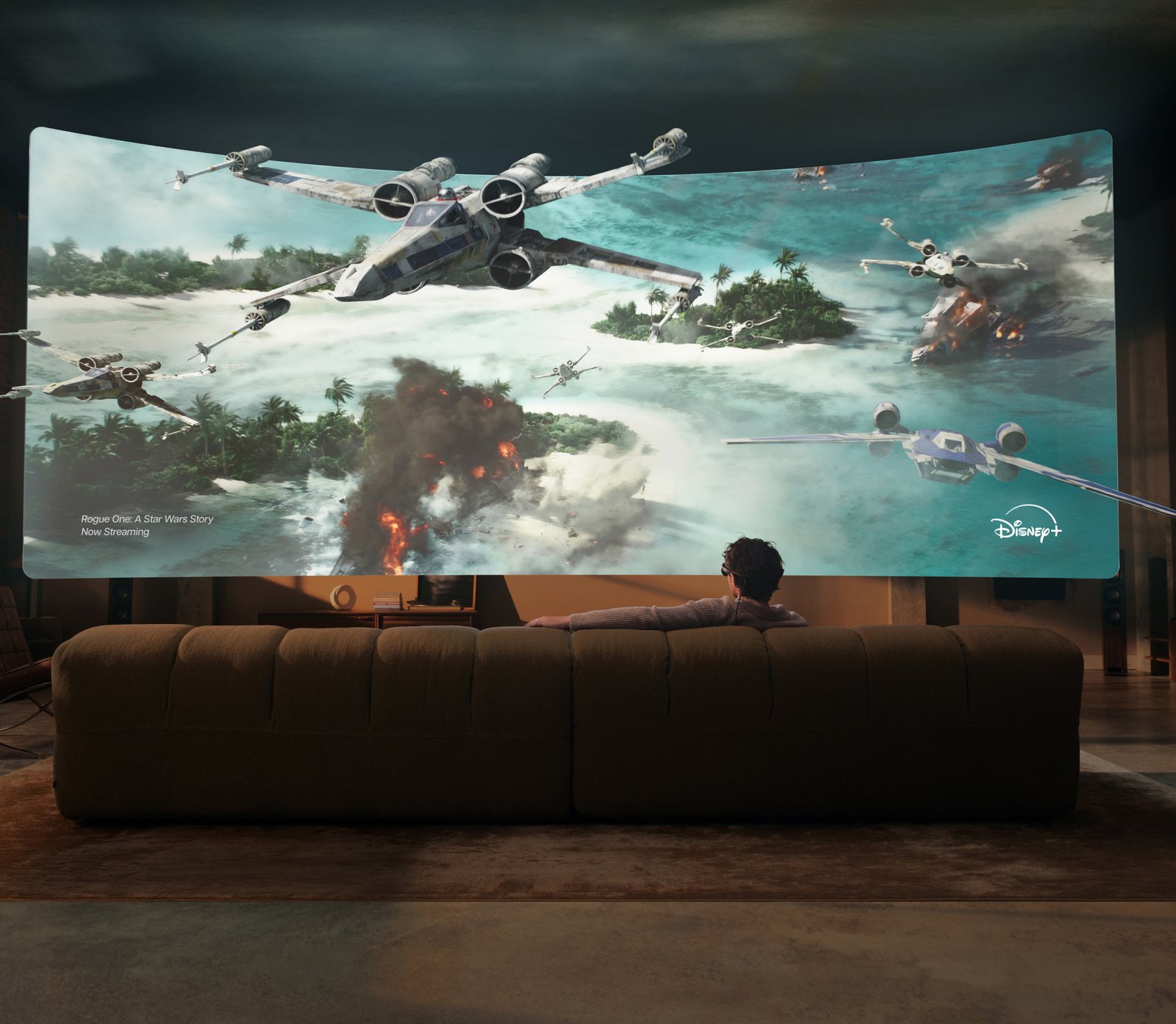
For anything I do sitting down, and anything that makes me sweat, a hundred grams wins, and I am not going to argue with Pero about it.
Where Alex and I split
Back in July, before any of this was official, Alex predicted the weight would be the number in the keynote "and it will be the least useful one available." His reason still holds. Meta has not said what "about 100 grams" includes, and the 107 grams Bigscreen lists for the Beyond 2 leaves out its strap and facial interface, so half the comparisons flying around this week may not be comparing the same thing.
He's right about the measuring. I would flip the rest. Resolution, field of view, the Snapdragon in the puck: I adapt to all of that inside a session or two. Not my neck. For me the weight is the only spec on the sheet that decides whether I am still wearing the thing at minute 61.
His other July question was fit, and the early answer is two sizes. Hayden tried both. The small "clamped too hard on the sides of my head, and kept slipping from my nose as a result," while the large was "very comfortable." His worry is ordering the wrong size with no way to check first. Mine is simpler. A pair that slips off your nose in a demo is not going to get better at minute 40.
Nobody has worn them for an hour
Which is the part of this debate that bugs me. Everybody arguing about how these feel, me included, is working from a short demo or from nothing at all. Pero says so himself: "While I didn't get a chance to use the Meta VR Glasses for an extended period, I could already tell they were going to be much less burdensome than wearing a computer over your whole head." Hayden, who liked the large pair, opened his comfort section with a warning: "A half-hour demo is a poor basis for understanding long-term comfort for any device."
Half an hour. My Quest 3 is fine at half an hour too.
The trouble shows up after that, and it would for the glasses as well, if it shows up at all. A regular pair of prescription glasses puts 25 to 40 grams on two nose pads, and these put about 100 on the same two spots, plus the tug of a cable running down to your pocket, for the full length of a feature film, which as far as I can tell nobody outside Meta has actually done yet.
So, cooked? No. My Quest 3 stays, and so does every headset built around two controllers and a wide view, because the games I care about need both. Everything else is up for grabs, the movie I never finish and the long flight and the workout and the ballgame on a screen the size of a wall, and if the glasses hold up past the demo they get every bit of it.
If I get a pair in the spring, the test is easy. Start a two-hour movie. Don't look at the clock.
Correction, September 29, 2026: This article said Supernatural comes back in October. The official launch window for the independent Supernatural app on Quest is fall 2026; UploadVR, which first reported October, has corrected its report.
Advertisement