
URXR One: Release Date, Price, Specs, and Everything We Know
Last updated: November 18, 2026
See also: our AR glasses guide, the VR release dates tracker, the best smart glasses, and upcoming VR headsets.
- ShippingNovember to December 2026To Kickstarter backers. Moved from mid-October
- Price$999Late pledge and retail. Backers paid $699 to $799
- Weight93 gramsNo battery in the frame
- Display2448 x 2064 per eyeMicro-OLED, 90 Hz, 90 degree field of view
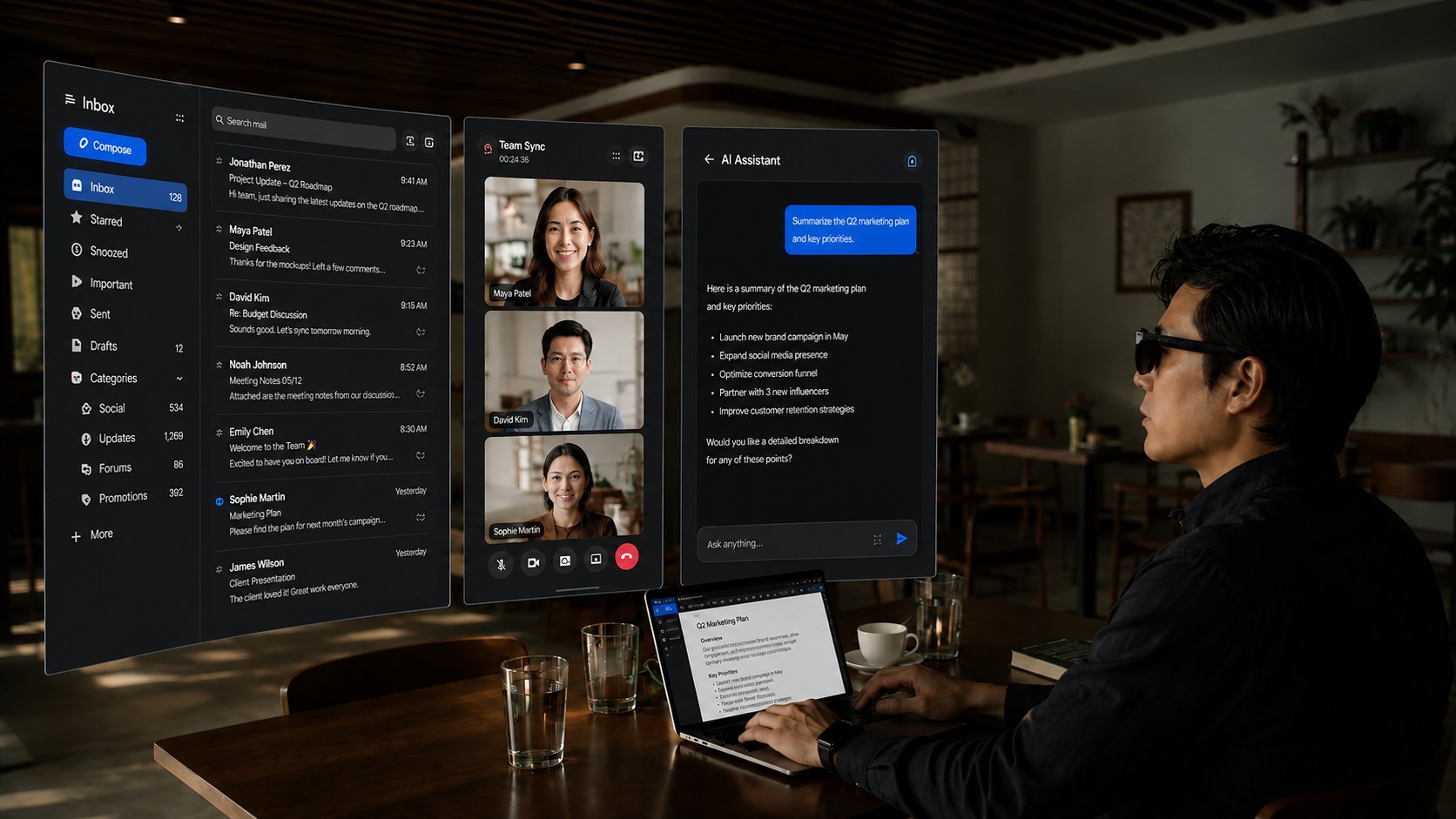
- Tracking6DoF and handsScreens stay pinned in the room
- NeedsA USB-C deviceLaptops and handhelds direct. Phones need the $69 Power Hub
- Made by Unseen Reality
- Kickstarter raised $1,288,712
- 36 pixels per degree
- Video see-through
- Prescription inserts supported
This is a crowdfunding pledge, not a store order: the glasses have not been confirmed as shipping, and the dates are Unseen Reality's targets.
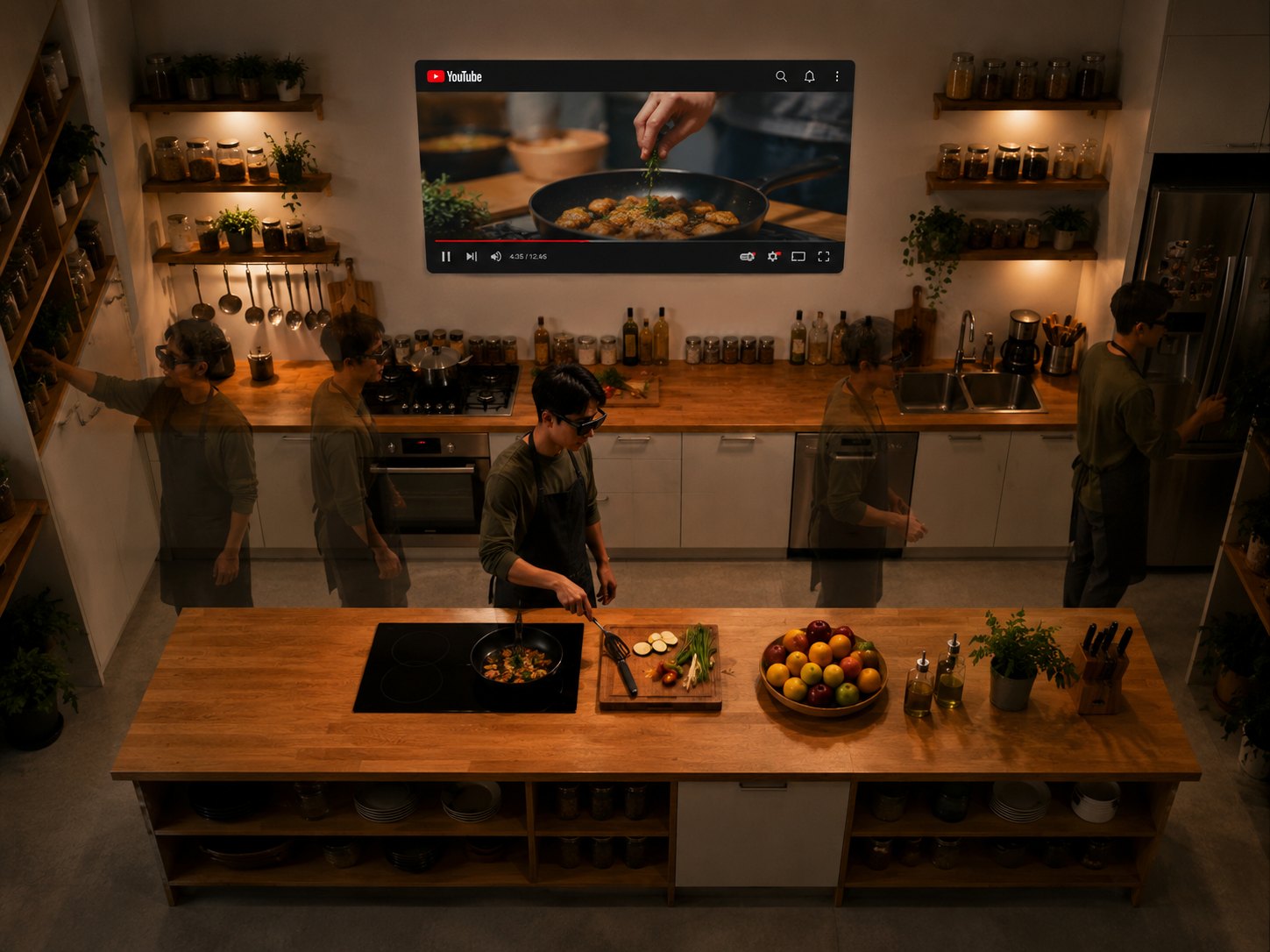
URXR One is a pair of 93 gram spatial display glasses from Unseen Reality. It plugs into a laptop, handheld or other USB-C device and shows that device's picture on virtual screens that stay pinned in the room, using dual micro-OLED displays at 2448 x 2064 per eye, 6DoF tracking and video see-through. Its Kickstarter closed on September 18, 2026 at $1,288,712. The glasses cost $999 as a late pledge, and Unseen Reality now schedules delivery to backers for November to December 2026, after first targeting mid-October. This page tracks the ship date, the price, the specs and what it works with.
Release date: November to December 2026, moved from mid-October
Unseen Reality's site answers the question directly: Kickstarter fulfillment of the glasses is scheduled for November to December 2026, with the Power Hub "planned for December 2026." When the campaign opened on August 4, and when it closed on September 18, the target was mid-October. The company's own closing announcement still reads "glasses ship mid-October 2026."
The site calls its dates "engineering targets" and adds that "hardware timelines can move, and we will say so if they do." We have not seen confirmation of a backer unit delivered, and will update this page when one is.
| Item | Planned |
|---|---|
| URXR One glasses, to Kickstarter backers | November to December 2026 |
| URXR Connect app for Windows | November 2026 |
| URXR Connect app for Mac | After Windows, no date |
| Power Hub | December 2026 |
| URXR Connect apps for iOS and Android | December 2026 |
Unseen Reality's schedule as published on its site, read November 18, 2026.
The Power Hub and phone app dates are "tentative, pending MFi certification progress," in the company's words. MFi is Apple's accessory certification.
Price: $999 now, $699 to $799 for backers
| Tier | Price | Notes |
|---|---|---|
| Early Bird | $699 | 75 backers |
| Kickstarter Special | $799 | 1,162 backers |
| Duo Pack (two pairs) | $1,550 | 55 backers |
| Late pledge, open now | $999 | The same as listed retail |
| Power Hub | $69 | Unseen Reality lists a future price of $99 |
Tier prices and backer counts from the Kickstarter reward page as read for our September 25 article. Current prices from Unseen Reality's site, November 18, 2026.
Retail moved during the campaign. Launch materials set it at $899, and the company's site listed $999 by late September, which is what a late pledge costs today. The $999 Glasses Only package includes the glasses, a USB-C cable and the companion app. The Complete Kit adds the Power Hub and a second cable.
Specs
| Spec | URXR One |
|---|---|
| Weight | 93 grams |
| Displays | Dual 1.03 inch micro-OLED, 2448 x 2064 per eye |
| Refresh rate | 90 Hz |
| Field of view | 90 degrees |
| Sharpness | 36 pixels per degree |
| Tracking | 3DoF and 6DoF, dual-camera SLAM, 1,000 Hz IMU, hand tracking |
| See-through | Video see-through |
| Battery | None in the glasses. Power comes over USB-C |
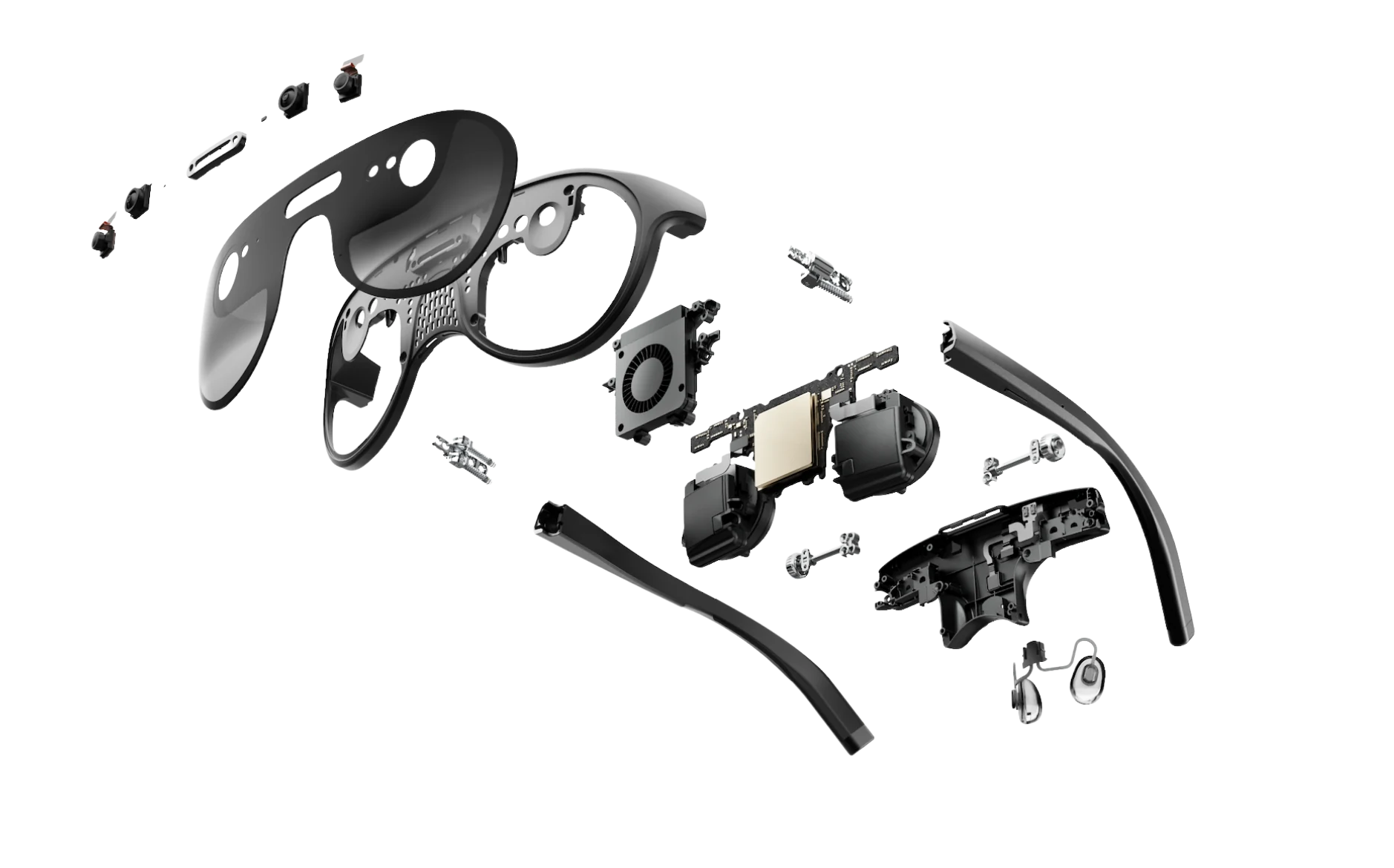
| Processing | On-glasses spatial processing unit and NPU for tracking. No built-in computer |
| Fit | Lens spacing adjustable from 58 to 68 mm. Prescription inserts supported |
| Frame | Magnesium alloy, folding temples |
From Unseen Reality's site and launch materials.
Two of those lines explain the other nine. There is no battery and no computer in the frame, which is how a device with a full room-tracking camera system weighs 93 grams. What the glasses do carry is their own tracking processor, so the pinned screens do not depend on software running on the laptop.
What it plugs into
| Device | Works? | Notes |
|---|---|---|
| Windows laptops and Macs | Yes | Directly over USB-C |
| Windows handhelds (ROG Ally, Legion Go) | Yes | Work like PCs, no Power Hub needed |
| Steam Deck | Depends | On Linux USB-C DisplayPort compatibility, per the company |
| Phones and tablets | With the Power Hub | Apps planned for December 2026 |
| Nintendo Switch and Switch 2 | With the Power Hub | Also needs a third-party USB-C display adapter |
Compatibility as described on Unseen Reality's site, November 18, 2026.
Pinned 6DoF screens need at least 15 watts from the USB-C source, according to the company, and work with no app in what it calls Direct mode. The URXR Connect app adds features such as a cinema environment, and it arrives on Windows first.
How it compares
| Glasses | Price | Field of view | What runs it |
|---|---|---|---|
| URXR One | $999 | 90 degrees | Your laptop, handheld or phone |
| XREAL AURA | $1,099 | 70 degrees | An Android XR compute puck, included |
| XREAL One Pro | $599 | 57 degrees | Your phone, Steam Deck or console |
Prices and fields of view for the other glasses are from our AR glasses guide. URXR One figures are Unseen Reality's.
URXR One has the widest view of the three and the most complete tracking, and it is the only one of them you cannot order from a store yet. XREAL AURA is a full Android XR device with its own apps. The One Pro is a simpler screen at $400 less. Our AR glasses guide covers all of them.
What to know before a late pledge
A pledge is not a purchase. The campaign's own risks section says Unseen Reality has "working CNC prototypes and our supply chain is locked," and that "the move from EVT to mass production always carries schedule risk." EVT is the engineering validation build that comes before production tooling is final. The mid-October date has since moved once.
In its favor, the hardware exists. Unseen Reality ran hands-on demos at AWE USA in June, and reviewers including Nathie published time with prototype units in September. Prototypes are not production units, though, and our September piece sets the campaign against the record of other headsets sold against a date. Our launch piece has the full hardware breakdown.
URXR One on VR.org
- Aug 2, 2026URXR One is set for an August 4 Kickstarter: 93 grams, four cameras, and compute left to the device you plug in.
- Aug 15, 2026With the campaign at $793,716, Evan asks why VR's crowd funds unbuilt glasses more readily than games.
- Sep 25, 2026LatestThe Kickstarter closes at $1,288,712 with its mid-October ship date three weeks out, and retail moves to $999.
Frequently asked questions
When does the URXR One ship?
Unseen Reality's site now schedules Kickstarter fulfillment of the glasses for November to December 2026. The campaign's original target was mid-October 2026. The Power Hub is planned for December 2026, and the company calls its dates engineering targets that can move.
How much does the URXR One cost?
$999, both as a Kickstarter late pledge and as the listed retail price. Kickstarter backers paid $699 for the Early Bird tier or $799 for the Kickstarter Special, and the planned retail price at launch was $899. The Power Hub battery is $69 now, with a future price of $99.
What is the URXR One?
A pair of 93 gram spatial display glasses from Unseen Reality. They plug into a laptop, handheld or other USB-C device and show its picture on virtual screens that stay pinned in the room, using dual micro-OLED displays at 2448 x 2064 per eye, 6DoF tracking, hand tracking and video see-through. The glasses have no battery and no built-in computer.
Does the URXR One work with a phone?
Yes, with the Power Hub. Unseen Reality says phones and tablets need the Hub, a separate battery, because the glasses draw their power over USB-C. Laptops and Windows handhelds power the glasses directly. The iOS and Android companion apps are planned for December 2026.
Does the URXR One work with a Steam Deck or Nintendo Switch?
Unseen Reality says consoles and handhelds run in plug and play mode, with caveats. Steam Deck support depends on Linux USB-C DisplayPort compatibility. A Switch needs the Power Hub for power delivery and a third-party USB-C display adapter that Unseen Reality does not sell. Windows handhelds such as the ROG Ally and Legion Go work like PCs and do not need the Hub.
Does the URXR One have a battery or a computer inside?
No battery and no built-in computer. The frame does carry a spatial processing unit and a dedicated NPU that run tracking and video see-through, while the connected device supplies the picture, the apps and the power.
Is the URXR One a VR headset?
No. It does not run games or apps by itself and has no controllers. It is a wearable display with room tracking: closer to a set of monitors you wear than to a Quest. Its 90 degree field of view is narrower than a VR headset's and about double that of typical display glasses, by Unseen Reality's own comparison.
Can you still buy a URXR One?
Yes, as a late pledge on Kickstarter at $999. The campaign itself closed on September 18, 2026 at $1,288,712. A pledge is not a store purchase, and delivery depends on Unseen Reality meeting its schedule.
Do the URXR One glasses support prescription lenses?
Yes. Unseen Reality's launch materials list prescription inserts, and the lens spacing adjusts by hand from 58 to 68 mm.