
Two Kickstarter tabs open on a Saturday morning, and one number I have now re-read about four times.
GamingAugust 15, 2026
Why Will VR's Crowd Spend $792 on Unbuilt Glasses and Not $25 on Job Simulator?
By Evan Marcus
Co-Founder, VR.org
Advertisement
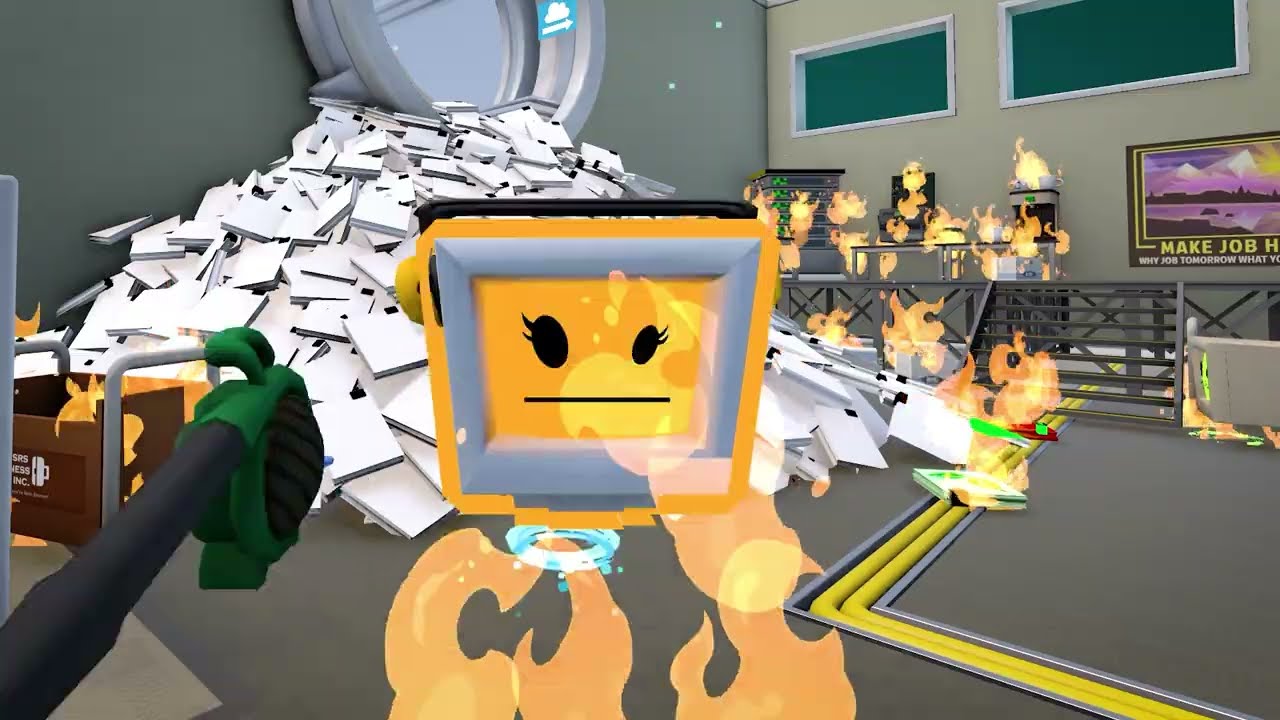
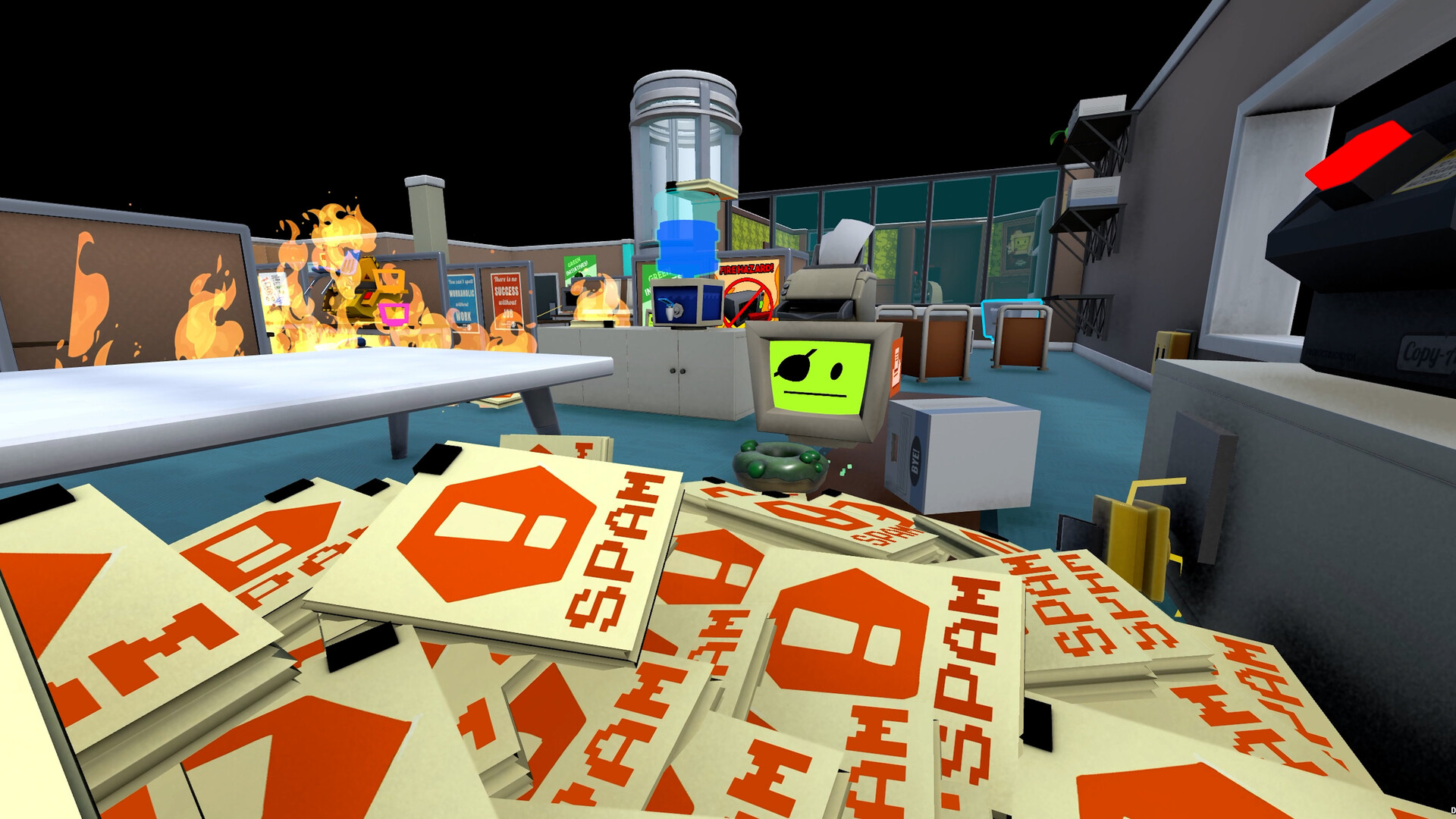
Job Simulator: Human Relations went live on August 11. It is the first thing in that franchise to exist outside a headset in the ten years the franchise has been around, a four-player flatscreen co-op comedy built by FarBridge under license from Owlchemy Labs, and it is asking for $150,000. As I write this it has $14,723 from 211 backers. Twenty-six days left.
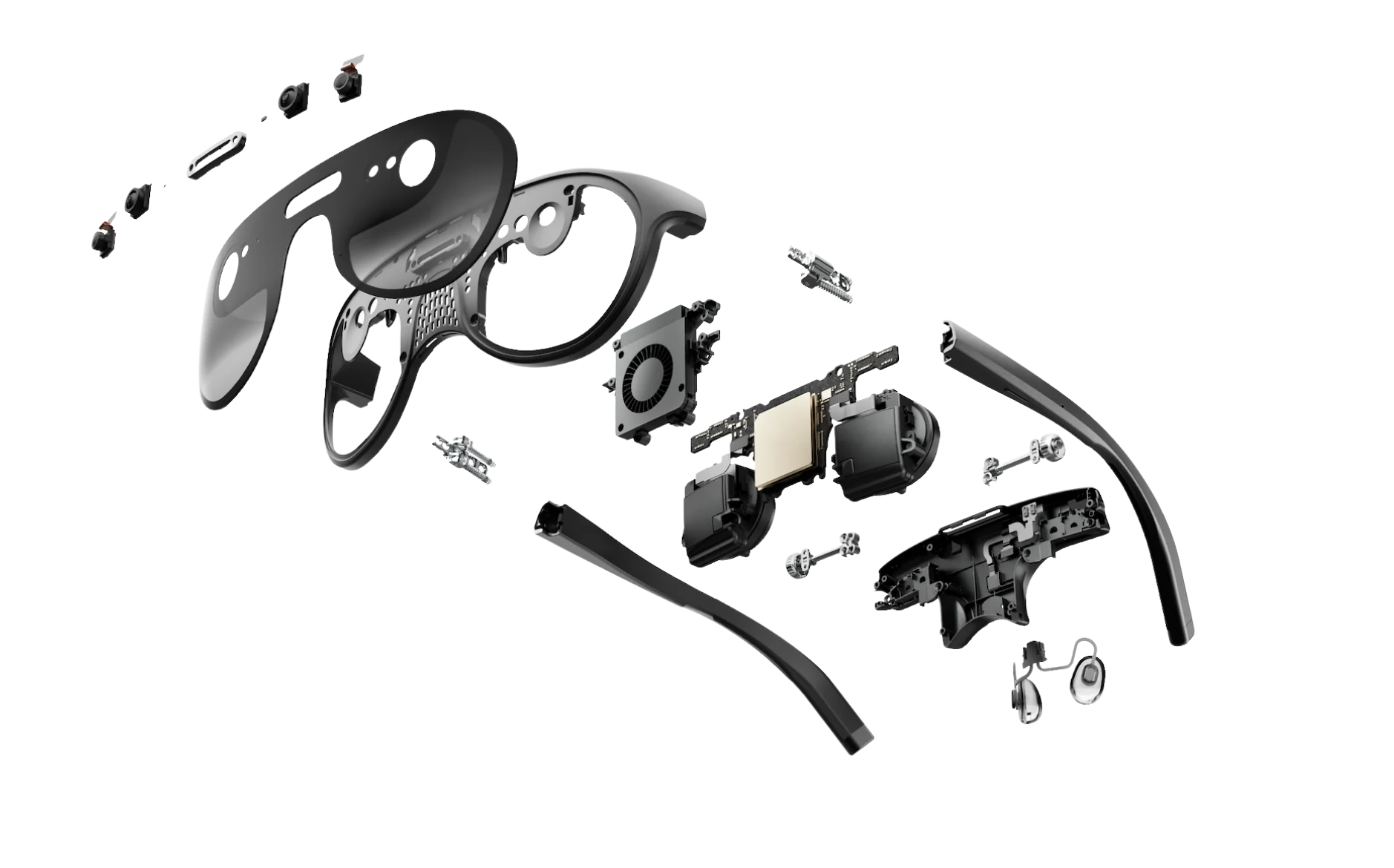
A week earlier, a company that almost nobody reading this had heard of in July opened a campaign for a pair of display glasses with no processor and no battery inside them. URXR One. Fifty thousand dollar goal, mid-October ship date, $699 to get in early. It is at $793,716 from 1,002 backers.
Same platform. Same month. The glasses have taken fifty-four times the money.
Six thousand people. That is the entire ask.
Here is the arithmetic that has been bugging me since Tuesday. The entry tier on Human Relations was $20 for the first day and $25 after, and that tier is a copy of the game. At $25 a head, $150,000 is roughly six thousand people. Owlchemy said in January that Job Simulator has crossed six million installs, averaging something like 600,000 a year since 2016. So the campaign needs one out of every thousand people who have ever installed the original to hand over twenty-five bucks.
It has 211.
The 211 are not being cheap about it, either. Divide the total by the backer count and the average pledge comes out at $69.78, which means the people who did show up are climbing into the higher tiers instead of grabbing a copy and leaving. That is exactly what a small, committed audience looks like. Small being the load-bearing word.
Where I have to be fair about this
Four things cut against the reading I just gave you, and I would rather put them here than have you email them to me on Monday.
Human Relations is not a VR game. It is flat, deliberately, PC only, and the pitch is that you can play it with three friends who do not own headsets. So this is not clean evidence that VR games cannot crowdfund. In a way it is worse evidence than that, because taking the headset off is supposed to widen the audience, and the wider audience has not turned up either.
Kickstarter also is not broken for games in general. As of this morning, in the same video games category, a strategy game called Sanctuary: Shattered Sun is sitting on more than a million Australian dollars from 7,174 backers. People fund games on that platform every week of the year, in volume, including games from studios with far shorter resumes than FarBridge's.
Four days is four days, as well. Crowdfunding runs in a U shape, heavy at the open, dead through the middle, heavy again at the close, and a September 10 deadline leaves a lot of room for a final week. I have watched campaigns double in the last 48 hours. This one still could.
And six million installs is not six million buyers. Owlchemy said so themselves when they announced the figure: free Vive bundles counted, Horizon Plus subscribers counted after March 2025, VR arcade licensing counted. The paying audience underneath that number is smaller than the number. Nobody outside Google knows by how much.
A pledge for hardware is not the same object as a pledge for a game
I think the gap comes down to what the pledge actually buys, and almost none of it is about how much anyone loves Job Simulator.
Put $699 into a pair of glasses and you are buying several things at once: a discount against a $899 retail price, a place in line, the only window you will ever get to own that specific object before anyone else does, and a small clean thrill of gambling on a startup. The product does not exist yet. That is the appeal, not the drawback. Scarcity is the entire product until the box shows up at your door.
Put $25 into a game and you are buying a Steam key, later, at the price it will cost on release day anyway, from a team that will happily sell it to you then. No scarcity. No line. No discount worth the name. What you are really purchasing is the risk that it never gets finished, and in exchange you get a Discord role and your name somewhere in the credits. That is a donation wearing a product-shaped receipt, and most people, reasonably, would rather just hit wishlist.
That asymmetry has always been there. What has changed is how lopsided the money got. Scroll the same live list and you find AIVU, an AI glasses campaign from a company I can tell you nothing about, sitting at $92,774 against a $10,000 goal with 230 backers. Two hundred and thirty people. That is more human beings than have backed a sequel to the second best-selling game in the history of Meta's store.
August 2012
None of this is a 2026 invention, which is the part I find genuinely funny.
Advertisement
On August 1, 2012, a nineteen-year-old with a Kickstarter page asked for $250,000 to build a development kit for a virtual reality headset. The campaign closed on September 1 with $2,437,429 from 9,522 backers. Modern VR exists because a crowd bankrolled a piece of face hardware that did not exist, from a company that had never shipped anything, fourteen years and ten days before Human Relations went live on the same site.
I was not one of the 9,522. I got there the year after, with a DK1 borrowed at somebody else's desk and a resolution so low I could count the pixels between me and the horizon, and I have not really taken a headset off since.

Job Simulator arrived four years after that campaign, in April 2016, as a launch title for a headset that only existed because a crowd had paid for the hardware first. The order has never once reversed. The crowd funds the face. Games arrive afterward, paid for by publishers, platform holders, and in Owlchemy's case a search engine.
The bet with the worse record is the one getting funded
Here is what actually bothers me about the split, and it is not wounded pride on behalf of games.
Hardware crowdfunding has a body count. Lynx took more than $800,000 on Kickstarter in 2021 for the R1, raised roughly $6 million across the entire life of the company, and in July was absorbed by EssilorLuxottica with the R2 quietly shelved. Immersed has been taking Visor preorders since September 2023 against a 2024 date that came and went. Those buyers each paid several hundred dollars for a promise. Some of them got hardware. Some got an email.
A Job Simulator backer is risking $25 on a studio that shipped Homeworld: Vast Reaches in 2024 and did production work on two Owlchemy VR titles before this one. A URXR One backer is risking $792 on average, against a ten-week gap between campaign open and promised ship date, in a product category that has essentially never hit a first date. One of those two has a thousand people in it.
I am not telling anybody to stop backing glasses. We covered the URXR One in detail on August 2 and the engineering behind 93 grams with real 6DoF tracking is legitimately impressive, and MemoMind One clearing roughly $1.1 million on a $10,000 goal is a real signal about what people want on their faces. Back what you want. Just notice what the aggregate looks like.
The $150,000 question
Owlchemy Labs has belonged to Google since 2017.
Sit with that one. The second best-selling game in the history of the Quest store, six million installs deep, belongs to a studio inside one of the largest companies that has ever existed, and the next entry in the series is a licensed project from an outside team asking the public for $150,000. That is not a budget. Nobody builds a four-player physics comedy for $150,000 in 2026. It is a demand test wearing a campaign costume, and the demand test is currently returning a number that nobody at FarBridge wanted to see on day four.
Whether Google was ever asked to write the check, I do not know, and I doubt anyone will tell me. What I do know is that FarBridge is a real studio with real credits taking a real public risk, and that Patrick Curry's stated reason for going to Kickstarter was to build the thing with players involved from the start, which is a better reason than most. It deserves better than 211.
If you want it to exist
The campaign runs until September 10 on FarBridge's Kickstarter page, and the entry tier is $25 for a copy of the game at launch on PC. If you would rather not gamble on a game that does not exist yet, the Steam page is live and a wishlist costs nothing while counting for more with Valve's algorithm than most people realize. There is no VR version announced, so do not back it expecting one.
And if you have $699 sitting in your pocket for a pair of glasses that ships in October, all I would ask is that you notice the shape of what you are trusting. The glasses are asking you to believe a date. The game is only asking you to believe a studio.
Correction, September 25, 2026: This article described URXR One as display glasses with no processor inside them. They have no battery and no built-in computer, but they do carry an on-glasses spatial processing unit and a dedicated NPU for tracking and passthrough, per Unseen Reality's spec sheet.
Advertisement