
EssilorLuxottica has acquired Lynx, the French mixed reality startup that spent eight years trying to prove a small European team could ship a headset against Meta's balance sheet. Founder and CEO Stan Larroque confirmed the deal in a public email to backers, describing it as a transfer of "all the IP, assets and most of the team" from a startup into a very large company. The deal covers the name, the domain, the databases, the code, the 3D files and the manufacturing know-how. It is a complete acquisition, not a partnership.
HardwareJuly 22, 2026
EssilorLuxottica Bought Lynx for the Software and Left the Headset Behind
By Alex Reeves
Staff Writer, VR.org
Advertisement
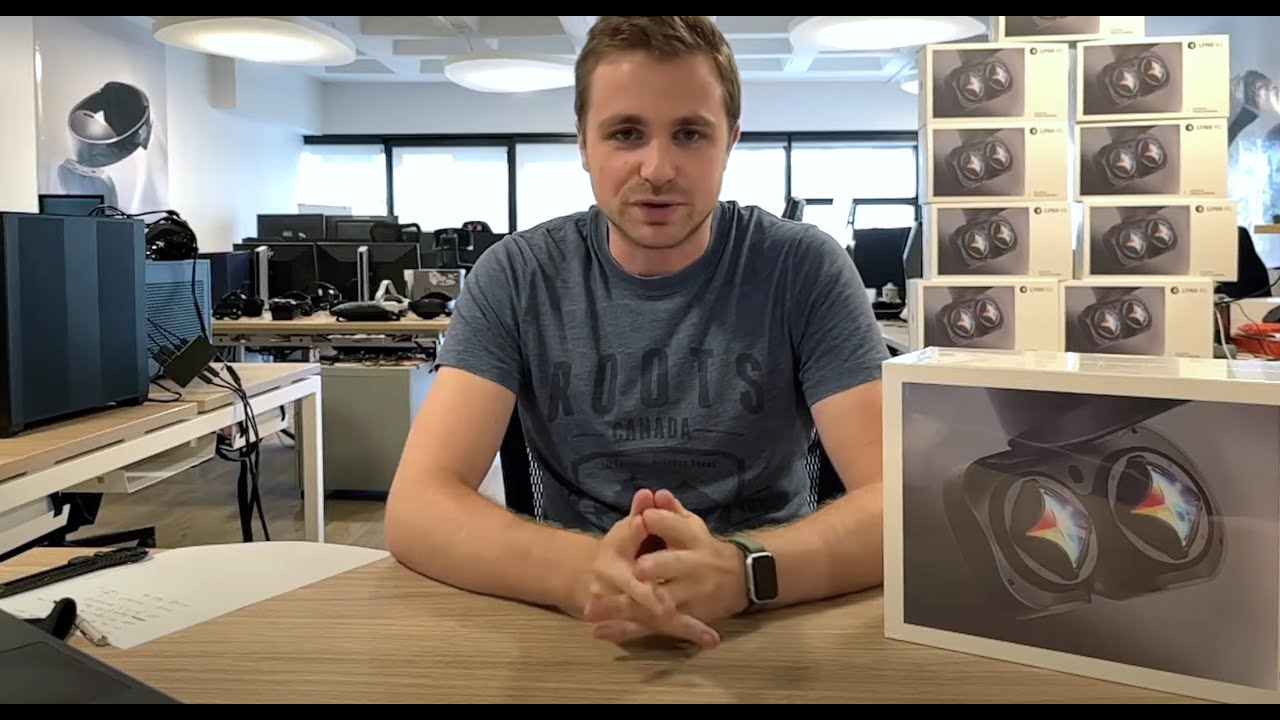
What did not survive the transaction is the product. The Lynx-R2, the standalone mixed reality headset the company revealed earlier this year with a surprisingly wide field of view in a very small package, has no announced future. Nobody has formally cancelled it, but nobody has committed to it either, and reading the room is not difficult. EssilorLuxottica builds and sells eyewear. It is also Meta's manufacturing partner on Ray-Ban and Oakley smart glasses, which makes shipping a Quest competitor a strange use of a Tuesday.
The assets that mattered were never the headset
Lynx's actual technical reputation was built on things you cannot see in a product photo. Its tracking algorithms, its video see-through pipeline and its optical design work were consistently the parts that made reviewers sit up, even when the hardware around them felt like what it was, a first-generation device from a company with almost no money. Video see-through quality is the single hardest problem in passthrough mixed reality, and a team that has solved it well is worth acquiring regardless of what chassis they were bolting it into.
That is the shape of this deal. EssilorLuxottica did not buy a headset company. It bought a computer vision team and a decade of hard-won knowledge about putting cameras and displays very close to a human face, and it bought them at the price a liquidation sets rather than the price a funding round sets.

The timing is the part worth dwelling on. Lynx's parent company, SL Process, entered judicial liquidation in March after a ruling by the Economic Activities Court of Nanterre. Liquidation means restructuring failed and the assets get sold to cover debts. So the sequence here is not a hot startup getting swept up in a bidding war. It is a distressed sale in which the buyer had enormous leverage and the seller had almost none.
Six million dollars was never going to be enough
Lynx raised roughly $2 million in seed funding after being founded in 2019, more than $800,000 from a 2021 Kickstarter for the R1, and a $4 million Series A in 2022 led by Somnium Space. Call it a little over $6 million across the company's entire life. Meta's Reality Labs has posted quarterly operating losses larger than that by three orders of magnitude.
Larroque was publicly blunt about this for years, at one point calling the European fundraising environment for XR hardware "excruciating." He was not being dramatic. Building a standalone headset means silicon partnerships, optics tooling, manufacturing minimums, a software stack and a content story, and the capital requirement for that does not scale down politely just because your team is talented. There is no clever way to do it for six million dollars. Lynx got closer than anyone had a right to expect, which is the whole tragedy.
Larroque is going to fly drones instead
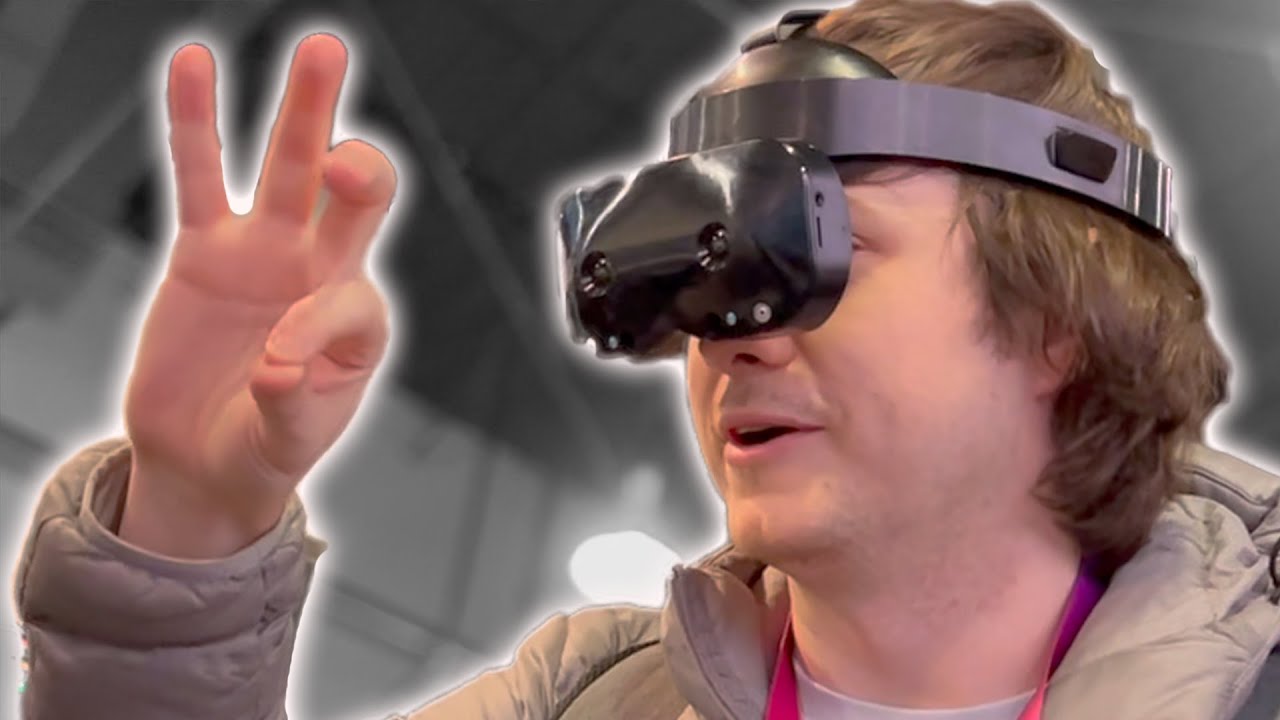
The founder is not making the move with his team. Larroque is joining Parrot, the Paris-based drone company, in what is described as a key leadership role alongside founder and CEO Henri Seydoux. That is a rational landing spot for someone whose expertise is real-time computer vision on power-constrained hardware, and it is also a fairly loud statement about where he thinks that expertise gets funded in Europe right now.
It is hard not to notice the pattern forming this month. Lenovo shut down its XR business unit and pivoted to AI wearables. Magic Leap cut nearly 200 jobs and is repositioning itself as a waveguide supplier rather than a device maker. Now Lynx's IP goes to an eyewear conglomerate and its headset quietly stops existing. In every case the underlying technology survives and the ambition to sell a complete headset to consumers does not.
That is not the industry dying. It is the industry consolidating around the two or three companies that can absorb a decade of losses, with everyone else becoming a component supplier or an acquisition target. Lynx's tracking stack will very likely show up in a pair of glasses you can buy from an optician in a few years, and almost nobody wearing them will know where it came from. That is a real outcome, and it is also not the one Lynx spent eight years working toward.
Advertisement