
XGIMI asked for 80,000 Hong Kong dollars to build its first pair of smart glasses. That is roughly $10,000. The MemoMind One Kickstarter has taken more than $1 million from over 2,000 backers, and it runs until August 28.
HardwareAugust 11, 2026
MemoMind One Cleared $1 Million on a $10,000 Goal With No Camera and an Always-On Mic
By Alex Reeves
Staff Writer, VR.org
Advertisement
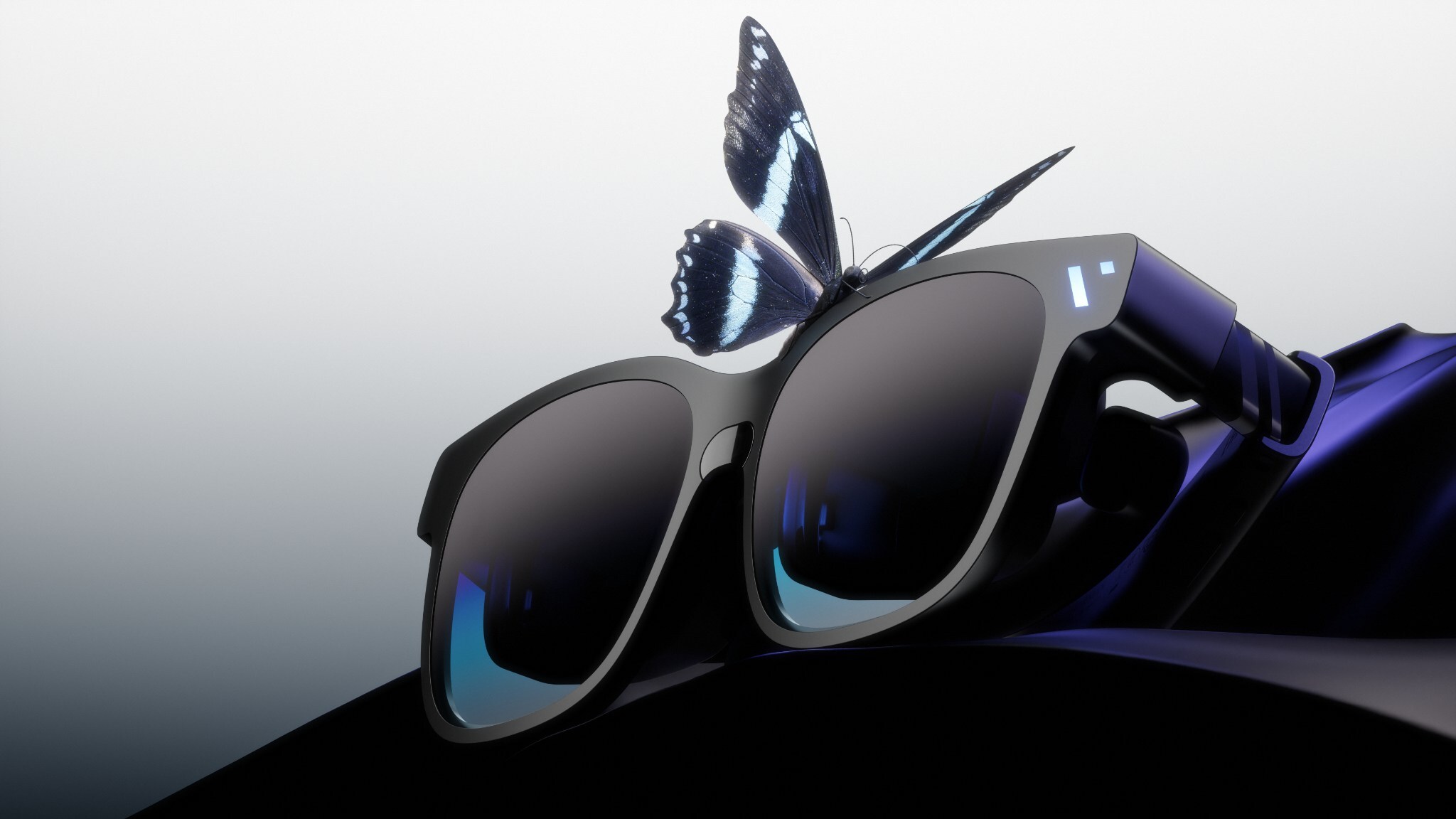
The specs are modest and the pricing is not subtle. Pre-orders are $399 for the standard edition and $499 with prescription lenses, against planned retail of $599 and $749. The frames weigh 47 grams. A green micro-LED projector sits near each hinge and throws text into a transparent waveguide prism in the lens, rated at 2,000 nits. XGIMI claims 16 hours of mixed use, and Engadget's reviewer ran it hard enough to conclude the number holds.
There is no camera. That is the entire pitch.
It is also most of the reason the price works. The displays are monochrome green, not full color, and green micro-LED is the cheapest way to get a bright readable image into a waveguide. Strip out the camera module, skip the compute puck, and accept text instead of pictures, and $399 stops looking like a subsidy. XGIMI is a projector manufacturer before it is a wearables company, which means light engines are the part of this it already knew how to build.

The floor moved in five weeks
In early July, camera-free glasses were the premium option. Even Realities reached a $1 billion valuation selling the G1 at $599, and closer to $1,000 once buyers added prescription lenses and the companion ring. We called that a market splitting in two, with the camera-free half positioned as the discreet, expensive one.
That half has since repriced itself. XREAL's A01+ shipped at $299 in July. Viture's Pro 2 arrived August 6 at $299, 63 grams, no cameras, and $160 below the model it replaced. DuckDuckGo went further down with $35 sunglasses carrying no camera, no battery, and no chip. MemoMind One sits at $399.
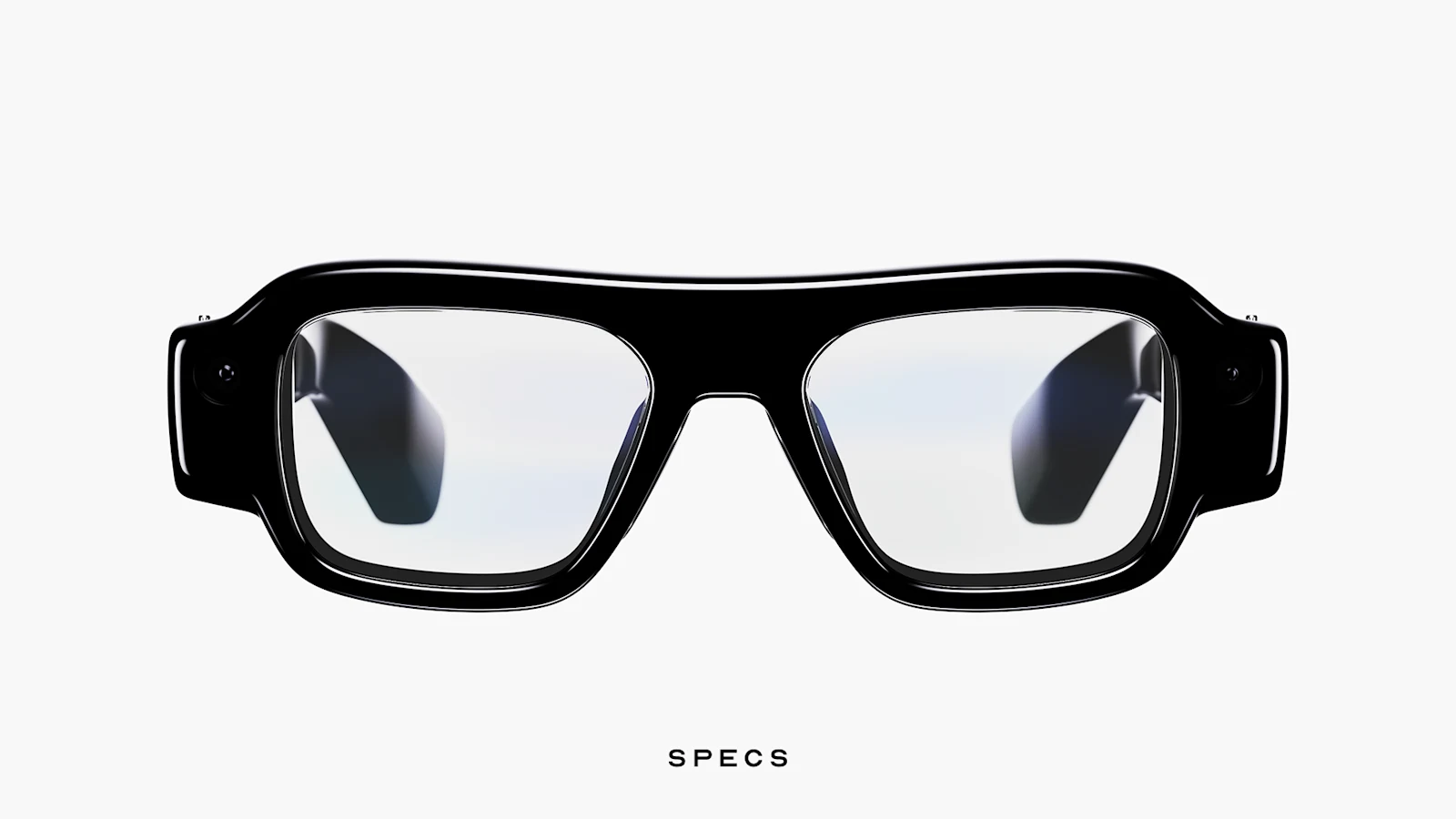
The camera side moved the other way. Snap's Specs cost $2,195 and get a launch event on September 16. URXR One opened at $699 with four cameras onboard.
Call it seven to one. Whatever the buyer is paying for at the top of this market, it is not the display.
No camera is not no recording
Here the pitch gets complicated. MemoMind One takes no pictures. It does record.
The feature is called Moments. It captures audio continuously and hands it to an AI that writes a daily summary of what the wearer did. Engadget's reviewer watched a friend's YouTube video and received a summary claiming he had bought and unboxed the model kit himself. Some of his weekly recaps came back in Simplified Chinese. Moments costs $19.99 a month.
A device with no lens still carries a microphone array, and that array is listening to everyone in the room rather than only the person who bought the glasses. Roughly a dozen US states require all parties to consent before a conversation is recorded. The commonly cited list runs to twelve: California, Connecticut, Delaware, Florida, Illinois, Maryland, Massachusetts, Montana, New Hampshire, Oregon, Pennsylvania, and Washington. The detail is messier than the count. Connecticut applies all-party consent to phone calls but not to in-person conversations under criminal law, and Oregon does close to the reverse.
None of that was written with an always-on wearable summarizer in mind. It is also not the first thing most people think about at $399.
The daily-use complaints are more ordinary. Nearly everything routes through a single button, and Engadget's reviewer spent a lot of time reaching for one function and triggering another. That is the trade for a frame with no touchpad and no controller, and it is the kind of thing that reads as a minor quibble in a spec sheet and an irritation by week three.
The wrong sensor got the attention
The industry spent a year arguing about the camera. It was the visible part, so it collected the venue bans, the house rules, and the privacy LEDs. British pubs and theatres wrote Meta's glasses out of their policies over the lens specifically.
The microphone sits on both sides of the split, in the $2,195 product and the $399 one, and nobody has put an indicator light on it.
For a buyer, the value at $399 is still real. Forty-seven grams is light enough to forget, 16 hours covers a day, the display is readable outdoors, and nothing is pointed at anyone's face. Just do not read camera-free as recording-free, and decide separately whether a $19.99 monthly transcript of your day is a thing you want running in a state with opinions about consent.
One more caveat applies to the whole thing. This is a Kickstarter, units are promised for the end of August, and a first-time hardware category from a company that has never shipped a wearable is exactly where crowdfunding timelines slip. The $1 million says a lot about demand for glasses that leave the lens off. It says nothing yet about whether these particular ones arrive on time.
Advertisement