
The conversation around high-end XR headsets has been dominated by two names for the past year: Apple and Meta. Vision Pro set the benchmark for display quality and spatial computing. Quest 3 owns the affordable standalone market. Everything else has been competing for third place. Pico, backed by ByteDance, just made a compelling case that third place is about to get a lot more interesting.
HardwareApril 30, 2026
Pico's Project Swan Has Better Specs Than Vision Pro at Potentially Half the Price
By Alex Reeves
Staff Writer, VR.org
Advertisement
Project Swan, Pico's next flagship headset, was teased at GDC in March and detailed further in the weeks since. The specs put it in direct competition with Vision Pro on display quality while targeting a significantly lower weight and, if history is any guide, a significantly lower price.
The display numbers are serious
Project Swan uses micro-OLED panels rated at over 4000 pixels per inch. For context, Apple Vision Pro's micro-OLED system, which was widely praised as the best display ever put into a headset, sits at roughly 3400 PPI. Pico is claiming an average angular resolution of 40 pixels per degree with a center sweet spot exceeding 45 PPD. Those numbers put text legibility in the range where you could realistically use this headset as a monitor replacement for productivity work.
Display quality has been the single biggest factor separating premium headsets from consumer ones. The jump from Quest 3's pancake LCD panels to Vision Pro's micro-OLEDs was immediately obvious to anyone who tried both. If Pico delivers on these numbers, Project Swan will match or exceed Vision Pro in the area that matters most for both immersion and utility.
Dual-chip architecture
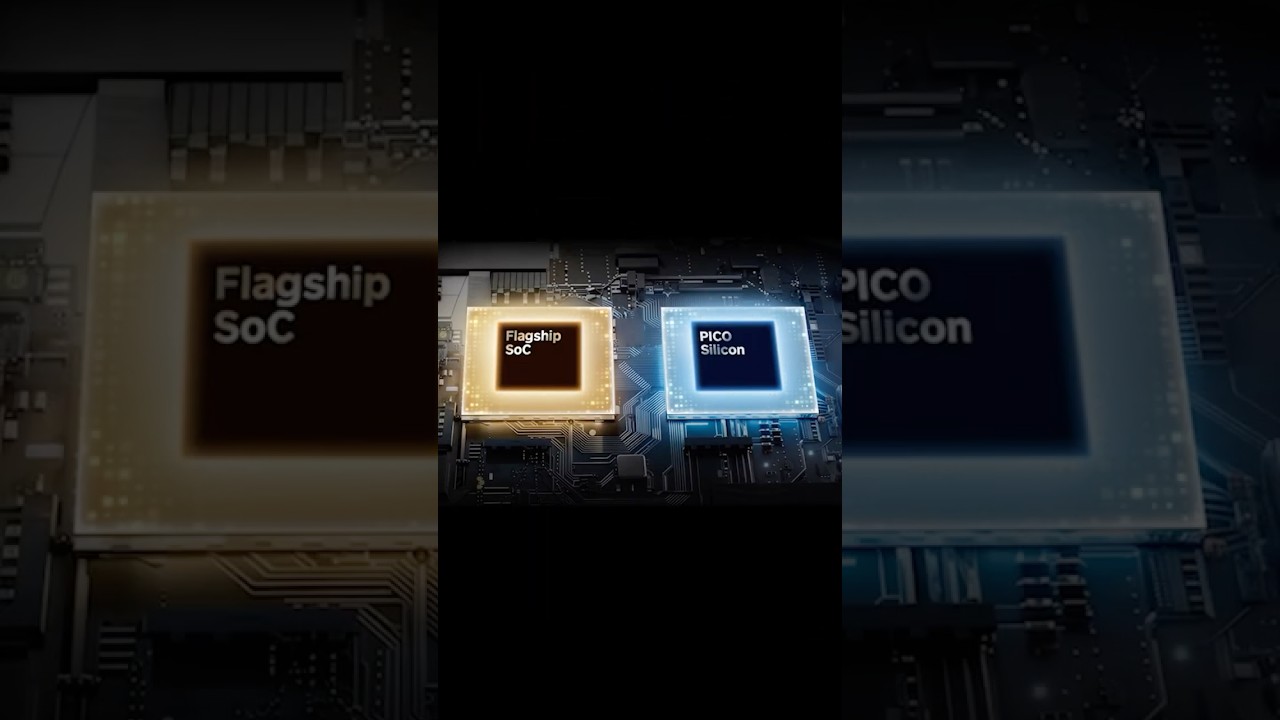
Project Swan uses two processors working together. The primary system-on-chip handles general compute and graphics, delivering roughly double the CPU and GPU performance of the Snapdragon XR2 Gen 2 found in the current Pico 4 Ultra and Quest 3. The second chip is a custom coprocessor designed specifically for spatial perception, computer vision, and image processing, handling those tasks at around 12 milliseconds of latency.
This is a similar approach to what Apple does with Vision Pro, where the R1 chip handles sensor processing while the M2 runs the operating system and applications. Splitting the workload means neither chip is bottlenecked by the other, and the dedicated perception processor can maintain low-latency tracking regardless of what the main chip is rendering.
270 grams with everything inside
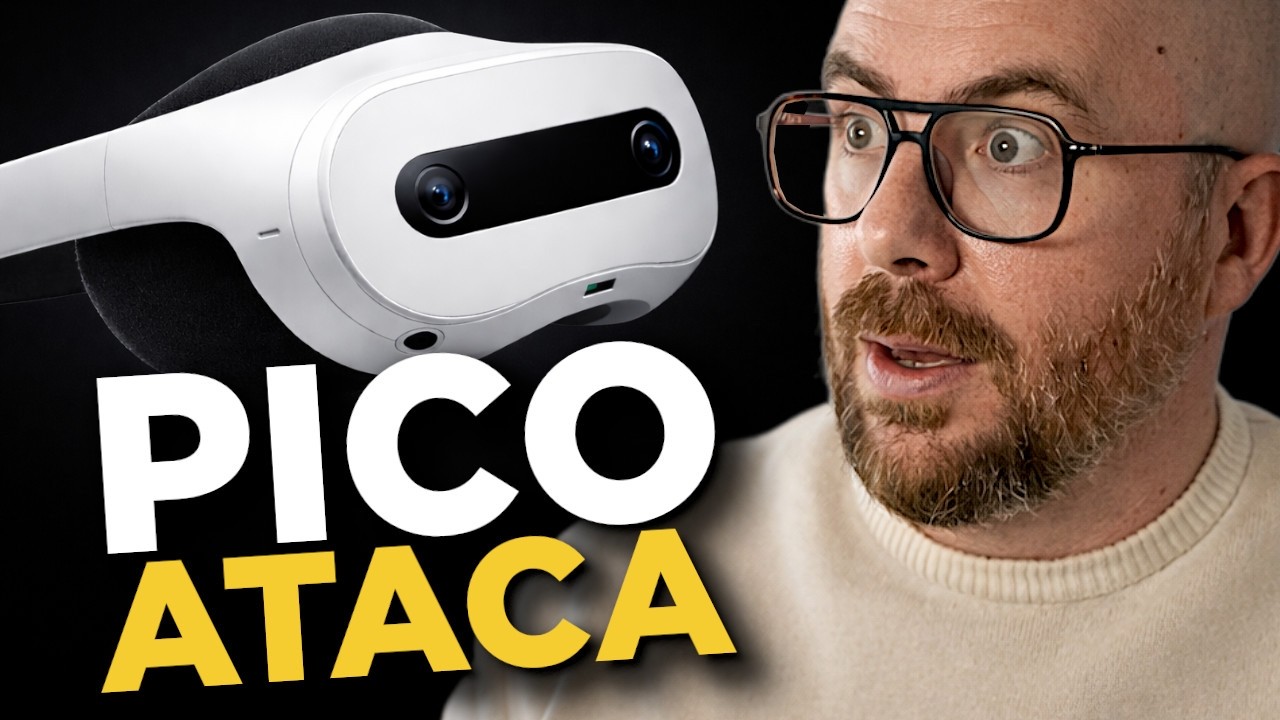
Vision Pro weighs between 600 and 650 grams depending on the headband. Quest 3 is 515 grams. Pico is targeting 270 grams for Project Swan with all components integrated into the headset. No external battery pack. No tethered compute puck. 270 grams, on your face, running a dual-chip system with 4000 PPI micro-OLEDs.
If that number holds up in the production unit, it would make Project Swan less than half the weight of Vision Pro while matching or exceeding its display specs. Weight is not a vanity metric in headsets. It determines how long you can wear the device before discomfort sets in, and it is the single biggest reason Vision Pro has struggled to find users who wear it for extended sessions.
Pico OS 6 is the real wildcard
The hardware is impressive, but the software is where Pico is making its most ambitious play. Pico OS 6 introduces what the company calls the Spatial Engine, a system-level compositor that manages global rendering of the environment. The practical result is that standard Android apps can run directly inside immersive spatial environments rather than appearing as flat windows layered on top of passthrough.
The comparison to visionOS is deliberate. Like Apple's operating system, Pico OS 6 supports a unified rendering pipeline where 2D and 3D applications coexist naturally, with either a virtual environment or physical reality as the background. Developers can build using the Pico Spatial SDK with Android Studio and Kotlin, or continue using Unity and Unreal with spatial extensions.
Pico also introduced WebSpatial, an open-source WebXR framework that lets web developers build spatial experiences using standard HTML, CSS, and JavaScript. That is a direct contrast to Apple's approach, which ties spatial development to Swift and Apple's proprietary tools. Whether open web standards or native frameworks produce better spatial experiences is an ongoing debate, but giving web developers an entry point lowers the barrier to building content for the platform.
The ByteDance question
Everything about Project Swan looks competitive on paper. The display quality targets Vision Pro. The weight undercuts it dramatically. The software borrows the best ideas from visionOS while keeping the platform open to Android developers. If Pico prices this anywhere near the $1,000 to $1,500 range, it becomes the most compelling alternative to Vision Pro available.
But Pico is owned by ByteDance, and that carries complications. TikTok's ongoing regulatory challenges in the United States have created uncertainty about ByteDance products in Western markets. Pico already exited several Western markets in 2023 before re-entering selectively. Whether Project Swan launches globally or stays concentrated in Asian markets will determine how much competitive pressure it actually puts on Apple and Meta.
The hardware is real. The specs are legitimate. The software ambition is there. The question is whether ByteDance's geopolitical baggage lets Pico compete where it matters most. Project Swan is targeting a late 2026 launch. The answers will come with it.
Advertisement