
Snap got the AWE headlines this week, and deservedly so. A standalone true AR product with preorders open is a real milestone. But if you care about the engineering problems that actually stand between smart glasses and all day usefulness, the most interesting hardware in Long Beach came from a startup almost nobody had heard of. Raven Resonance previewed Raven Prism, which it calls the world's first ambient computer, and it takes direct aim at the single constraint that hobbles every pair of glasses on the market: battery life.
HardwareJune 18, 2026
Snap Stole the AWE Headlines. Raven Prism Quietly Solved Smart Glasses' Hardest Problem.
By Alex Reeves
Staff Writer, VR.org
Advertisement

The hot swap is the headline
Here is the problem every smart glasses maker runs into. A pair of glasses has almost no room for a battery, because anything you put on someone's face has to stay light enough to wear comfortably. That physical limit caps runtime hard. Snap's brand new Specs, for all their ambition, run about four hours on a charge before you reach for the case. Four hours is not an all day device. It is a few sessions with charging breaks in between.
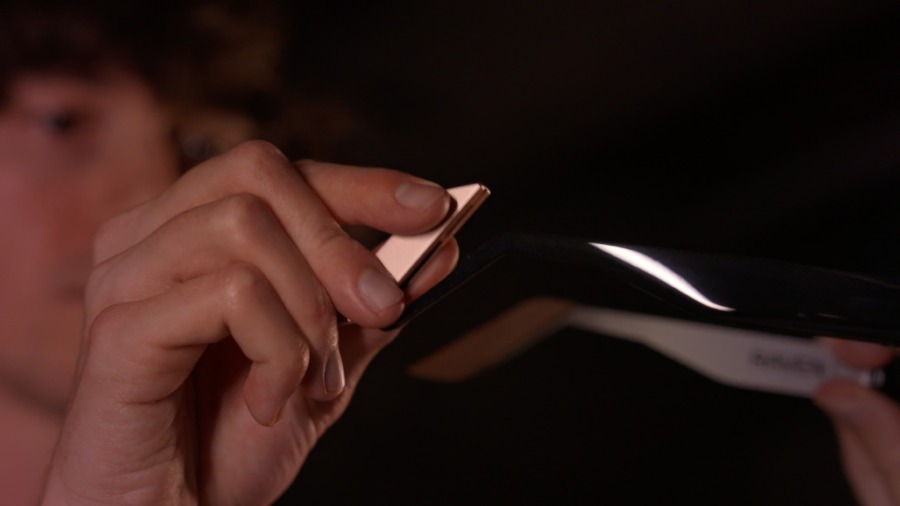
Raven Prism attacks this differently. Instead of trying to cram a bigger battery into the frame, it uses a hot swappable battery system the company calls Raven Wings, modular batteries you can replace without interrupting your apps or rebooting the device. Run one down, snap in a fresh one, and you keep going with zero downtime. It is the same logic that kept professional camera operators and cordless power tools running for decades, applied to a category that has been treating battery life as a fixed ceiling. The Wings double as an expansion platform too, which hints at a hardware philosophy built around swappable modules rather than a sealed slab.
This is the kind of unglamorous engineering answer I find far more convincing than another spec war over field of view. The companies obsessing over making glasses thinner keep running into the same wall, because the battery does not care about your industrial design. Raven decided to route around the wall entirely, and that is a genuinely clever call.
It is a Linux computer that happens to be glasses
The second surprise is what Raven Prism actually is under the hood. This is not a display accessory tethered to your phone. It is a standalone 64 bit computer running RavenOS, the company's own Linux based operating system, on a quad core ARM processor with 2 or 4 gigabytes of RAM. It supports native Linux ARM64 applications, SSH access, and developer customization. You can, quite literally, SSH into your glasses.
Advertisement
That openness is a real philosophical departure from where the rest of the category is heading. Snap, Meta, and Google are all building tightly controlled platforms with their own app stores and their own rules. Raven is pitching a developer first, open computer you can actually tinker with. For the enthusiast and developer crowd, that is enormously appealing, and it is the same open versus walled garden tension playing out across the whole spatial computing space right now. A Linux box on your face is never going to be a mainstream consumer pitch, but it is exactly the sort of thing that builds a devoted early community.
The rest of the spec sheet
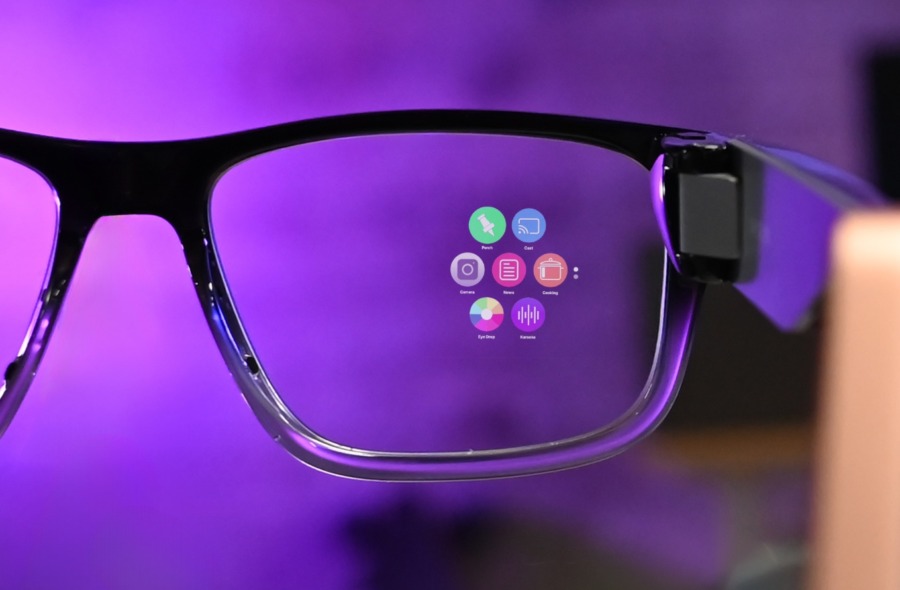
The hardware around those two ideas is reasonable rather than record setting, which is the right call for a startup. Raven Prism weighs under 70 grams, lighter than Snap's Specs, with weight distribution tuned for all day wear, and it comes in prescription versions from minus 4.5 to plus 4.5 diopters or as plain eyewear. The display is a full color LCoS panel delivered through a single waveguide in the right eye, with a 30 degree diagonal field of view that the company compares to looking at a 16 inch laptop at arm's length. Input is primarily eye tracking, supplemented by voice and wireless peripherals, so the whole thing is hands free by default.
Privacy got real attention too, which is smart for a face worn camera in 2026. There is a visible capture light and a physical privacy cover on the camera, eye tracking data is processed locally, and the company says no user data leaves the device without explicit consent, with core AI running on device where possible. After years of smart glasses spooking the public over exactly these concerns, building the privacy story into the hardware is the correct instinct.
The honest caveats
Temper the enthusiasm appropriately. This is a preview from a startup, not a shipping product, with a planned launch later in 2026 and a tentative base price around $1,499. That is enthusiast pricing, the 30 degree field of view is modest next to the wider displays competitors are chasing, and a roughly 1 gigahertz ARM chip is not going to run anything demanding. Startups also have a way of missing ship dates and prices, and previews always look better than retail units.
But the ideas are what matter here, and the ideas are good. Hot swappable batteries are the most practical answer to all day wear anyone showed at AWE. An open Linux computer you can SSH into is a real alternative to the locked down platforms everyone else is building. Snap will sell more glasses than Raven ever will, and that is fine. The value of a show like AWE is seeing which small teams are asking the right questions, and on the two hardest questions in this category, battery and openness, Raven Prism had better answers than the company that took the main stage.
Advertisement