
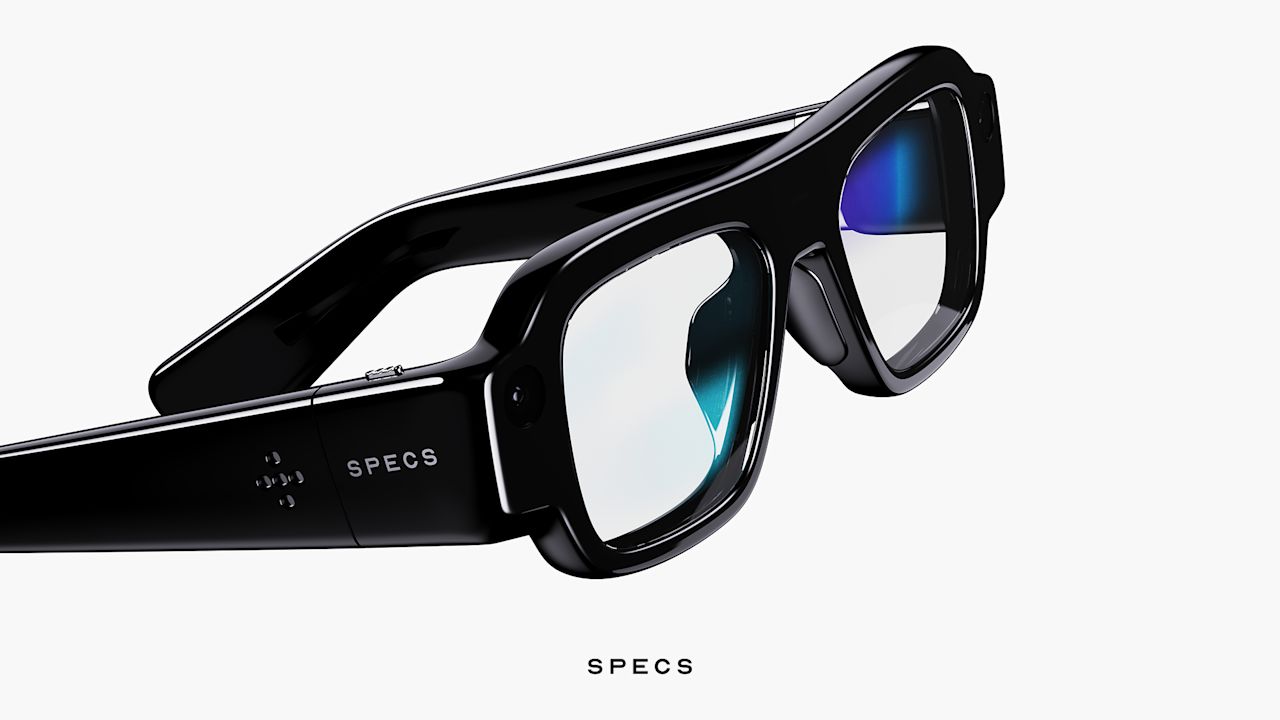
Snap's enterprise case for Specs is a single newsroom post, published September 16 alongside the company's launch event, and it names five partners: Salesforce, Amazon Web Services, NVIDIA, Trifork and Hololight. It does not name a customer. It carries no enterprise price, no enterprise SKU, no support terms and no date for any of the integrations it describes, and the passage written for IT departments says Snap is "working closely with device management vendors" without saying which ones. For a document meant to put a $2,195 pair of AR glasses on a purchasing agenda, the omissions are as useful to a buyer as the partner list.
EnterpriseSeptember 18, 2026
How Much of Snap's Enterprise Pitch for Specs Ships This Fall?
By Sam Whitfield
Contributing Writer, VR.org
Advertisement
Three partners described as work in progress
Read partner by partner, the post is written in the tense of work in progress. Salesforce "is bringing" its Agentforce platform to Specs, so that an employee can identify an object, open a case and update a workflow without returning to a separate screen. With AWS, Snap says it is "working to connect" Specs to Amazon Quick, the AI assistant for work, and offers a retail associate checking where a product sits and how many are in stock as the example. NVIDIA's contribution is agents built on its XR AI stack, with Snap adding that partners are "already exploring" how those capabilities could support different kinds of work. None of the three describes something a buyer can install when the glasses arrive, and to Snap's credit, none claims to.
Two partners described as products
Trifork and Hololight are described as products rather than projects. Trifork's Tandem connects an onsite technician with remote experts and AI agents who see what the technician sees and draw annotations into the technician's view, the same remote assistance pattern Vuzix was already selling as a packaged kit through resellers when this column surveyed the enterprise vendors in May. Hololight's entry is more specific, and most of the detail comes from Hololight itself. In comments published by DEVELOP3D, the company said applications render on a workstation, an on-premises server or the cloud, then stream to Specs over Wi-Fi, 5G or LiFi at up to 90 frames per second with latency under 50 milliseconds, figures it qualifies as dependent on network conditions, scene complexity and server hardware. Hololight already supports Apple Vision Pro, Meta Quest and HoloLens 2, which makes Specs a new endpoint for an existing product and the firmest commitment in the announcement.
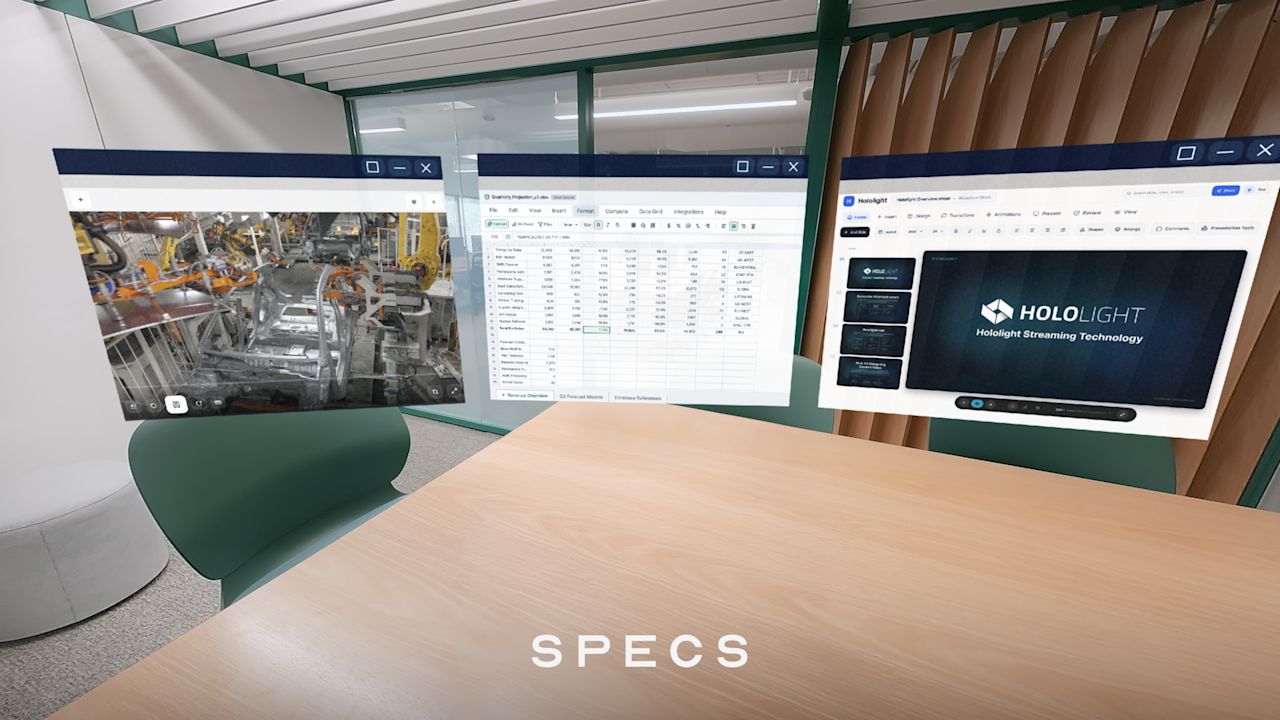
Hololight managing director Florian Haspinger framed the pitch around session length, saying in the same DEVELOP3D report that Specs extends the company's reach "to professionals who want one lightweight device for both a design review and the rest of their working day, rather than a dedicated headset they put on for twenty minutes at a time." The company also said sensitive data and models never leave a customer's own infrastructure, which answers the first question any regulated buyer will put to a streaming product.
The line IT departments will read first
Device management matters most to the people who approve pilots, and it is the thinnest part of the announcement. Mobile device management is the layer that lets an organization enroll hardware, push configurations and wipe a lost unit remotely, and at most large companies it is a precondition for a trial rather than something evaluated during one. Snap says it is building "mobile device management and security controls" with vendors it does not name. Until those vendors are named and the integration is documented, a Specs pilot would run on hand-managed devices, which in practice keeps any trial small.
Advertisement
Not every analyst reads the week the same way. Anshel Sag of Moor Insights & Strategy wrote that enterprise AR "is already making serious money and will instantaneously drive volume for SPECS in ways that consumers will not for years," and pointed to the gap left by HoloLens and Magic Leap. The gap is real. Microsoft ended HoloLens hardware production in late 2024, and Meta stopped selling its commercial Quest SKUs on February 20. The case for Snap walking into that space is sound; the word instantaneously is harder to support, because volume follows procurement and procurement follows a price sheet, which Snap has not published for business customers.
The commitment with a price attached
The firmer deal of the week was made with a carrier. Snap's launch release introduced a charging case with a cellular modem, sold separately, which adds four charges and a data connection through participating carriers, and it is bundling that case with the glasses for $2,395, or $200 over the glasses alone. In the United States, Verizon will sell data plans from $10 a month for existing Verizon customers and from $20 a month for everyone else, offer eligible buyers financing that includes a 36-month plan, and put Specs in select stores for hands-on demos. Spread evenly over 36 months, the bundle works out to about $66.53 a month before data, or roughly $76.53 with the cheaper plan, assuming no finance charge; the release does not state the financing terms. Orange in France and EE in the United Kingdom are signed on as well, with pricing still to come.
For an enterprise buyer, the carrier arrangement may say more about field readiness than the partner list does, because field service happens away from corporate Wi-Fi. Whether Verizon will offer the plans on business accounts, the channel most companies already use to buy phones, the release does not say. The constraint is the one Snap disclosed at AWE in June, when preorders opened: about four hours of runtime per charge. At continuous use, an eight-hour shift means at least one trip back into the case. That is a workable pattern for a technician who wears the glasses for a repair and takes them off afterward, and a poor one for a store associate expected to wear them from open to close.

The event also did not produce a ship date, the item Alex Reeves identified in August as the one thing September 16 had to fill. Shipping is "expected to begin later this fall" in the United States, the United Kingdom and France, the same window Snap gave in June. The first public demos open October 1 at a SPECS First Look location in Westfield Century City in Los Angeles.
How a buyer should sort it
For an operations or IT lead, the announcement divides into two piles. Hololight's streaming and Trifork's remote assistance describe products that can anchor a small pilot once hardware ships, and Hololight's data residency claim addresses the objection a regulated site raises first. The Salesforce, AWS and NVIDIA integrations, the device management layer and any enterprise pricing are commitments without dates. A pilot budget can reasonably be drafted against the first pile this quarter. A deployment plan should wait for the second, and the single item worth watching is the name of the first device management vendor, because that is the one line Snap cannot fill with a partnership announcement.
Advertisement