
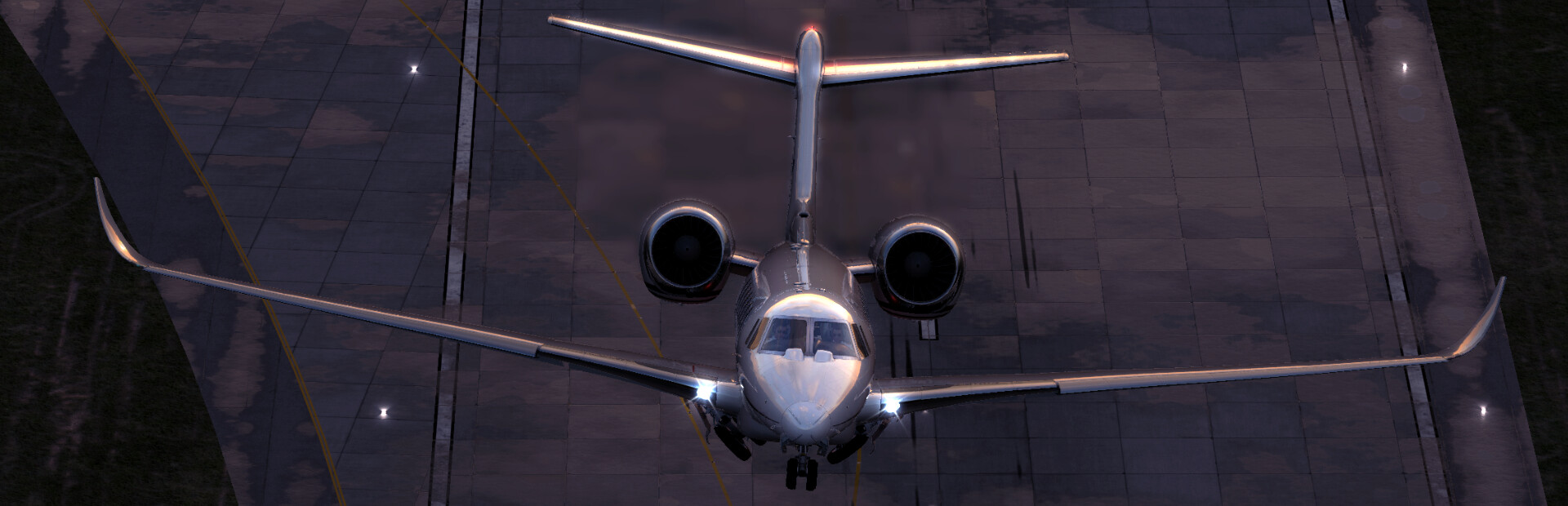
The two most demanding simulator communities in gaming just got official Apple Vision Pro support. X-Plane Streaming Link and iRacing Connect are now available on the visionOS App Store, streaming X-Plane 12 and iRacing from your gaming PC to Apple's headset. Both apps are free, both were announced at GDC back in March, and both arrive with a feature that changes what simming in a headset actually feels like: your physical cockpit hardware gets blended into the virtual world through passthrough.
SoftwareJune 7, 2026
X-Plane and iRacing Just Landed on Vision Pro, and Your Real Cockpit Comes With Them
By Nina Castillo
Staff Writer, VR.org
Advertisement
How the Streaming Works
Neither sim runs on the Vision Pro itself. Both apps are streaming clients built on Nvidia's CloudXR, the technology we covered in April when the visionOS bridge first arrived. Your PC does the rendering, your Vision Pro does the displaying, and the connection between them leans on the OS-level foveated streaming that Apple shipped in visionOS 26.4.
Foveated streaming is the technical piece worth understanding. The Vision Pro's eye tracking tells the encoder where you are looking, and the stream prioritizes image quality exactly there, spending fewer bits on your peripheral vision. The result is a stream that looks dramatically sharper than its bandwidth should allow, because the full fidelity follows your gaze. On the M5 Vision Pro, the pipeline runs at up to 120FPS, which matters enormously in a racing sim where reading the track at speed is the whole game.
The catch is on the PC side: foveated streaming requires Nvidia's Ada or Blackwell architectures, meaning an RTX 40-series or 50-series card. Older GPUs are not invited to this particular party, which tracks with the sim community's hardware habits but is worth knowing before you download.
The Cockpit Blending Is the Real Story
Plenty of headsets can stream a sim. What the Vision Pro versions add is the passthrough integration, and this addresses the oldest annoyance in hardware simming. If you own a yoke, a wheel, pedals, or a button box, VR has always forced a tradeoff: total immersion in the virtual cockpit, at the cost of fumbling blindly for physical controls you cannot see.
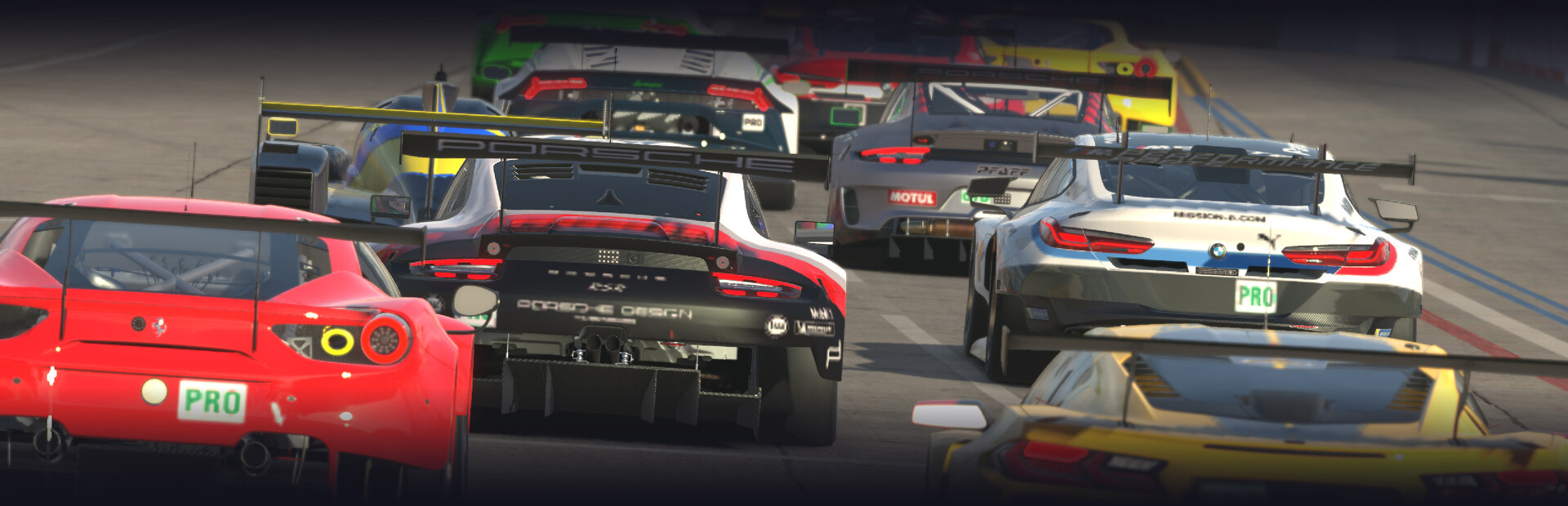
These apps solve it by blending your real accessories into the virtual world. Look down at where your hands are, and you see your actual wheel and your actual hands on it, composited into the virtual race car. Your physical yoke appears in the virtual Cessna. The seam between the real hardware and the rendered cockpit is the kind of mixed reality that sounds like a gimmick and absolutely is not, because it removes the last reason sim players kept one eye outside the headset.
The same accessory tracking powers automatic cockpit alignment. The system actively tracks where your physical controls sit and aligns the virtual cockpit to match, so your real wheel occupies the same space as the virtual one. Anyone who has performed the traditional VR sim ritual of recentering, nudging their seat, and recentering again understands how meaningful that is. The crude recentering dance is simply gone.
What This Says About Vision Pro's Trajectory
There is a pattern forming around Vision Pro in 2026, and it is not the one Apple originally pitched. The device is quietly becoming the premium display peripheral for content rendered elsewhere. Valve brought SteamVR streaming in April with Steam Link. Nvidia built the CloudXR bridge. Now two of the most dedicated sim platforms in existence have shipped official clients. None of these experiences run on Apple silicon, and none of them care. They use the Vision Pro for what it is: the best micro-OLED displays and the best eye tracking money can buy.
For the sim communities specifically, this is a meaningful new option at the high end. Dedicated sim players already spend serious money on rigs, wheels, and pedals, and the audience that owns both a capable RTX system and a Vision Pro is exactly the audience that will tolerate streaming complexity for display quality. The micro-OLED panels render cockpit instruments with a legibility that LCD headsets cannot match, and in instrument flying or endurance racing, legibility is not cosmetic.

How to Try It
X-Plane Streaming Link and iRacing Connect are free downloads on the visionOS App Store. You need to own the respective sims on PC, have an RTX 40-series or 50-series GPU for foveated streaming, and have both machines on a solid local network. X-Plane's developers have also been documenting their broader VR overhaul in the 12.4.3 update, which shipped alongside this release and improves VR performance on PC headsets too.
After a stretch where the Vision Pro conversation was dominated by roadmap cancellations and delayed successors, it is worth noticing what just happened: the headset's most compelling new use case this year came from Nvidia, Valve, Laminar Research, and iRacing, not from Apple. The platform is finding its audience anyway. Sim players, of all people, might be the ones who end up getting the most out of Apple's $3,500 headset.
Advertisement