
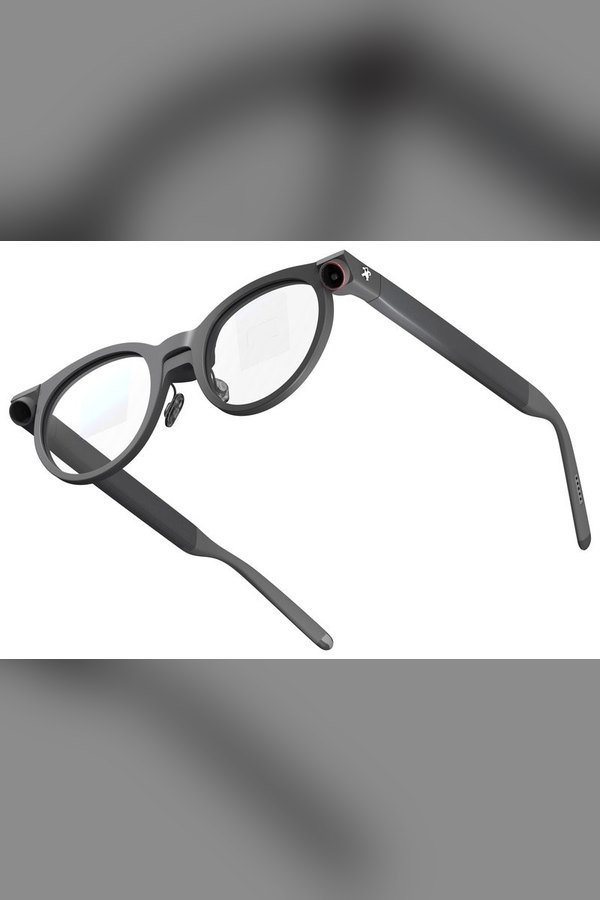
In September this site sorted the fall's glasses platforms into two awkward groups, stores with no hardware in buyers' hands and hardware with no way to publish to it, and Savage Technology, a Hong Kong startup now taking reservations for its first product, has arrived with a third arrangement. Its glasses are still in engineering validation and its SDK is not public, but the pitch to developers is already written, and the first reader it addresses is a coding agent rather than a person.
ArNovember 26, 2026
Savage's $799 Orrorin Glasses Want Coding Agents to Write Their Apps, in 64 MB of Memory
By Jordan Kuo
Staff Writer, VR.org
Advertisement
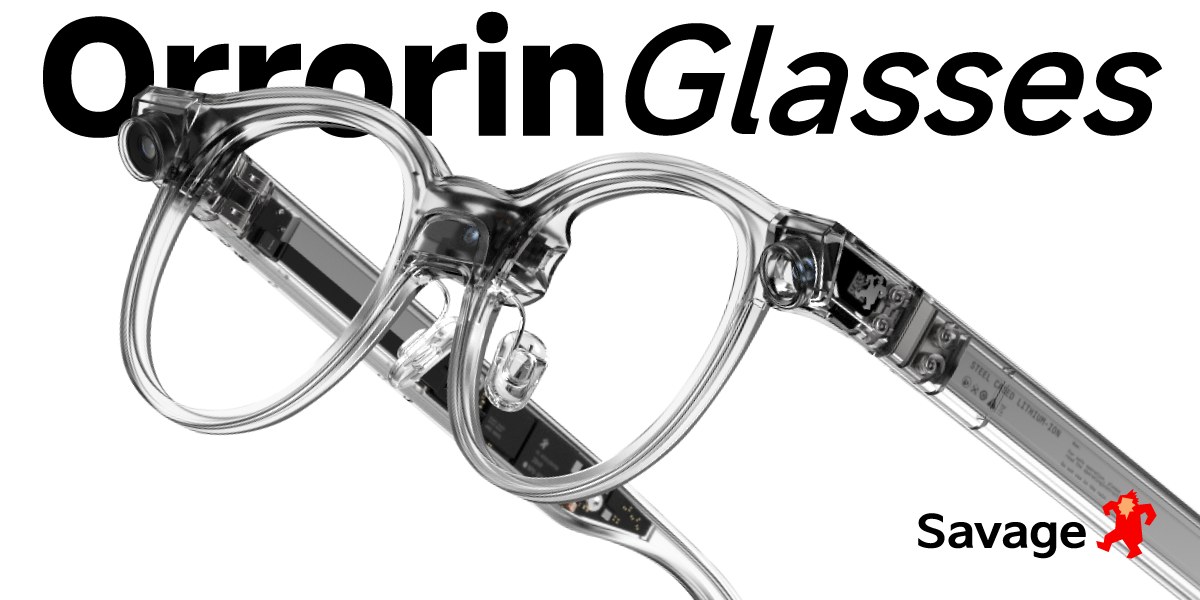
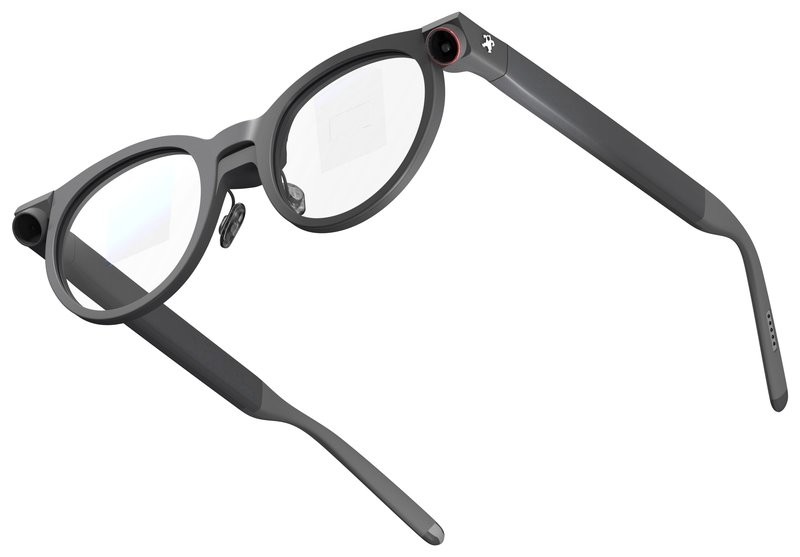
The Orrorin Glasses, which MacRumors reported on November 25, cost $799 in total. A $199 deposit reserves a Founder Edition that Savage estimates will ship in March 2027 and a $29 deposit an Early Bird pair for May, with a third tier, In Line, estimated for July, according to the company's shipping policy, which took effect on November 21. The spec sheet lists a 45-gram frame with a full-color MicroLED display in front of each eye at 500 by 380 pixels and 60 Hz, up to 1,800 nits across a 25 degree field of view. It adds a 1280 by 800 global-shutter camera, two inward-facing eye cameras, 64 MB of memory and 4 GB of storage. Input is a pinch made with the hand down at your side, with no ring or wristband, and the eye tracking Savage demonstrates fades the display when you look away from it rather than selecting things, although its API list does mention eye input. Savage's own FAQ says the product is "progressing through engineering validation," and VR.org found no hands-on account from anyone outside the company.
An SDK written for agents, and not public yet
The developer section of Savage's home page describes SavageOS, in a release the company calls Oldowan, and it is more specific than most glasses pitches manage at this stage. Apps "compile straight to machine code and run on the glasses with nothing in between. No web view, no virtual machine, no interpreter." Each app is signed by its developer and runs in its own sandbox. A desktop simulator runs it before it reaches the glasses, and the system APIs cover display, pinch and eye input, app lifecycle and settings. Above that sits a block labeled "Designed for AI to build with" and marked Upcoming, which tells developers to give Claude Code or Codex a single instruction: "Read savage-technology/SavageOS/agents/SKILL.md and follow it to build apps for SavageOS Oldowan." The demo terminal beside it shows an agent writing two C source files, building a native ARM binary, packing and signing it as a .sapp and installing it on the glasses.
That repository was not public on November 26. GitHub returned a 404 for SavageOS, and the Savage-Technology organization had one public repository, its profile. Savage's developer site explains why. Development "is currently an insider program," with the SDK, simulator and early documentation shared with developers in the company's Discord, and "public documentation is coming soon." The home page headlines a "Fully Open SDK" for hand tracking and eye control, while the FAQ is more careful and says the exact API availability and hardware access permissions "will be documented before the SDK becomes available." So the hardware has an estimated ship month and the public SDK has none. That is the ordering this beat has learned to discount, even if an insider Discord with a working simulator is well ahead of a render and a mailing list.
Advertisement
What fits in 64 MB
Savage answers the question a developer asks first in its FAQ, under the heading "Why do the glasses only have 64 MB of RAM?" The glasses run on what the company calls "a highly optimized, low-power embedded architecture rather than a conventional smartphone architecture." Its on-device hand and eye tracking models "currently use approximately 20 MB of memory," and the rest is shared between the operating system and apps. The software is designed for "one foreground application alongside one or two background tasks." If you wrote for Pebble, that shape is familiar: C against a system that runs one app in front, a small background allowance added later, and a display you design for glances, not sessions. Android Wear went the other way and put a phone-style runtime on the wrist, and battery life was the complaint that followed it for years. Savage makes the same argument in its own words, that the goal is useful computing "without compromising power efficiency."
The rest of the FAQ draws the boundaries a team would plan around. There is no 6DoF positional tracking and no SLAM, so nothing can be pinned to a place in the room. The cameras are for sensing, chiefly hand tracking, and the glasses are "not designed as a photography or video-recording device." Third-party access to raw camera data "will be strictly restricted." The audio is piezoelectric, meant for notifications and interaction feedback rather than music, and the formats the SDK will support are still to be documented. The glasses wake on head gestures or a touch area on the frame, with voice still under consideration. The use cases on the home page, teleprompter, messages, navigation, sports and what Savage calls vibe coding, are all text and small graphics, which is what 500 by 380 pixels and one foreground app are good for.
The other $799 pair
The obvious comparison costs the same. Meta Ray-Ban Display is $799 with the Neural Band wristband included, weighs 69 grams and has one display, in the right lens, which Meta says packs 42 pixels into each degree. The Verge's hands-on lists that display at 600 by 600 pixels over 20 degrees, with up to 5,000 nits. Meta's 42 matches 600 pixels spread across 20 degrees measured on the diagonal, and if Savage's 25 degrees is also a diagonal figure, the same arithmetic puts Orrorin at about 25 pixels per degree, so the trade is sharpness and brightness for a second eye, a wider window and 24 fewer grams. Meta's pair also has a 12MP camera that takes photos. Orrorin's does not, by design.
For developers the more useful difference is the route in. Meta's Wearables Device Access Toolkit reaches its glasses from a phone app, and when this site last checked in September, publishing through it was still closed to the public. Savage is proposing native apps on the glasses themselves, built by an agent, signed by the developer and sandboxed by the OS. That is a cleaner model on paper. It is also unproven, on hardware nobody outside the company has worn.
For a team deciding what to build in the next six months, the realistic target is the simulator, reached through an invitation to a Discord. The date that matters is not March. It is whenever the SavageOS repository the home page names goes public. If that happens before the Founder Editions ship, Savage will have done what most glasses makers have not and put the SDK in front of developers ahead of the hardware. If it is still an insider program when the first pairs go out, a $29 deposit buys a place in a shipping queue, not a platform.
Advertisement