
For seven months the Steam Frame has lived mostly in slide decks, spec sheets, and the fevered speculation of people who refresh ImportYeti for fun. This week it started behaving like an actual product. On June 18 the FCC embargo on Valve's controller filings lifted, exposing the hardware in regulatory detail. A few days earlier, roughly 32,000 kilograms of cargo politely labeled "Virtual Reality Devices" finished clearing into Valve's US warehouses. And according to a leak that has not been denied, a price reveal is penciled in for June 23. None of these is the launch. Together they are the sound of a launch loading.
HardwareJune 18, 2026
Steam Frame Launch Signals Stack Up: FCC Filings, 35 Tons of Headsets, and a June 23 Price Date
By Alex Reeves
Staff Writer, VR.org
Advertisement

What the FCC filing actually confirmed
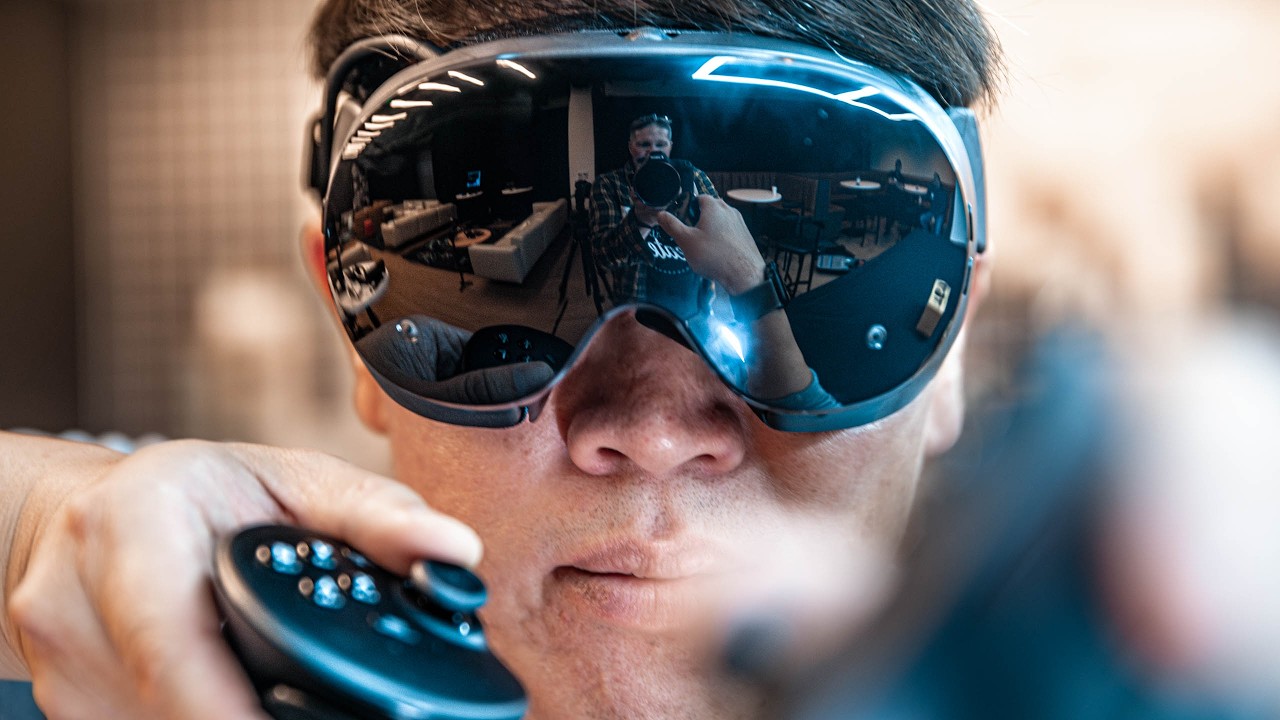
Regulatory paperwork is not marketing, which is exactly why it is worth reading. The June 18 documents confirm that the Steam Frame ships with two separate motion controllers, left and right, talking to the headset over Bluetooth Low Energy. Each one carries a thumbstick, a D-pad, face buttons, a trigger, a bumper, and a circular tracking ring. So far, so Quest. The interesting part is underneath the thumbsticks.
Valve is using TMR sticks, short for tunneling magnetoresistance. Without turning this into a physics lecture, TMR sensors read movement by measuring how electrons tunnel through an insulating barrier only a few nanometers thick. The practical translation is sharper detection of small stick movements and better power efficiency than the Hall-effect sensors most premium controllers use today, including the ones on Meta's Quest hardware. Valve has been beating the drift-resistance drum since the new Steam Controller, and the Frame's controllers inherit that work.
The filing also confirmed a Frame Enthusiast Kit, an accessory bundle built around a hot-swappable battery pack. You can pull a depleted battery and drop in a fresh one without powering the headset down or dumping yourself out of whatever you were doing. For a standalone headset, where battery life has always been the quiet killer of long sessions, that is a more meaningful feature than it sounds.
The warehouse math
The logistics story is less glamorous but more predictive. Public import records show bulk shipments of "Virtual Reality Devices" arriving by container from Shanghai into Valve's US distribution facilities, with the first big drop landing in the Los Angeles area around June 10. Supply chain watcher Brad Lynch flagged the pallets, and the tonnage is not subtle. You do not freight 35 US tons of headsets across the Pacific to keep them in a closet.
Here is why that matters for timing. When Valve shipped the new Steam Controller earlier this year, the gap between warehouse arrivals and the official announcement ran about three to four weeks. Apply the same spacing to a June 10 arrival and you land squarely in the back half of June, which is exactly where the leaked June 23 price reveal and a rumored June 30 pre-order window fall. The pieces line up a little too neatly to ignore, even if Valve has only ever committed to a vague "summer 2026" on the record.
Advertisement
The number nobody wants to say out loud
Valve originally wanted the Frame to undercut the original Index kit, which means south of $999. That was the plan before the global DRAM shortage turned memory into a luxury good. Contract prices for RAM have climbed well over 150 percent year over year as AI data centers vacuum up supply, and a headset built around 16GB of RAM is exactly the kind of product that feels that squeeze. Early retailer database listings pointed at roughly $950 for the 512GB model and around $1,070 for the larger one, and analysts have floated a range somewhere between $899 and $1,199.
If Valve lands under a thousand dollars, it can credibly call the Frame a mid-range standalone with PC VR ambitions baked in. If the memory crisis forces it past that line, the conversation changes. A $1,099 Steam Frame is no longer competing with the Quest on price. It is asking buyers to pay a premium for a streaming-first headset that leans on a gaming PC they already own. That is a defensible pitch, but it is a different pitch than the one Valve drew up in 2025.
What you are actually getting
For anyone who tuned out after the November reveal, the spec picture is worth a refresher. The Frame is a standalone headset running SteamOS on a Snapdragon 8 Gen 3 with 16GB of RAM, dual 2160 by 2160 LCD panels per eye, refresh rates from 72 up to 120Hz with an experimental 144Hz mode, and eye tracking driving foveated rendering. The whole rig, strap and battery included, weighs about 440 grams, with the frontbox alone at 185 grams. A bundled Wi-Fi 6E adapter handles a dedicated 6GHz link for low-latency streaming from a PC, and inside-out SLAM tracking handles the room.
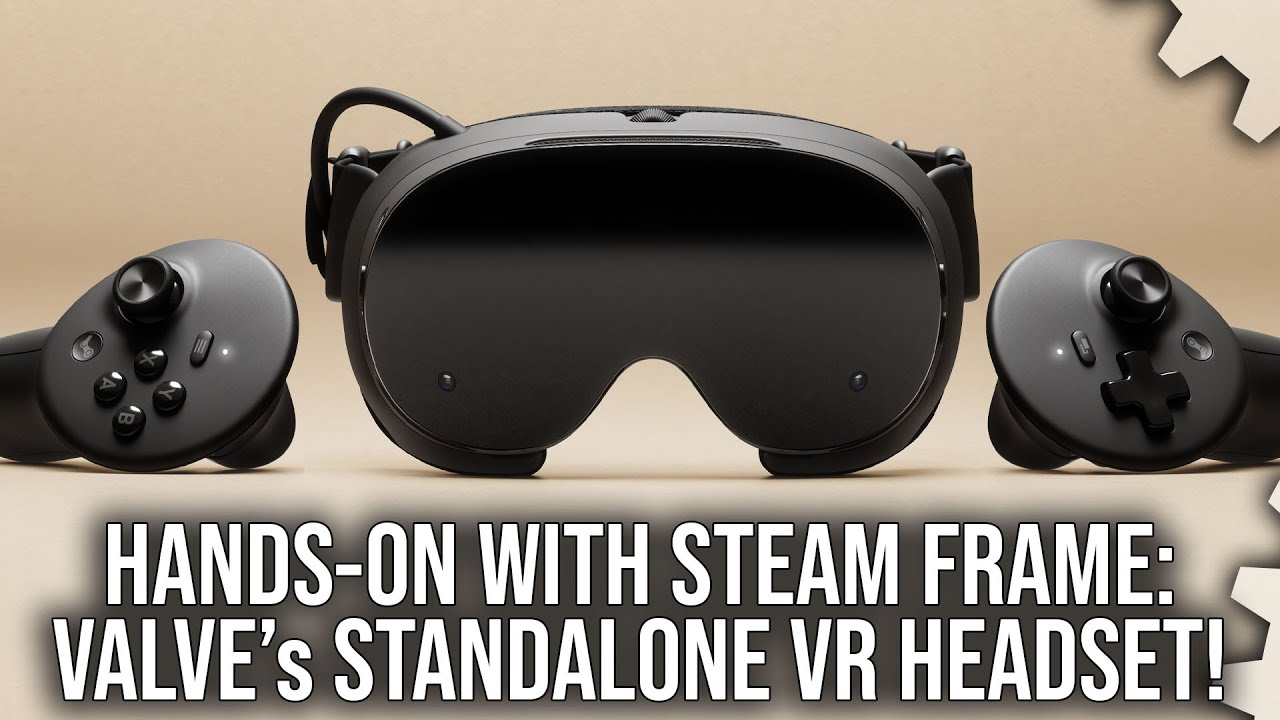
The pitch has always been flexibility. Native standalone games, wireless PC VR streaming, and flatscreen Steam titles, all in one light package that taps the library you already own. That is the part Valve gets right on paper. The part still missing is a marquee launch title, a problem this publication has chewed on before, and one a price tag will not solve.
The takeaway
Stack it up and the signal is hard to misread. Hardware is in the country, the regulators have stopped hiding it, and a price date is reportedly days away. Valve will tell you nothing is official until the store page flips, and technically they are right. But headsets in warehouses tend to end up on heads. The only real questions left are the number Valve prints on June 23 and whether the DRAM market let it keep the promise it made back in 2025.
Advertisement