
Three weeks ago I published a long piece about everything riding on Steam Frame, and near the end of it I wrote something I believed completely at the time. I said Valve does not launch hardware without software to justify it. Steam Deck had the entire Steam library. Index had Alyx. And I speculated that whatever Valve was quietly working on, Steam Frame would be the delivery mechanism for it.
GamingJune 6, 2026
Steam Frame Still Has No Launch Game. It Is Time to Talk About What That Means.
By Evan Marcus
Co-Founder, VR.org
Advertisement
I need to revisit that, because the evidence has been sitting in plain sight since November and I talked myself around it. When Valve announced Steam Frame, the company told UploadVR it was "not talking about content today." That is the kind of corporate phrasing that lets hope survive. But Road to VR reported something blunter at the same time: a member of the Steam Frame team flatly denied that Valve has any VR content in development. Not "we are not discussing it." Not in development. Seven months later, nothing has contradicted that. No teases, no trademark filings, no Aperture Desk Job equivalent, no nothing.
So today I want to do the thing I think more writers should do when the story they wanted does not materialize. I want to take the denial at face value and think honestly about what a Steam Frame launch with no flagship game actually means.
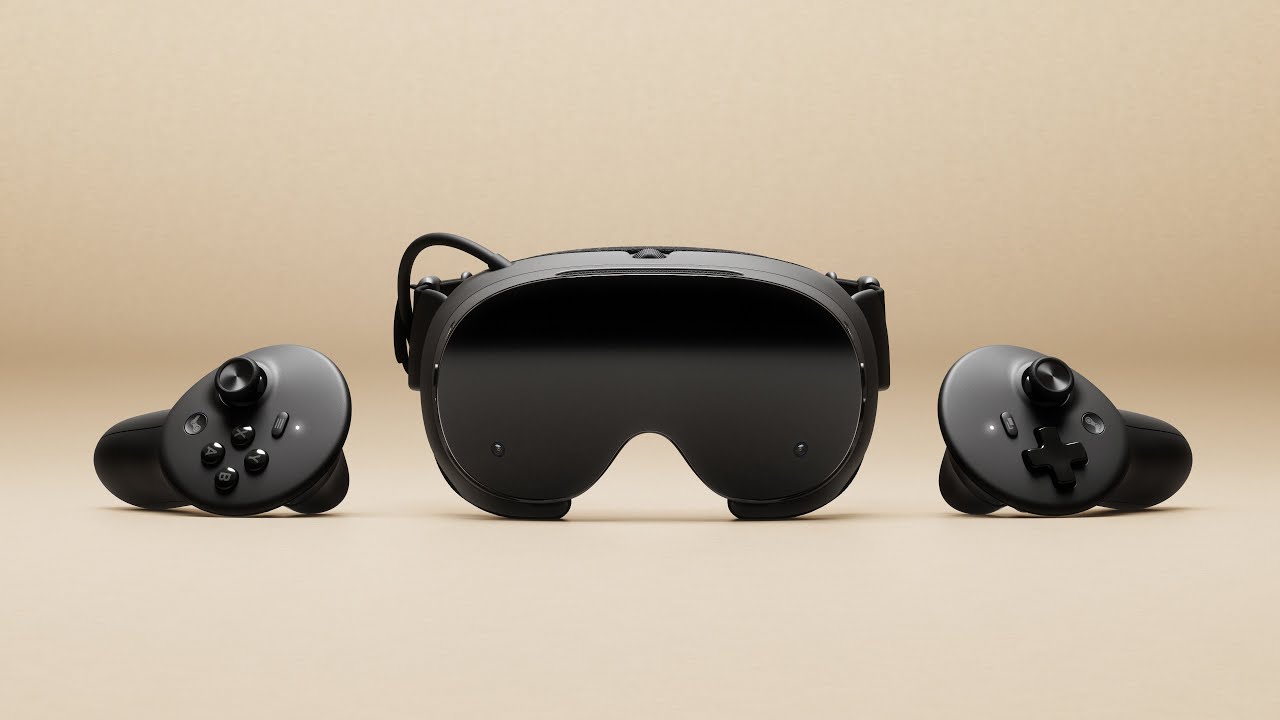
Why This Worries Me
Start with the history, because the history is brutal. Every VR hardware launch that landed without a defining piece of software has underperformed, and every one that had one overachieved. Index launched in 2019 to respectable enthusiast sales, and then Alyx arrived in March 2020 and the headset sold out for months. Quest 2 became the best-selling headset ever made on the back of Beat Saber, a genuine system seller that justified the purchase for millions of people who had never owned a console. PSVR2 launched with strong hardware, no defining exclusive, and spent two years searching for an identity. Vision Pro launched with extraordinary hardware, no killer app, and Apple just erased every successor headset from its roadmap.
The pattern is not subtle. In VR, hardware does not sell hardware. One specific, irreplaceable experience sells hardware. The entire history of this medium is people buying headsets to play one thing.
And Alyx is the proof of what Valve specifically can do when it decides a platform needs a reason to exist. I have written before about how it remains the gold standard for VR gaming six years later. Nobody else has matched it. The studio that made the best VR game ever is launching its most important VR hardware, and apparently decided that lightning does not need to strike twice.
The Case That Valve Knows Exactly What It Is Doing
Now let me argue the other side seriously, because Valve's position is not crazy. It is a bet on a different theory of what sells a headset in 2026.
The theory goes like this. The Alyx moment already happened. It proved VR could host a masterpiece, and it sold headsets to everyone willing to buy a headset for one game. That well is drier than enthusiasts want to admit. What is left is a much larger group of people who own gaming PCs, own large Steam libraries, and have never bought into VR because the experience of using it was annoying. Cables, base stations, routers, software stacks. For those people, the killer app is not a game. The killer app is friction removal.
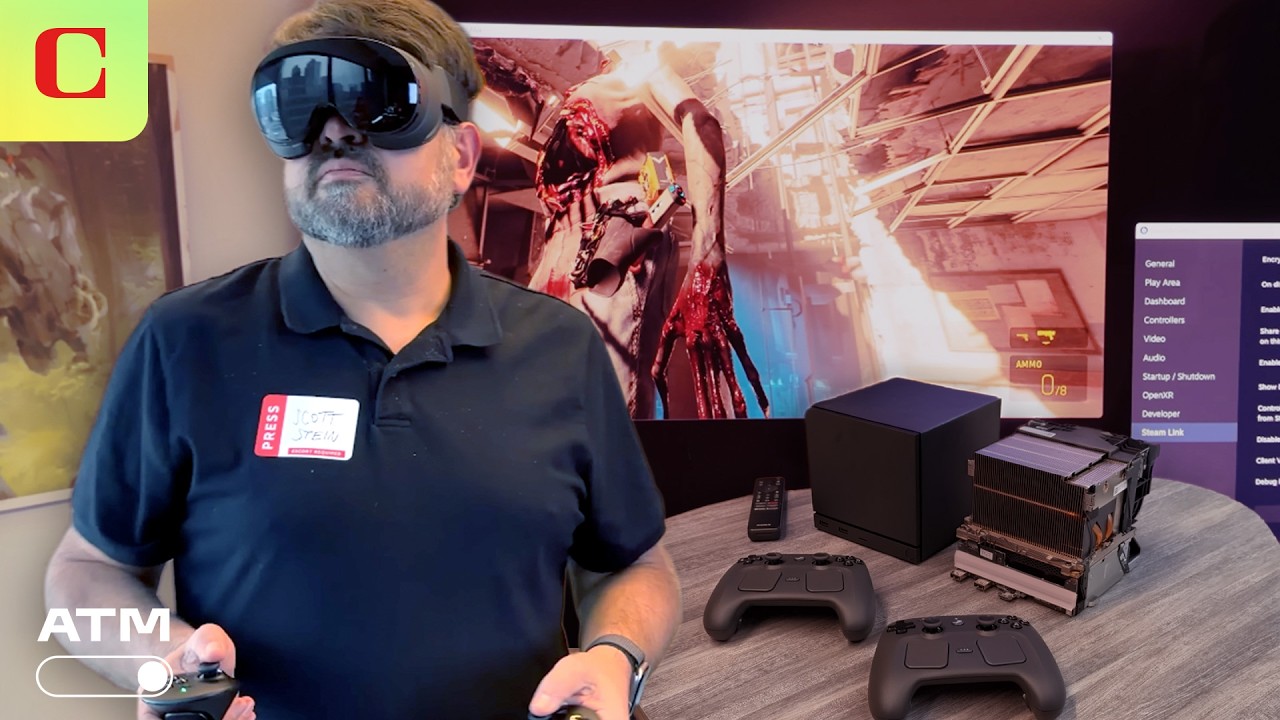
Seen through that lens, Steam Frame's launch game is your own Steam library. Every flatscreen game you own, playable on a giant private screen anywhere in the house. Every VR title you bought during five years of sales, finally wireless with no setup. The 6GHz dedicated adapter in the box is the Alyx of this launch: the thing nobody else ships that changes what owning the device feels like. Valve is betting that "everything you already own, with zero friction" beats "one new thing you cannot get elsewhere."
Advertisement
There is also a quieter structural argument. Valve makes 30 percent of every Steam sale. A first-party game takes years of its best people. From Gabe Newell's chair, the rational move is to make the hardware that drives more Steam purchases, not the game that delays the hardware. Steam Deck validated this exact playbook. It launched with zero new Valve games and became a phenomenon, because the value proposition was the library, verified and portable. Steam Frame Verified exists to run that play again, badge for badge.
Where the Steam Deck Comparison Breaks Down
I keep coming back to one problem, though. Steam Deck sold a new way to play games people already loved. Steam Frame, in standalone mode, does the same. But the VR side of Steam Frame is selling something harder: a reason to put a screen on your face at all. The Deck never had to convince anyone that playing games is worthwhile. A VR headset still has to convince most people that VR is worthwhile, and a library of five-year-old VR titles plus your flatscreen backlog might not do that for anyone who was not already convinced.
The PCVR enthusiast market, which I am part of and which will buy Steam Frame on day one regardless, is real but finite. We covered the Bigscreen Beyond 2 crossing 1 percent of Steam VR users as a genuine milestone, and it is, but think about what that number says about the ceiling. Growth has to come from people who are not currently PCVR users, and those people historically move for software moments. Alyx moved them. Beat Saber moved them. "Your library, wireless" is a fantastic pitch for me. I do not know if it is a pitch for my brother-in-law.
What Third Parties Have to Carry
If Valve will not make the defining Steam Frame game, somebody else has to, and the candidates are worth naming. H3VR2 is coming and its predecessor is one of PCVR's most beloved games. Roboquest VR lands on more platforms in July. Into the Radius 2 is exactly the kind of PCVR-first experience that benefits from a wireless headset that runs the full-fat PC version. The indie pipeline from this spring's showcases is healthier than it has been in years. There is a plausible world where the Steam Frame launch window contains three or four third-party games that collectively do what one Valve game would have done.
But collectively is doing heavy lifting in that sentence. Marketing does not work collectively. Quest 2 did not sell because the library was good on average. It sold because everyone saw one specific video of Beat Saber and understood instantly. A launch without a focal point is a launch that depends on the product itself being the story, and that brings everything back to the wireless adapter, the weight, the price. The hardware has to be so good that the hardware is the killer app. The hands-on reports say it might be. That is a real bet, not a hedge, and Valve is making it with open eyes.
Where I Land
So was I wrong three weeks ago? Partially. I said Valve does not launch hardware without software to justify it, and I implied that meant a new game. The truthful version is that Valve does not launch hardware without a software story, and the Steam Frame software story is Proton, FEX, SteamOS, Steam Link, and twelve thousand existing titles. That is a real story. It is just not a romantic one, and I let the romance of another Alyx write a paragraph my own evidence did not support.
My honest position now: Steam Frame will sell out its first production run on enthusiasts like me no matter what. Whether it becomes more than that, whether it grows PCVR instead of just upgrading it, depends on something Valve has chosen not to control. They built the best delivery mechanism VR has ever had and left the payload to the rest of the industry. Seven months of silence says that is the plan, not a secret. I will be first in line anyway. But for the first time since November, I am buying the headset hoping someone else gives it the moment Valve decided not to.
For the full hardware picture, my earlier deep dive is here: Everything Riding on Steam Frame.
Advertisement