
I quit VR fitness in month four. I wrote the whole thing up in April. Month one I played every day and sweated straight through the facial interface. Month two, four times a week. Month three, twice. By month four the Quest was back on my desk and I was back in a gym full of strangers, which turned out to be the part I had been missing without knowing it.
GamingAugust 23, 2026
Supernatural Has 102 Days Left, and Its Head of Fitness Cannot Promise Your Streak Comes With You
By Evan Marcus
Co-Founder, VR.org
Advertisement
So the December 3 deadline is not aimed at me.
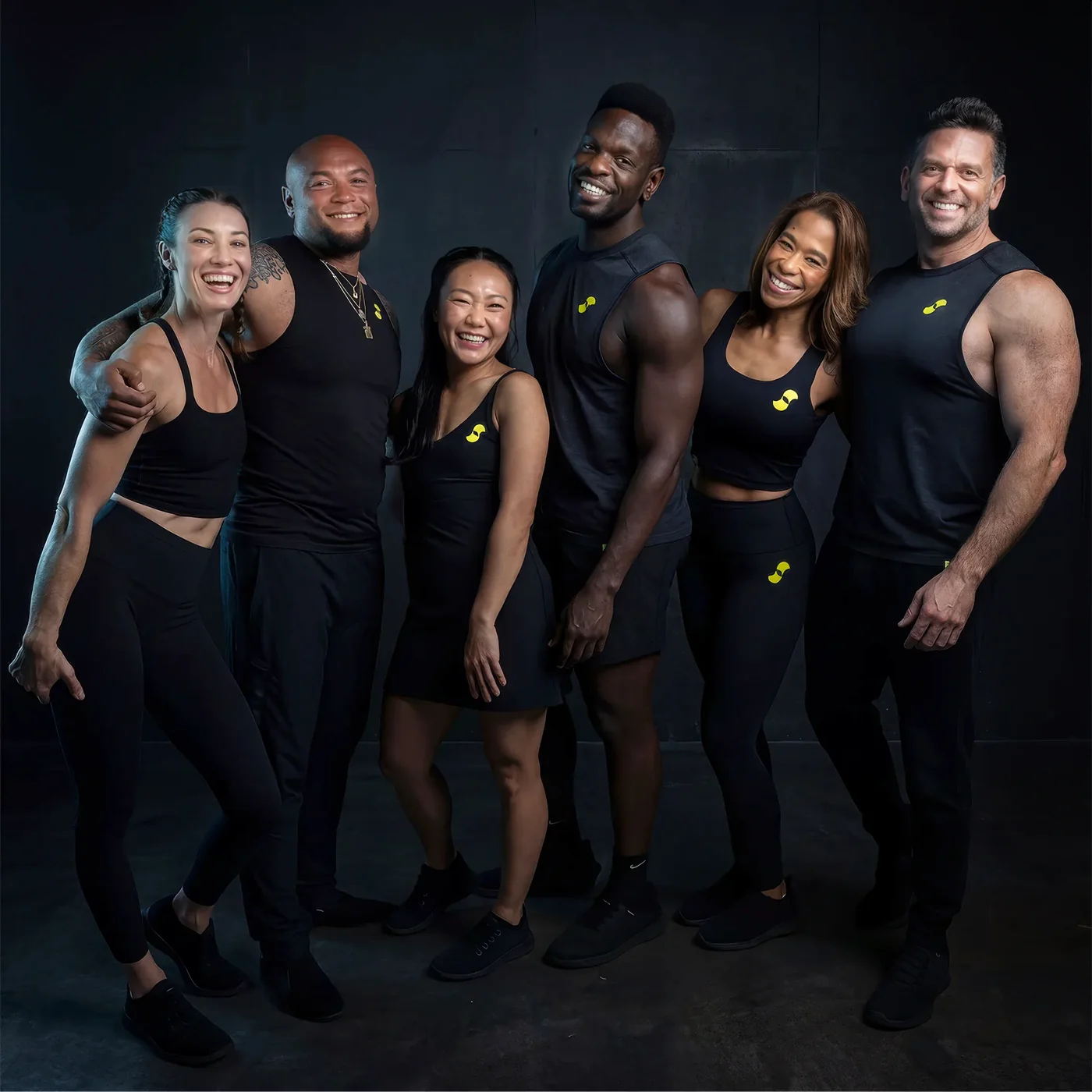
It is aimed at the people who did not quit, and it turns out there are enough of them to restart a company. When Meta stopped developing Supernatural in January and laid off the team, a petition went up the next day and collected more than 7,800 signatures asking Meta either to keep developing it or to let somebody else. Meta eventually chose somebody else. The original Within founders, Chris Milk and Aaron Koblin, took the product back, all six coaches came with them, and the whole thing is now an independent company called Supernatural Health. Leanne Pedante, one of those founding coaches and now the head of fitness, told UploadVR why it happened at all: "If the layoffs happened and the community quickly moved on, I don't think we would be doing what we're doing right now. We're only doing this because all of those people said we still need you."
What actually happens on December 3
Meta's version of Supernatural stops. That is 102 days from today, and every subscription attached to it ends on the same date. If your annual plan runs past December 3, the new company's FAQ says Meta will issue a prorated refund around then, and you do not have to do anything to get it. That is the clean part.
The rest is a migration, and migrations are where subscription services go to lose people.
That new app is a separate listing on the Horizon Store, targeted at fall 2026, available in the United States and Canada at launch. Your existing account does not travel. New account, new privacy policy, new company, and you do not even need to use the same email address you used before. Supernatural Health says it is working to bring forward your points, your streaks and your join date. It has also already confirmed the thing nobody wants to read: Favorites, the My List you have been curating for years, will not carry over.
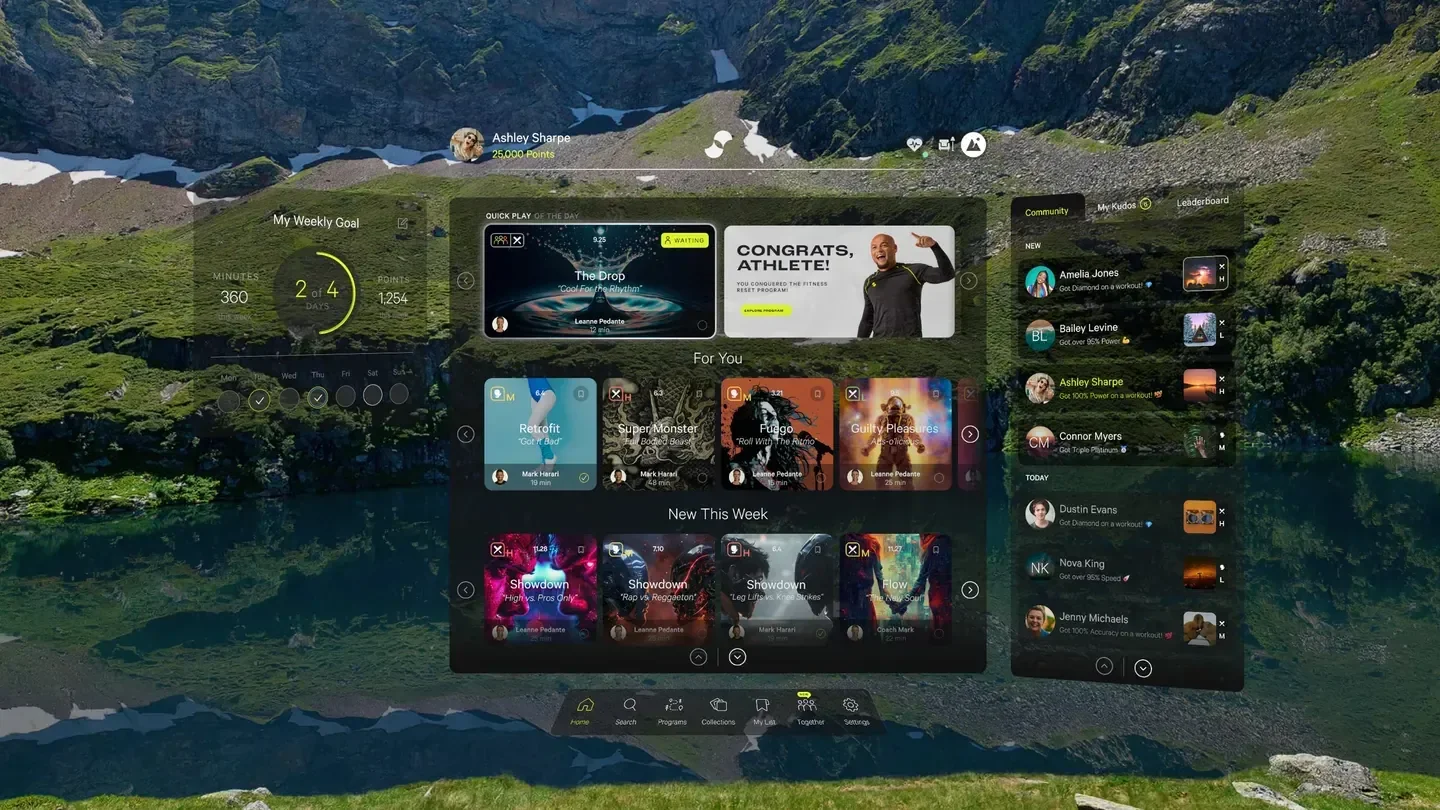
Look at that home screen for a second. Weekly goal, two of four days, 1,254 points, a community column of people you probably do not know by face but absolutely know by name. That is the actual product. The workouts are the reason you open it and the numbers are the reason you open it tomorrow.
Pedante has been noticeably careful about those numbers. Asked whether member history survives the move, she said "we are working on it" and then said "I can't promise anything." The easy move was to say yes and figure it out later. She did not take it, and after a year of watching companies promise things they had no mechanism to deliver, I would rather be told the truth about a streak than lied to about one.
Fifteen people
"At our biggest we were almost 200 people staff and now we're about 15," Pedante said.
Sit with that ratio. Fifteen people are rebuilding a subscription fitness service that a company worth trillions of dollars bought for $400 million, fought the Federal Trade Commission in court for the right to own, ran at a discount for three years, and then handed back, and they are doing it with a library of more than 3,000 workouts, six coaches who all came back, and the same environments those workouts were shot in. Pedante says the library returns intact. She also says the flat structure is the point: "There's no bureaucracy. We can move really fast."
Advertisement
Small teams shipping fast is a story VR tells itself constantly, and it is usually true right up until the moment the thing being rebuilt has a recurring content obligation attached. Supernatural is not a game you finish. It is a subscription that has to produce new workouts every week forever, and fifteen people producing weekly choreographed sessions with licensed music is a genuinely hard operational problem, not a scrappy underdog anecdote.
The music is the part I would worry about
Everything else on the list is a data problem, and data problems get solved eventually. Music is a rights problem.
The FAQ says the company is bringing forward "as much of the original library as licensing allows," and Pedante told Engadget the music negotiations are happening right now. In a rhythm-based fitness app the track is not decoration. A 25-minute Flow is choreographed to a specific song, beat by beat, and if that song does not clear, the workout built on top of it does not come back either. Not a reskin. Gone.
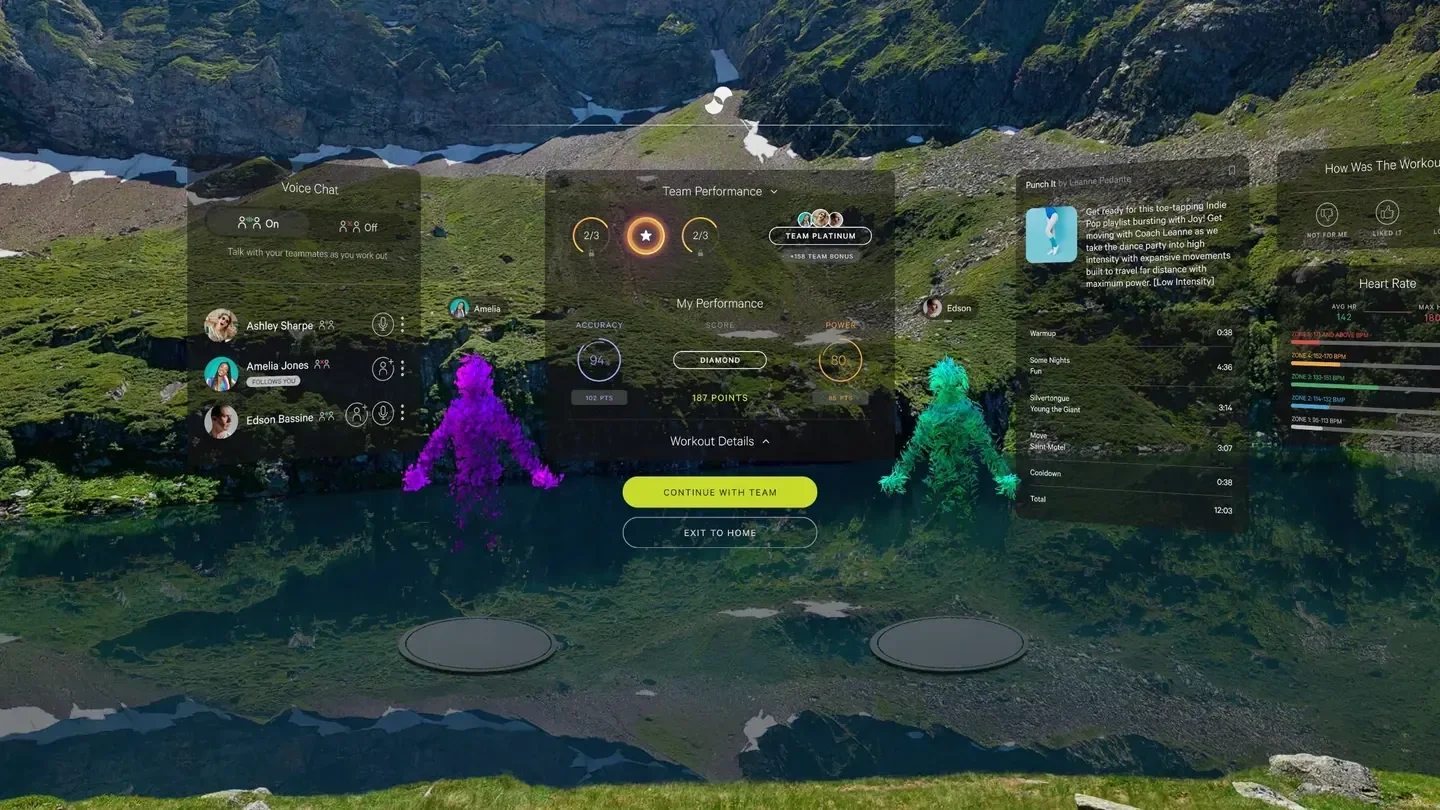
That screen lists the tracks by name and artist, which is exactly the level of specificity that makes relicensing expensive. I have no idea how much of the catalog clears. Neither, from the sound of it, does anyone at Supernatural Health, which is why they are being vague about it in public and specific about it in negotiations.
The price doubles, and I think it should
Meta charged $10 a month or $100 a year. The independent version goes back to the original $20 a month or $200 a year, with a Founding Member rate of $180 for the first year that requires no card and no payment today. Alex covered the economics of the spin-out in June, and the short version is that Meta's price was never a price. It was a subsidy attached to a headset strategy, and it lasted exactly as long as the strategy did.
Twenty dollars a month is real money. It is also roughly what a single boutique fitness class costs in Los Angeles, and unlike that class it does not require me to drive anywhere. Pedante says the founding sign-ups serve a second purpose beyond revenue: "It is helpful for us to have a sense of how many people are coming with us." Fifteen people planning a fall launch need a headcount more than they need $180.
If you are still in
Housekeeping, in the order it matters.
Register as a Founding Member at wearesupernatural.com if you intend to keep going, because the rate is only available before launch and it costs nothing to hold. Screenshot your stats before December 3, since the history question is genuinely unresolved and a photo of your own numbers is the one backup nobody can lose for you. And write down your My List, because that one is already confirmed gone and rebuilding it from memory in six months is going to be miserable.
I am not going to pretend I am buying back in. I tried the all-in version of this and it did not hold, and I have been honest about why: sweat, isolation, no leg day, a headset that is a worse gym than a gym. But the version of VR fitness that actually survived was never the one that replaced anything. Not the gym, not the class, not the run. It was the one people kept opening on the ordinary days they otherwise would have skipped entirely, in a bedroom with the furniture pushed against a wall, at whatever hour the rest of their life left them, for years, right up until a trillion-dollar company decided it was finished with them and they turned out not to be finished with it.
Fifteen of them are about to find out if that is a business. I would like it to be.
Advertisement