

Counter-Strike was a mod when I met it. Not a product, not a box. Somebody had built it on top of Half-Life and given it away, the same way Team Fortress Classic had turned up inside that game a couple of months earlier, and some of my fondest memories as a kid with a PC are of exactly that: a game somebody made out of another game. Later it was Skyrim and everything people bolted onto it.
GamingNovember 21, 2026
Counter-Strike Was a Mod, and VR's Mod Boom Is Not a Sign of Decay
By Evan Marcus
Co-Founder, VR.org
Advertisement
So I read Scott Hayden's opinion column on Road to VR with my arms crossed. It ran on November 20 under the headline "PC VR Modding Revolution: Savior to Some, Sign of Decay to Others," and it asks whether VR is "actually okay" when the biggest thing going in it lately is one more flat game converted for a headset.

Most of his case holds up
A lot of it is true. Meta spent years paying for the biggest native VR games, pulled a large share of that money this year, and left what Hayden calls "a Meta-sized hole in VR gaming." Budgets are smaller now. He is right, too, that a flat game keeps its menus and its inventory screens when you drag it into a headset, which is why his example, a modded Cyberpunk 2077, "kind of works, and kind of doesn't."
Then come two sentences I cannot follow him on. "PC VR modding probably isn't expanding the market," he writes, on the reasoning that anyone willing to set up a mod most likely owns a headset already. And near the end, right after saying VR gaming is not dying: "An overreliance on modding is a symptom of that." A symptom. The headline reaches for a harder word, decay, and hands it to unnamed others.
The top of Steam on a Saturday morning
I opened Steam's most played chart a little after 11 on Saturday morning, November 21, Pacific time. Counter-Strike 2 was first, with 1,060,332 people in it. Dota 2 was second with 752,901. PUBG sat fourth at 263,047, one place behind a free-to-play game that launched this month, after peaking at 770,200 earlier in the day.
Every one of those three traces back to a mod. Counter-Strike is the thing Minh Le and Jess Cliffe started releasing for Half-Life in 1999, which Valve bought and put on store shelves the following November. Dota was a fan-made map for a Blizzard strategy game for years before Valve acquired the rights in 2009. PUBG grew out of mods its designer, Brendan Greene, had built for other people's shooters. And Team Fortress Classic, the one I started with, exists because Valve hired the people behind a Quake mod and pointed them at Half-Life.
Twenty-seven years. That is how long PC players have been treating a mod as the first draft of something bigger, and in all that time I cannot think of one person who looked at Counter-Strike in 1999, watched it swallow the multiplayer of the game it was built inside, and concluded that Half-Life was in trouble.
Hayden's other worry is friction. The elbow grease, he argues, keeps regular consumers away. Maybe so. But Counter-Strike spread for four years before Steam existed to install anything for anybody.
Advertisement
The same thing, in a headset
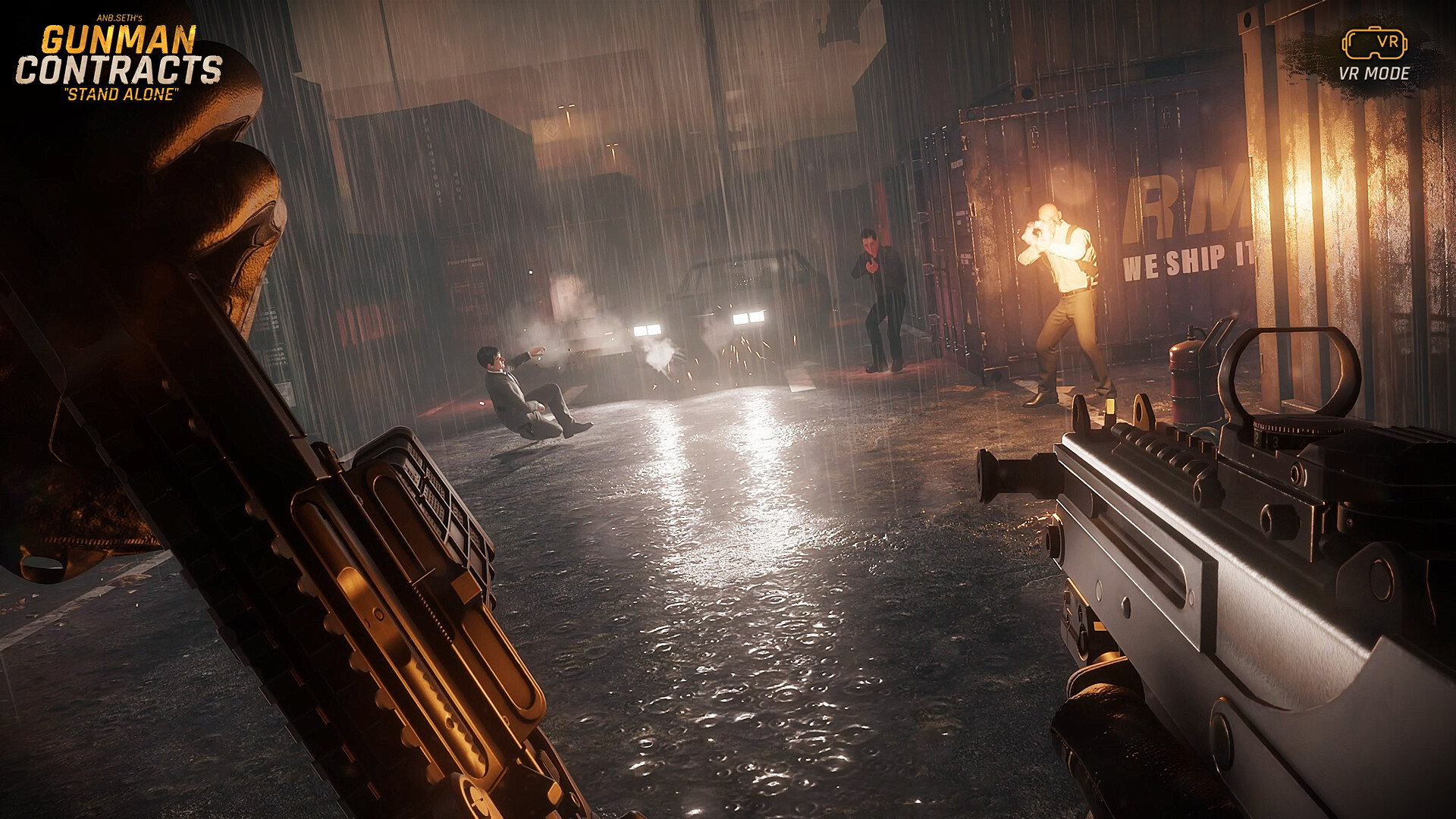
VR is already running the same play, and you can put names and prices on it. Gunman Contracts was two free chapters for Half-Life: Alyx on the Steam Workshop, made by one developer in Germany, and when I wrote about it in August the first chapter had 309,185 subscribers. In September he released Gunman Contracts - Stand Alone as a game of his own. It costs $29.99. Steam showed 1,792 reviews on it that same Saturday morning, 77% of them positive.
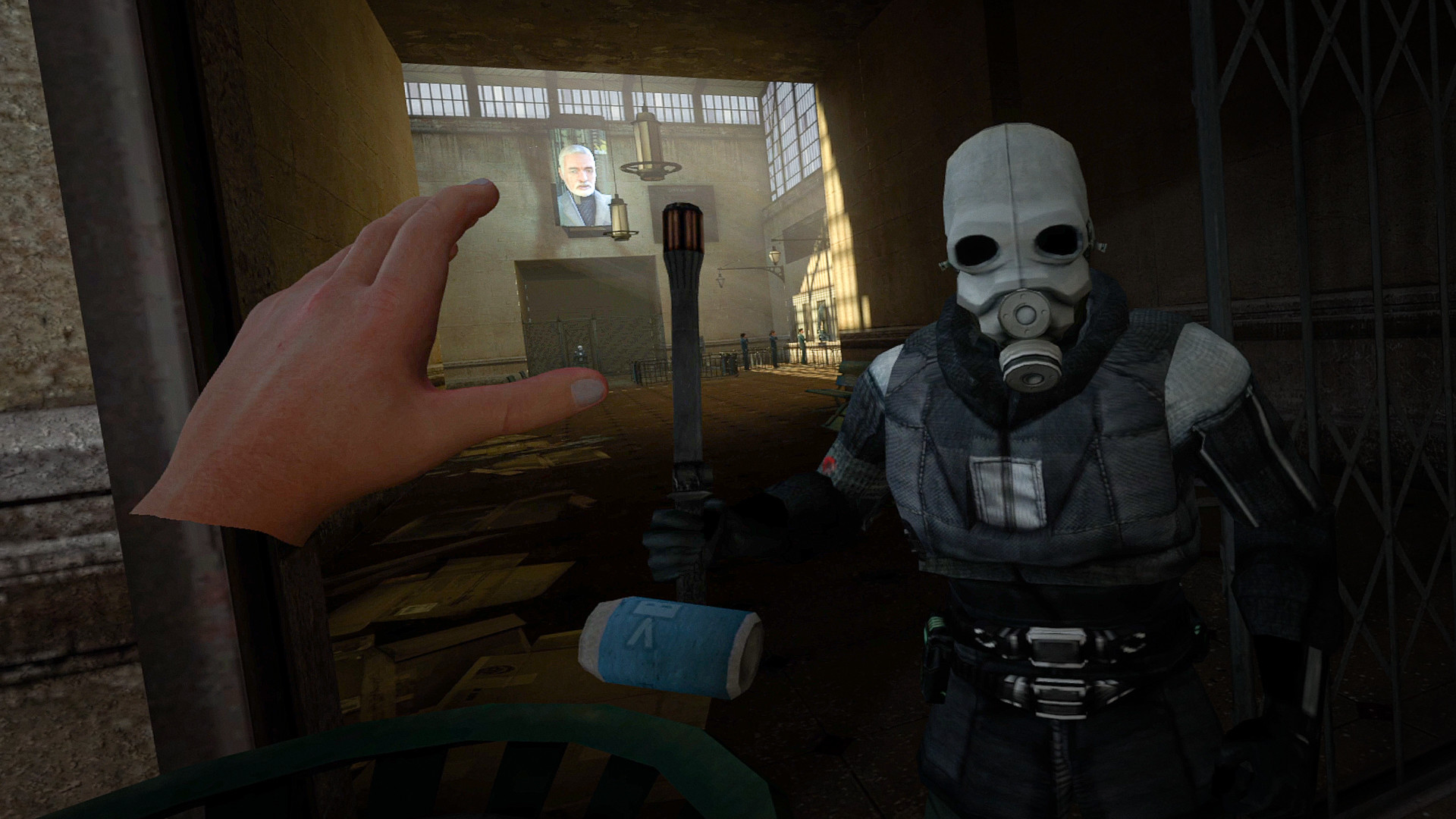
Half-Life 2: VR Mod has been a free download on Steam since September 2022 for anyone who owns Half-Life 2, and 97% of its 5,583 English-language reviews are positive. In August it cleared Valve's Verified bar for the Steam Frame, and the team got there by shipping eye-tracked foveated rendering, unpaid, to hit a frame time target. (Our guide has the install steps.) The publisher on its store page is Flat2VR Studios, which started life as a modding community and in August announced an official System Shock VR, after that same scene had produced an unofficial one.
Mods are also where a good share of the design thinking is getting done right now. The original Dead Space drew its health bar down the back of Isaac's suit, which is no help once the suit is on you, so Talemann's VR mod moves it to your forearm. D2R VR, the Diablo II mod we keep a guide for, will lay the entire game on your floor as a diorama you can walk around. Nobody at EA or Blizzard paid for either idea.
Hayden says most flat games make for poor VR. Fair. It was every bit as true of the mods people were passing around in 1999, most of which were bad, a few of which were unplayable, and two of which you can still name without looking anything up.
What a server log can tell you
I can measure one corner of this. In the 30 days ending November 20, readers arrived at VR.org from Google 166,467 times. That figure counts every page a person landed on with a Google address as the referrer, crawlers filtered out. About 29,700 of those arrivals, a little under 18%, were on a page about a mod, an emulator or a fan port. Our Diablo II VR guide took 6,930 by itself. Nina Castillo's Titanfall 2 how-to and the guide that grew out of it took 8,093 between them. Our ranking of the best VR games ever made got 2,997.
I understand the Diablo number. That game ate a good part of my 2000.
What I cannot tell you is whether any of those people own a headset. A server log records which page somebody asked for and where they came from. It has no idea what is sitting on their desk. So Hayden may be right that the mod audience is the audience VR already had, and I have no number that proves him wrong. I only know that more than one in six of the strangers Google sends here land on a page answering some version of "can I play this game I already love in VR," and I have a hard time filing that under decline.
Where I would worry instead
None of this replaces the money. Hayden writes that he is mourning "the compelling native VR content," and so am I. My colleague Sam Whitfield reported on November 12 that Meta still counted more than $120 million in funding for third-party games in development as of October 1. That is real money, and by Hayden's account it buys smaller games than it used to.
The thing that would actually hurt is a publisher's legal department. In July 2022 Take-Two had a DMCA notice sent over Luke Ross's VR mods for Rockstar and 2K games, and Road to VR reported at the time that he pulled them to comply. (The longer history is on our GTA 6 VR page.) Valve did the reverse with a fan mod of its own 2004 game. It reviewed the thing and gave it a badge.
Publishers get to choose which of those to be. The mods are here either way, and most of them cost nothing. Our VR mods page tracks 16 of them, with what each one needs you to own and the steps to install it, and the PCVR Central catalog listed 898 when Nina went through it in August.
Somewhere in that pile is a rough build, with a README full of warnings, that somebody will be charging $30 for in a few years. Good. From where I sit this looks a lot less like decay than like 1999, and I liked 1999.
Advertisement