
The Muse Supplemental Terms of Service, last updated September 8, are more direct about the agent's spending than anything Meta said on stage at Connect. A user who lets Muse handle payments agrees that they "bear all risk of financial loss arising from such actions" and are "solely responsible for setting appropriate limits and safeguards (including transaction limits and category restrictions)." The terms also warn that "certain transactions may be irreversible by their nature." Meta's aggregate liability, including for claims arising from Muse "executing unintended transactions," is capped at the greater of $250 or whatever the user paid Meta in the preceding twelve months. Those are the terms behind the version of Muse that Meta announced for its AI glasses on September 23, and nothing Meta has published suggests the glasses will carry different ones.
Who Pays When Muse Shops From Your Meta Glasses?
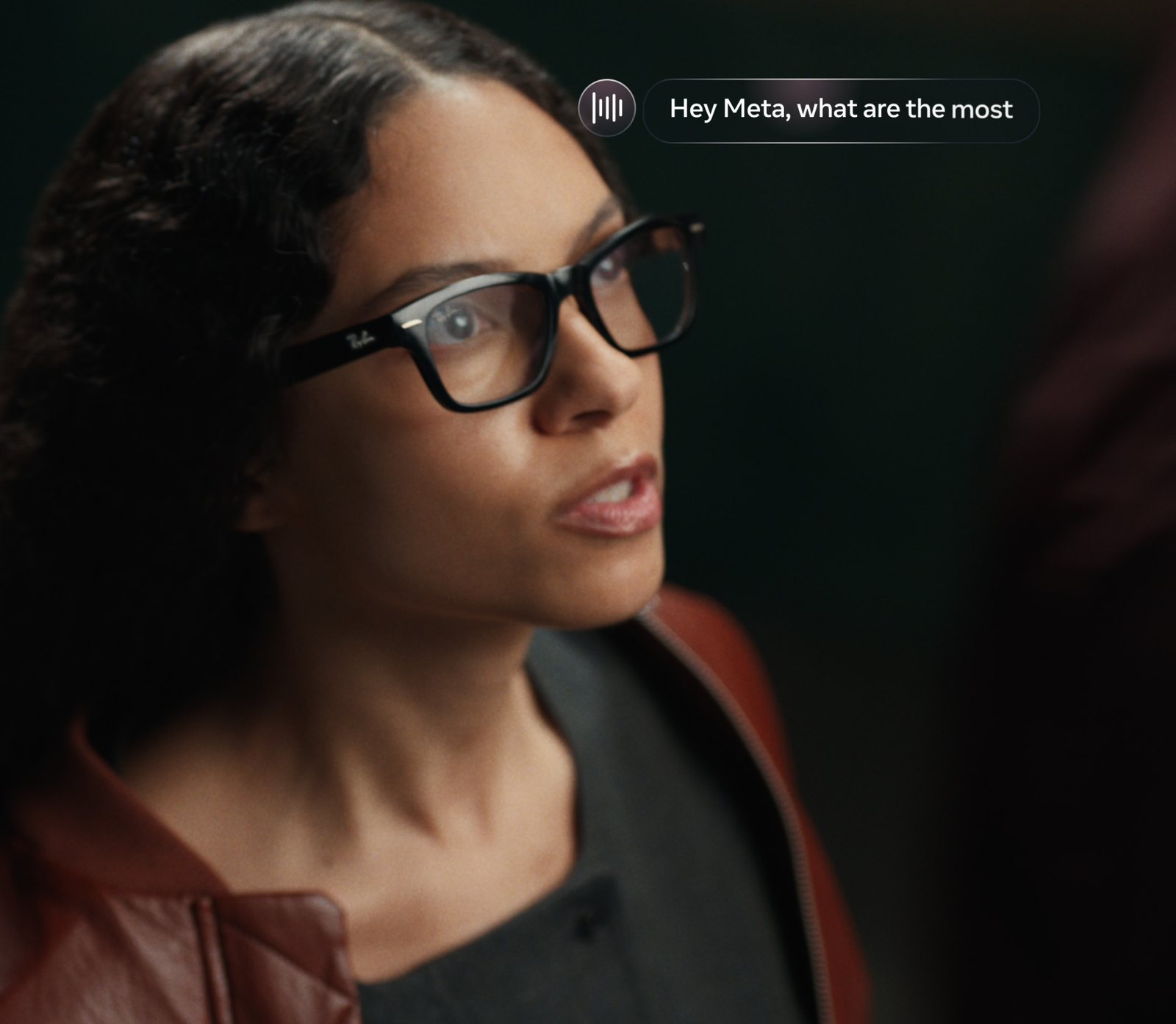
Commerce is part of the pitch from the start. Meta's post on bringing Muse to AI glasses says wearers "can ask Muse to guide your personalized workout, log meals, get nutrition insights on demand, and even help buy products you see." It also lists booking appointments, pricing flights and tracking down a missing part "while you're driving, cooking, or mid-run." The Connect roundup adds that Muse "can also act on what you're looking at," citing a product on a shelf and a list of school supplies. Meta has not said which models will get the agent. The keynote's fitness segment showed Muse on Oakley Meta frames. The camera-free Ray-Ban Meta Audio, priced at $349 and shipping October 13, has no camera with which to see that shelf, whatever else it receives. Alex Reeves covered the reporting on that model, then codenamed Luna, a week before Connect.
Meta's timing depends on where one reads it. The roundup and the September 24 newsroom recap both say "in the coming months." In the keynote, Mark Zuckerberg said that "in the coming weeks" Meta would start upgrading the AI on its glasses, so a wearer could say "Hey, Agrippa," the name of his own Muse, "or whatever your Muse's name is." An upgrade that starts in weeks can finish in months, so the two are not strictly in conflict. Anyone planning around the feature should still treat the written date as the operative one. The dedicated glasses post, as Jordan Kuo noted on Connect day, gives no date at all.
How a purchase is paid for
The payment path is better documented than the rollout. Stripe's September 8 announcement describes two routes. At the more than 1 million businesses that accept Link, Stripe's stored-payment wallet, Muse checks out with the method the user has saved there. Everywhere else, "Link issues Muse a single-use virtual card scoped to the approved purchase," and the user approves the total before it goes through. Meta's account of Muse's safety design, written by Tarek Sheasha of Meta Superintelligence Labs and published the same day, goes further. The credential "is tied to that particular merchant, a particular dollar amount, and only valid for a limited period of time," so a card number stolen through prompt injection would be of little use. The post also describes a second route, for sites where the user's card is already on file, in which Muse detects the checkout page and asks for approval "with the exact details of the purchase every time."
Consumer protection in this arrangement belongs to Link, not Meta. Meta's launch post calls Muse "the first AI agent covered by Link's purchase protections," which Link provides through XCover. Link lists the limits at up to $500 per claim for damage, loss and theft, $250 for no-fee returns, $500 for price protection and $1,000 under its refund guarantee. That coverage attaches to eligible purchases made with Link, which gives a Muse user a practical reason to pay through the wallet rather than with a card already saved at a merchant.
The payment options have widened since launch. On September 8, Meta called Shop Pay "coming soon," along with 1Password support for stored logins. At Connect, Alexandr Wang told the audience that Muse could "use Link and now Shop Pay to buy almost anything on the internet," and that Meta was "adding more support for payments with PayPal." The roundup named new retail connectors for Walmart, Best Buy, American Eagle Outfitters, DICK'S Sporting Goods, Fanatics, Gap, Michael Kors, Sephora, Ulta and Wayfair.
Where Meta expects to earn
Zuckerberg described the model plainly: "We believe that Muse will make you money, and we are standing behind this by making Muse free for a huge number of tokens with the expectation that over time, we will profit by taking a small fee from transactions." He did not say who pays that fee, how large it is or when it begins. The one merchant-facing document this publication could find points the other way for now. Shopify's help page on selling through Meta, which covers checkout "on Meta surfaces, including Muse when available," states that "there are no fees associated with selling in Meta's direct checkout" beyond standard processing fees. The same page says direct checkout "is active by default" for eligible stores selling in the United States, Canada or Mexico. Until Meta publishes terms, the fee is an intention rather than a line item, and whether it lands on the merchant is the figure most retailers will want before deciding how far to commit.
One retailer has already made its decision. GeekWire reported in the days before Connect that Muse users shopping on Amazon were seeing a popup reading "Continued access by an unauthorized AI agent violates Amazon's Conditions of Use, to which our customers have agreed." An Amazon spokesperson said the company had "requested that Meta remove Amazon from the experience." The largest online retailer in the United States has opted out before the glasses version has shipped.
The approval step on a pair of glasses
How approval works on the glasses is the most consequential open question. Stripe says users approve the total "directly in the chat interface," and Meta's safety post promises the exact details of each purchase before it completes. On a phone, that is a screen with a number on it. Most of Meta's AI glasses have no display, and Meta has not described what confirming a purchase looks like when the only interface is a voice in the wearer's ear. Link's own agent page shows spend requests arriving as notifications in its app, which suggests the confirmation could still land on the phone. Meta Ray-Ban Display has a screen, but Meta has not said whether Display owners will approve purchases on it. The same Link page lists controls over "when your agent can spend with and without your approval" as coming soon.
For merchants, Connect leaves a clear choice with one term unpriced. Shopify stores are enrolled in Meta's direct checkout by default, Amazon has shown that a retailer can refuse, and the size of Meta's fee is unknown. For consumers the calculus is narrower. The purchase protections come from Stripe's Link, the liability limit comes from Meta's terms, and the spending limits, by those same terms, are the user's to set.