Software

Platforms, apps, developer tools, and the software ecosystem powering virtual and augmented reality. From social VR platforms to creative tools and enterprise applications, we cover the software layer that brings hardware to life. SDK updates, platform policy changes, and new app launches all land here.

Most Popular VR Apps & Utilities
Full best VR apps guide
Virtual DesktopEditor's Pick

Virtual Desktop

$19.99

The single most important app for any Quest owner with a gaming PC. Streams your entire desktop and SteamVR library into the headset wirelessly, with remarkably low latency.

VRChat

VRChat

Free

The largest social VR platform. Build a custom avatar and explore thousands of community-built worlds across Quest, PC VR, and now mobile. Free to play.
Immersed

Immersed

Free

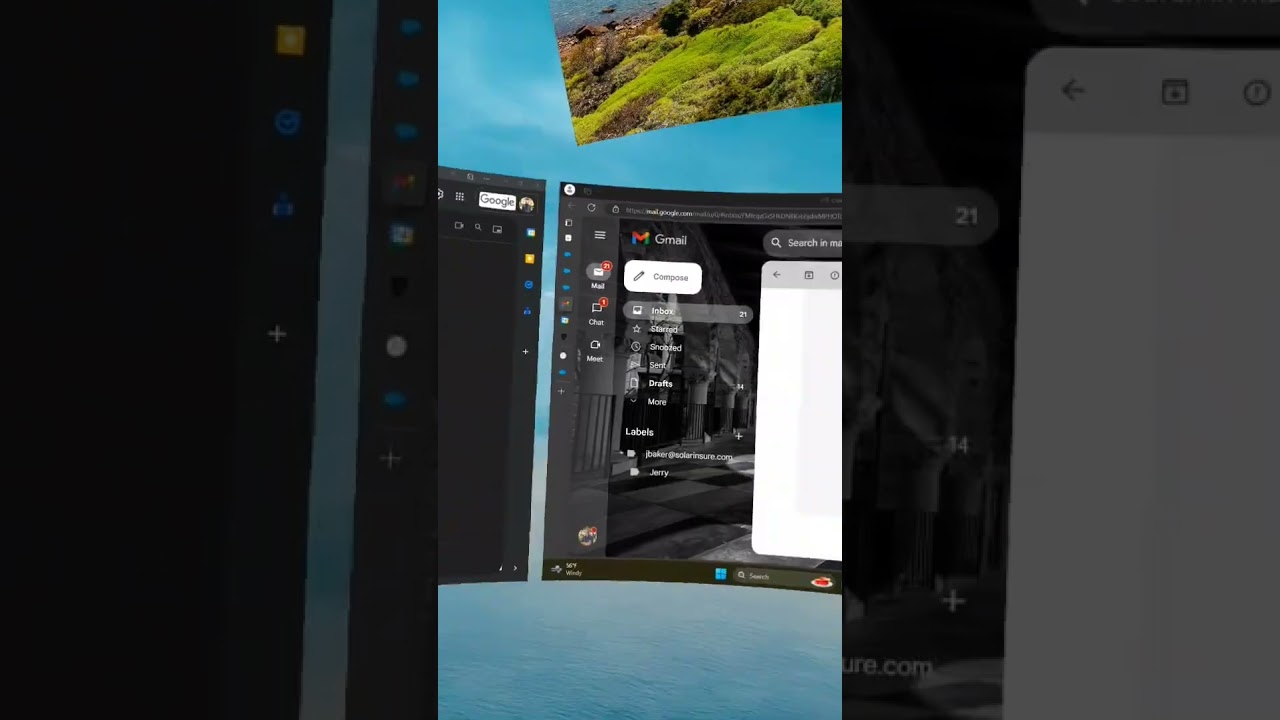
Turns your headset into a multi-monitor workstation with up to five virtual screens and passthrough so you can still see your keyboard. A remote-work favorite, with a free tier plus paid plans.

VR.org Originals
All originals →
VR.org OriginalsoftwareBy Nina Castillo
Apple Spent Two Years Saying Vision Pro Didn't Need Controllers. It Just Published 74 Pages on How to Build Them.
Apple has published a detailed technical specification for building third-party motion controllers for Vision Pro, down to the exact wavelength of the tracking LEDs. For a headset that launched insisting hands and eyes were enough, that is a meaningful reversal.
Read article →
VR.org OriginalxrBy Evan Marcus
This Week in VR: The Smart Glasses Privacy Reckoning, Apple Retreats Again, and VR Gaming Quietly Wins
The whole industry spent the week arguing about cameras on your face, Apple quietly killed the display for a cheaper Vision Pro, and underneath the noise VR gaming and open source had one of their best weeks of the year. Here is what mattered.
Read article →
VR.org OriginalxrBy Jordan Kuo
A Spotify Teardown Just Showed Us How Apps Will Actually Work on Android XR Glasses.
Code found inside a recent Spotify build reveals a deep Gemini integration built specifically for Android XR smart glasses, including music chosen from what the camera sees. The features are interesting. The architecture underneath them is the real story.
Read article →
VR.org OriginalgamingBy Alex Reeves
Proton Is Valve's Real Competitive Moat. The Clever Part Is That Valve Gave It Away.
Every company launching new gaming hardware faces the same brutal problem: an empty library on day one. Valve solved it years ago with an open-source compatibility layer, and that decision is quietly the most durable competitive advantage in the business.
Read article →
VR.org OriginalsoftwareBy Nina Castillo
Godot 4.7 Quietly Became the Most Complete Open-Source XR Engine Yet. Steam Frame and Android XR Are Now First-Class Targets.
Godot 4.7 ships production-ready support for Valve's Steam Frame and Android XR, subsampled foveated rendering that finally saves memory, simplified action maps, and a stable Android build environment. The free engine's XR story just got hard to ignore.
Read article →
VR.org OriginalxrBy Sam Whitfield
This Week in VR: AURA Undercuts Snap, Discord Lands on Quest, and Apple Loses Its Spatial Hardware Chief
The first week of the year's second half brought a cheaper path into AR glasses, a long-awaited app finally arriving on Quest, another Apple spatial departure, and a controversial new subscription. Here is what mattered.
Read article →
VR.org OriginalsoftwareBy Nina Castillo
Discord Just Landed on Quest for Real. It Quietly Fixes VR's Most Annoying Social Problem.
After years of clunky workarounds, Discord released an official native app for Meta Quest today, free on the Horizon Store. The headline feature is not voice or video. It is the ability to pin a Discord call in your playspace while you play anything else.
Read article →
VR.org OriginalsoftwareBy Nina Castillo
A-Frame 1.8.0 Ships, and the Independent WebXR Framework Just Quietly Grew Up
A-Frame 1.8.0 caught up to Three.js r184, retired the Oculus branding, dropped the last of WebVR, and quietly fixed a bug that was blocking WebXR Layers requests. It is a boring changelog, and that is exactly why it matters.
Read article →
Live Feed