
Since April I have written the same article seven times.
GamingAugust 4, 2026
Six Years, 41 Courses, No Battle Pass: Walkabout Mini Golf Is the Best-Run Game in VR
By Evan Marcus
Co-Founder, VR.org
Advertisement
Rec Room shutting down. Survios getting wiped out. Horizon Worlds walking out of VR for good in June, after Meta had already tried it once and backed off. A Township Tale going dark in the same week three other studios did. Hyper Dash putting a date on its own ending in November. Every one of those pieces sent me looking for the same answer, which is what happens to the people who are still logged in when somebody turns the lights off, and every one of them arrived at the same place. Not much. Sorry.
Then last week a studio in Austin announced a mini golf course.
Gloop Lair lands August 13. The pitch is a once-peaceful 90s metropolis whose entire water supply has been turned into hazardous villainous gloop, a sentence I enjoyed typing considerably more than I expected to. It is the fifth entry in the Evil Lairs series, following Laser Lair in 2023, Ice Lair and 8-Bit Lair in 2024, and Crystal Lair last year. It is the fourth of six courses Mighty Coconut has planned for 2026. And by the running count it is course number 41 since Walkabout Mini Golf launched on Quest on September 24, 2020.
Forty-one courses. Put that number next to my obituary folder and tell me which one is the anomaly here.

Run the arithmetic yourself
Mighty Coconut published a five-year retrospective last September, and the numbers in it are faintly ridiculous for a game about knocking a ball into a cup. 23,004,672 hours played. 43,365,815 sessions. Two billion putts. 1,332 holes across the catalog with more than 650 balls hidden inside them, and over 40 commemorative putters to collect on the way. Players in more than 40 countries. A slot as the 20th best-selling title in the history of the Meta Quest store.
The one I keep circling back to is this: more than 55 percent of VR sessions are multiplayer. Think about how odd that is in a medium where the overwhelming majority of what gets funded is one person alone in a room holding a gun, where every studio deck since 2016 has promised social presence as the killer feature and the thing that would finally make VR stick, and where the game that actually delivered it at scale turned out to be a low-poly mini golf sim from a studio most people outside VR have never heard of. Steam has it at 97 percent positive across more than 2,700 reviews. The Quest store has it past 13,000.
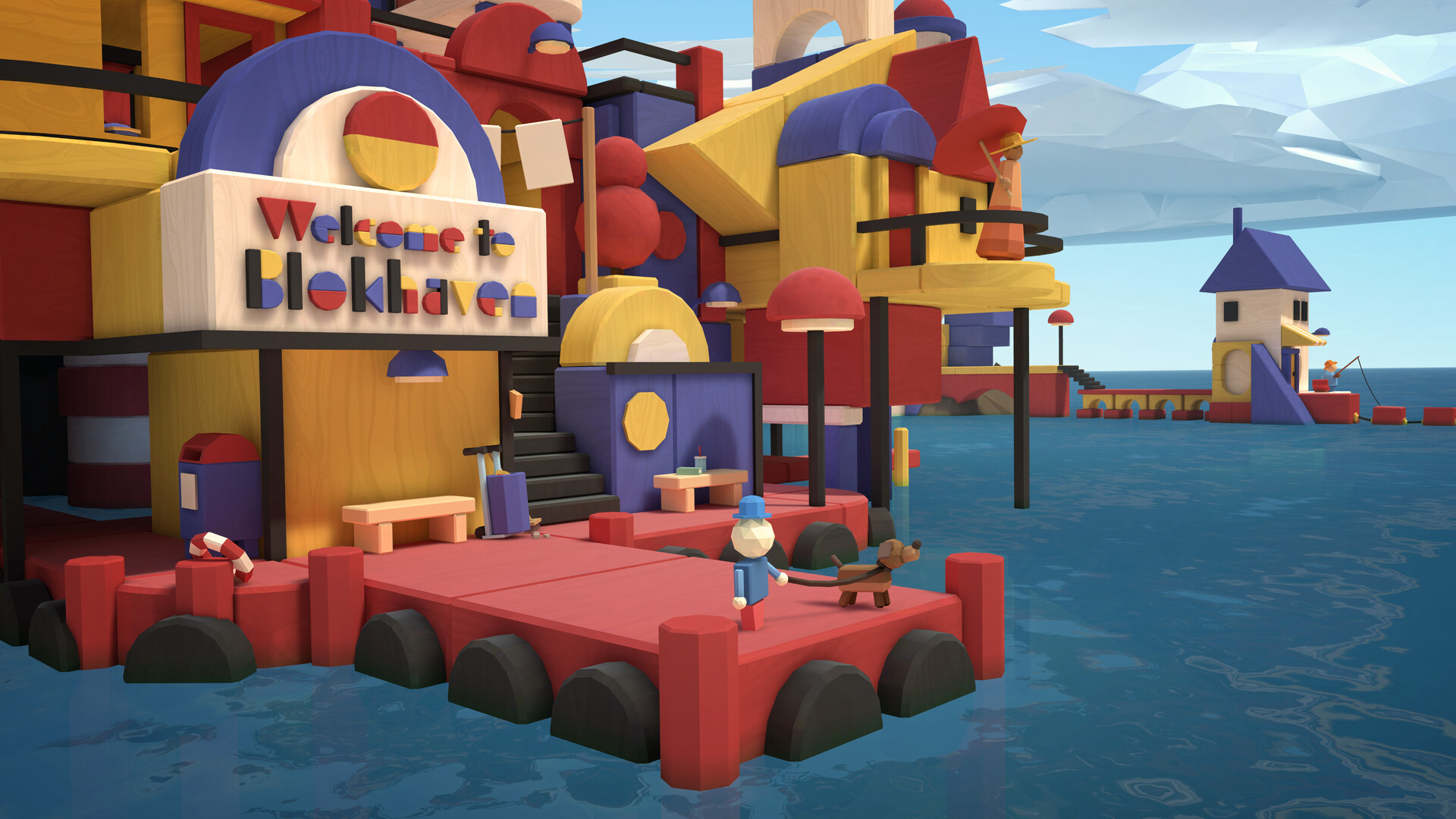
That retrospective counted 37 courses. Tiki a Coco arrived in January. Hollywood in March. Blokhaven on May 7. Gloop Lair next Thursday takes it to 41, and none of those gaps ran longer than a couple of months, and not once in six years has anyone at that studio published a post about the roadmap being reevaluated.
It also runs on Quest, SteamVR, PSVR2, Pico, Samsung's Galaxy XR, and as a flatscreen Pocket Edition on iOS. It is in Meta's Horizon+ catalog and it has been through PS Plus. When a platform shows up, Walkabout shows up on it.
They raised the price and gave content away in the same breath
Here is the decision that convinced me this is the best-managed game in VR, and it is not a golf course at all.
On May 1, 2025, the base price of Walkabout Mini Golf went from $14.99 to $24.99. Ten dollars more for a game that had already been out nearly five years. In that same announcement, six courses people had been buying separately, Sweetopia and Laser Lair and Shangri-La and Upside Town and 20,000 Leagues Under the Sea and Alfheim, were folded into the base game. Everyone who already owned it got all six free. Quest+ and PS Plus subscribers got them too.
The stated reason was that "the amount of DLC has started to dwarf the main content."
Sit with that for a second, because every incentive in modern game publishing points the other way: a studio sitting on three dozen paid add-ons and a five-year-old base game is supposed to rebundle all of it as a Deluxe Edition at $49.99, grandfather nobody in, and quietly let the confusion at checkout work in its favor. Mighty Coconut did the opposite. It concluded its own store page had become unreadable to a newcomer and fixed that by making the thing you buy first substantially bigger. New customers pay more and get more. Existing customers pay nothing and get more. No expiring window, no premium currency, no deluxe tier, no 48-hour countdown engineered to panic you into a purchase. A price change and a gift, written out in plain English on a blog post nobody made them publish.
Advertisement
I cannot name another VR game that has done anything close to it.
What six years of buying in actually costs
Courses ran $3.99 for most of the game's life. The recent ones, Blokhaven and Hollywood among them, are $4.99. Buy the base game at launch and then every single course since, and you are somewhere around a hundred and twenty dollars deep after six years.
A hundred and twenty dollars. A mid-tier live service game will take that off you in four months of battle passes, and at the end you own a weapon skin in something that may not have servers in 2028.
Everything I have bought in Walkabout is still there. Courses I paid for in 2021 load today on headsets that did not exist in 2021. That sounds like a low bar. Given what the last four months looked like, it is not a low bar, it is close to the only bar that matters.
The part where I argue against myself
Mini golf is an easier problem than social VR and pretending otherwise would be dishonest.
Rec Room and Horizon Worlds were trying to be platforms. They carried user-generated content, moderation at scale, creator payouts, and the standing cost of keeping thousands of concurrent strangers in shared space without it turning ugly. Walkabout carries four friends around a golf course. The technical risk is not comparable and the operating cost is not comparable, so "just do what Mighty Coconut does" is not advice a social VR studio can actually act on.
But look at what actually killed the games I have been eulogizing. Hyper Dash had servers and a shooter's overhead, and what finished it was a business built on a growth curve that never showed up. Rec Room had taken money at a valuation that assumed a VR audience which does not exist yet, and once that number is on paper every decision made afterward serves a user count nobody can actually deliver, which is how a game with real players still in it ends up shut down for reasons those players never saw and would not have recognized as fatal. The game was rarely the problem. The size of the promise the game had been asked to keep was the problem.
Walkabout never made that promise. It said it would sell you a golf course for four dollars every couple of months, and then it went and did that twenty-six times.
Next Thursday
I will buy Gloop Lair on the 13th, the same way I have bought most of the others, without once stopping to wonder whether the game will still be running next year. That question has never come up. Mighty Coconut has never given anybody a reason to raise it.
Six years in, I own more Walkabout courses than I own PSVR2 games, which says something unflattering about my PSVR2 library and something genuinely remarkable about a studio that has kept me buying four dollar golf courses across three headsets, two platform shifts, and the whole arc of VR going from the next computing platform to a line item Meta apologizes for on earnings calls. It has never been uninstalled from any headset I have owned. When somebody asks me what to put a first-timer in, I stopped saying Beat Saber a while ago. I hand them a putter and let the room do the work.
Most of this industry spent 2026 shutting things down and calling it discipline. An independent studio in Texas spent it shipping course number 41.
Correction, September 29, 2026: This article said nobody at Mighty Coconut had published a post about the roadmap being reevaluated in six years, and that none of the gaps between this year's courses ran longer than a couple of months. Both were wrong. Lucas Martell's January 23, 2026 update, published alongside a cut of about 25 percent of the studio's staff, raised new course prices to $4.99, stopped new courses on the iOS Pocket Edition, scaled back work on extra activities like Chess and Slingshots, and cut the 2026 plan from seven courses to six with a longer summer break. Blokhaven (May 7) to Gloop Lair (August 13) was 98 days. The article also listed the iOS Pocket Edition as a current platform; Mighty Coconut ended its crossplay with VR and removed it from the App Store on May 7, 2026. On September 28 the studio announced a second round of layoffs, covered here.
Advertisement