
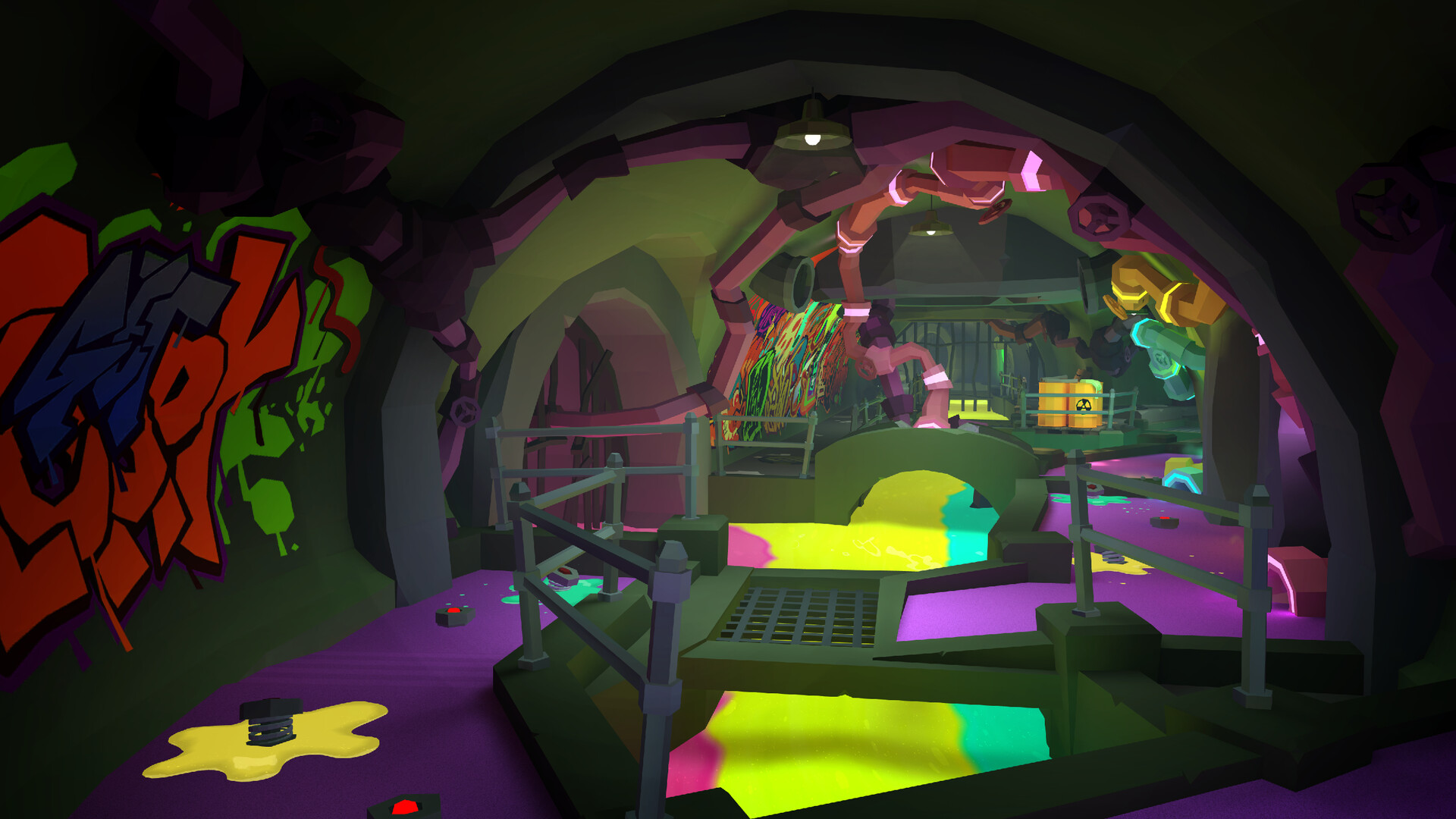
Gloop Lair is the newest course in Walkabout Mini Golf (also on Steam), number 41, a sewer and a chemical plant flooded with neon slime, and I have played it. Most of the other forty too. Hundreds of hours. On Monday the studio that builds them said it is getting smaller again.
GamingSeptember 29, 2026
Mighty Coconut Is Cutting 10 More Jobs as New Walkabout Mini Golf Players Thin Out
By Evan Marcus
Co-Founder, VR.org
Advertisement
Lucas Martell, who created Walkabout, posted the news on Mighty Coconut's blog and on LinkedIn on September 28. Ten people will leave "over the next several months." It is the studio's second round of cuts this year. In January it let go of about a quarter of its staff, which Mighty Coconut told UploadVR came to roughly eight jobs, with 27 people staying on full time. If that headcount held through the summer, this round takes more than a third of the team that survived the first one.
I run a small studio myself. I know roughly what a post like that costs to write, and this one is more candid than most. "I failed to anticipate just how rapidly and deeply this trajectory would continue," Martell wrote. Then the sentence that explains everything else in it: "without a steady stream of new players coming into VR and Walkabout, the scale at which we've been operating is no longer sustainable." The post closes with a reverse-recruiting list for the people leaving, pitched at anyone hiring in games. If that is you, start there.
In August I called Walkabout the best-run game in VR. That piece left January out entirely, and it said the studio had never published a post rethinking its roadmap, when Martell's January 23 update cut the year from seven courses to six, stopped new courses on iPhone and scaled back extras like Chess and Slingshots. I got that wrong, and the August article now carries a correction at the bottom. Monday's statement is about the one thing no amount of good management fixes.
1,038 reviews, then 112
Mighty Coconut can see how many new players arrive each month. I can't, and neither can you. The closest public number I know of is Steam's review history, which the store charts month by month for every game it sells. Walkabout has been on Steam since July 2021. By Steam's own chart, here is how many reviews it collected each year.
1,038 in 2022. 647 in 2023. 363 in 2024. 265 last year. 112 so far this year.
That works out to about 86 new reviews a month in 2022 and about 12 a month in 2026, a drop of roughly 85 percent.
The numbers need caveats, so here they are. Steam is not Walkabout's home; the game launched on Quest in September 2020, most of its players are there, and Meta publishes nothing comparable. Reviews are not sales either. But people mostly review a game in the first weeks after they buy it, which makes the rate of new reviews a fair stand-in for the rate of new owners. The base price also went from $14.99 to $24.99 in May 2025, and that cannot have helped, though most of the slide came before it. What never slid is the score: 3,291 of the game's 3,364 Steam reviews are positive. The people who find Walkabout still love it. Fewer of them are finding it.
More from each player
UploadVR's Mike Johnson made a point in his report on the cuts that I think is right: Walkabout has spent this year earning more from the players it already has. You can read it straight off the store. Tiki à Coco in January was the last course at $3.99, and every course since Hollywood in March has cost $4.99. June brought the Homestar Runner Distraction Pack for $4.99, an add-on outside the course schedule. On the same day as Gloop Lair came the Fur N' Feathers Cosmetic Pack, $2.99 for a set of animal heads to wear on your avatar.
Advertisement
None of that bothers me. Five dollars for a course I will replay for years is still the best deal on my headset. The trouble is that you can only raise what each player spends so far, and Martell's statement reads like somebody who has already run that math and found the end of it.

The next front door has no controllers in it
Martell names three things that have been "diverted elsewhere": funding, press attention and hardware. Hardware is the one I keep turning over. Meta's next headset is Meta VR Glasses, $1,299.99 next spring, about 100 grams on your face, with no controllers in the box. Meta says more than 75 games at launch will play with hand gestures alone, and its developer recap says what happens to the rest of the catalog: "Customers who only use their hands see hand-tracked titles first." The same post says Meta expects "most customers not to use" controllers at all. Nina walked through the store change last week.
Walkabout's page on the Meta store lists one supported input. Controllers. A game built for hand tracking says "Hands, Controllers" in the same spot. So the device Meta is building to bring in its next wave of people will, for most of those people, show them other games before it shows them this one.
Honestly? I would love a hand-tracked putter. Nothing in my hands but the swing, on courses I have already sunk hundreds of hours into with a controller, is exactly the kind of thing that would get me to replay all 41 of them. It is also the most direct fix on the table for the problem Martell describes, because a hands mode is what moves a game toward the front of the store for people who buy VR Glasses without controllers. It is not a cheap fix. Beat Saber, which Meta owns, is getting its own hand-tracked mode next year, and a studio that just announced it is getting smaller has less room to build one. So the timing is brutal: the studio says new players are the whole problem, and the headset aimed at new players sorts its game toward the back.
The fall's other new headset points the other way. Every Steam Frame kit ships with controllers, and Walkabout is on Valve's Great on Frame list. Valve has not said how many Frames it has sold, though, and people are still working through the waitlist.
Two new games, one of them flat
Martell's plan for new revenue is new games. Walkabout Dungeon Golfer, the roguelike spinoff aimed at summer 2027, is being built for headsets and flat screens with crossplay between them. Grass, a lawn care game from Cosmic Dog that Mighty Coconut is publishing, is flat only. Resolution made a similar move with Demeo's D&D game on Xbox a week ago. The VR version stays, and the studio goes looking for players wherever they actually are.
For now the course calendar holds. Escape from Planet Xylodon, course 42 and the fifth of the year, lands October 8. This year's courses have arrived on an eight-week beat: January 15, March 12, May 7, then the long summer break the January post warned about, then August 13 and October 8. Mighty Coconut staff told UploadVR the schedule was set through 2027 before the cuts. Martell says courses "might be a little less often" from here.
I will be on Planet Xylodon the week it opens. And the next time somebody asks me what to try first in a headset, the answer is still a putter. I just need them to show up with something to swing it with.
Advertisement