Impact Reality, the company behind Flat2VR Studios and the publishing label Impact Inked, has opened a reservation page on the equity crowdfunding platform StartEngine. The company is looking to extend a private round that its own campaign material puts at $5 million already raised, from partners including Hartmann Capital. The announcement went out during the August VR Games Showcase on August 13, minutes ahead of the two reveals that closed the show. Almost nobody wrote about it that day. The System Shock and High on Life reveals took the oxygen, which is what reveals are for.
EnterpriseAugust 18, 2026
$5 Million In, Flat2VR's Parent Company Is Now Taking Reservations From Retail Investors
By Sam Whitfield
Contributing Writer, VR.org
Advertisement
What a reservation actually is
A reservation is not an investment, and the distinction matters more here than the marketing around these campaigns usually admits. In this phase a prospective backer records how much they might put in, the company measures the demand, and no money moves. Neither party is committed to anything. Terms, valuation, and the size of the eventual raise are not disclosed at this stage, because there is no formal offering yet to disclose them for. Anyone reading the page today is looking at a pitch and an expression of interest. Not a security.
Impact Reality is direct about the risk in its own language. The campaign describes the eventual offering as speculative, notes that it carries a high degree of risk, and states that an investor could lose the entire amount with no return of any kind. That disclosure is boilerplate for the format and appears on essentially every campaign StartEngine hosts. In this sector it also happens to be accurate.
The asset is a catalog
None of this is a concept raise. The pitch rests on work that has already shipped or is already dated, which is an unusual position for a company going to the public for money. Across Flat2VR Studios and Impact Inked, the portfolio named in the campaign includes Trombone Champ: Unflattened, WRATH: Aeon of Ruin VR, FlatOut 4: Total Insanity VR, Roboquest VR, Surviving Mars: Pioneer, VRacer Hoverbike, POSTAL 2, Primal Rumble, I Am Your Beast, Out of Sight, R.A.I.D., and the two 2027-window announcements, High On Life VR and System Shock VR. That is a real slate. Whether it is a profitable one is a different question, and the campaign does not answer it with numbers.

The stated use of proceeds is expansion: more titles in the publishing portfolio and more internal headcount to move ports and original games through production. Port work has a specific economic shape that makes this plausible. The underlying game already exists, the audience already exists, and the risk sits almost entirely in execution rather than in whether anyone wants the thing. Flat2VR has been reasonably disciplined about that execution, including delaying the Roboquest VR Quest port rather than shipping it in poor shape.
Why the money is coming from here and not from a fund
Context matters here, and the context is bleak. Meta's Reality Labs division reported an operating loss of $4.62 billion for the second quarter of 2026, which is the number every institutional investor looking at this sector reads first. Studio closures have continued through the year, including the collapse of Survios in May and four separate VR casualties inside a single week in July. Venture money that was routine in 2021 is not routine now, and a publisher that wants to grow has a shorter list of doors to knock on than it did three years ago.
Advertisement
Retail equity crowdfunding is one of the doors still open. It is also expensive in ways that do not show up on a term sheet: a public campaign means public scrutiny, a cap table with hundreds or thousands of small holders, and a promotional obligation that continues long after the round closes. Companies with easy access to institutional capital rarely choose it. That is not an accusation. It is an observation about which instruments get used, and when.
There is a nearby data point worth holding next to this one. Three days ago this site looked at the gap between what VR's crowd will fund and what it will not, and found consumers pouring three quarters of a million dollars into unbuilt display glasses while a Job Simulator spinoff struggled past $14,000. Equity is a different instrument with a different buyer, and the comparison should not be pushed too far. But both campaigns are ultimately asking the same small enthusiast population to move money on faith, and that population has finite capacity.
The pipeline the money is meant to feed
Impact Inked and Flat2VR used the same showcase to launch Unlock the Vault, a program aimed at bringing VR titles already released on Quest, PICO, and Steam over to PlayStation VR2 on a recurring basis rather than one deal at a time. Shuhei Yoshida, who ran PlayStation's worldwide studios and championed the original PlayStation VR before leaving Sony in January 2025, appears in the announcement video and is described in coverage of the launch as advising the program, alongside Ryan Biniecki, Rob Pearson, and Bryan Paul. Impact Inked has not published the terms of those roles. Soul Assembly's co-op zombie shooter Drop Dead: The Cabin is the first title out, arriving August 27 with adaptive triggers, headset haptics, and eye-tracked foveated rendering.
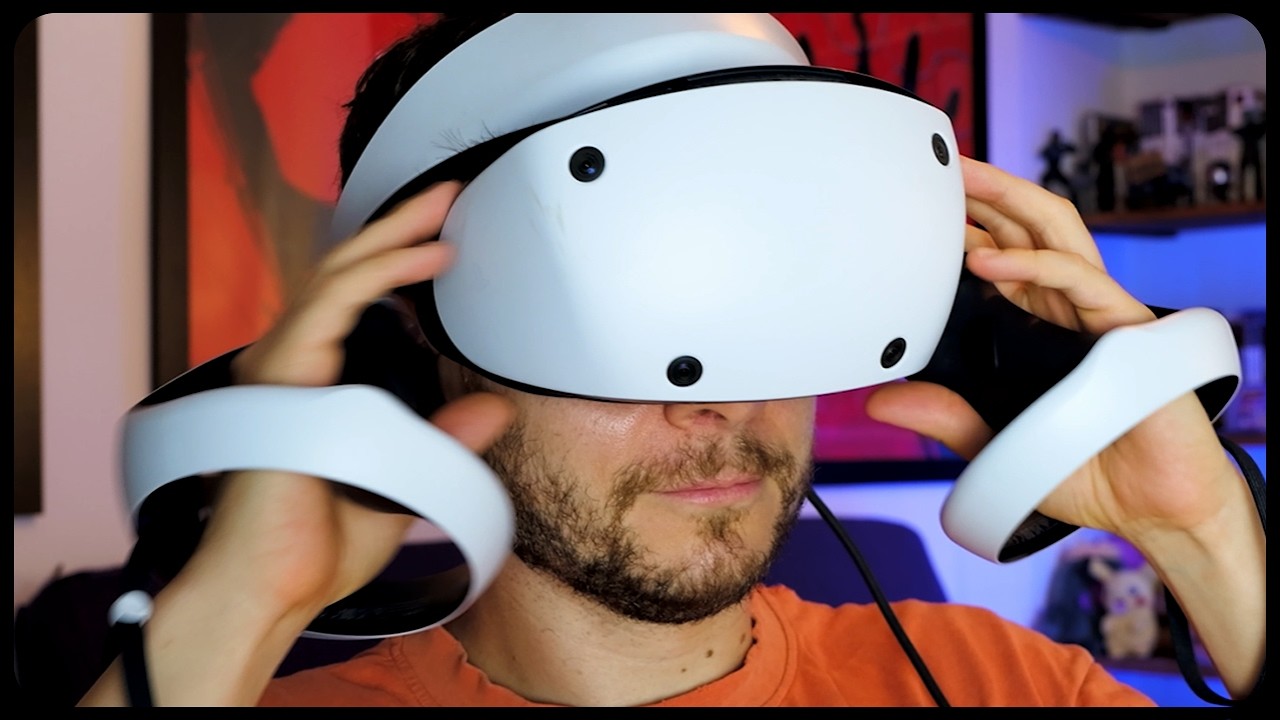
A standing pipeline is a more meaningful thing for PSVR2 owners than any individual port announcement, because the platform's problem has never been that the ports are bad. The problem is that they get negotiated one at a time, slowly, and frequently not at all. Structuring that work as a program, with named advisors and a release cadence, is the kind of operational commitment that costs money up front and pays it back over years. Which is presumably why the raise and the program went out in the same show.
What is missing
Several things a serious evaluator would want are not on the table yet. There is no disclosed valuation, no stated target for the round, no revenue figure for any title in the catalog, and no public breakdown of how the existing $5 million was spent. VR.org has not independently verified the $5 million figure or the Hartmann Capital relationship, both of which come from the company's own materials. None of that is unusual this early. All of it is necessary before anyone treats the campaign as an investable proposition rather than an interesting signal.
For a studio head or a platform partner watching this, the signal is the part that matters. A VR publisher with a shipping catalog, a named PlayStation veteran on the advisory bench, and a 2027 slate carrying two recognizable flatscreen franchises has concluded that the fastest available capital runs through its own audience. Read that as confidence in the audience if you like. Read it as a comment on the institutional market if you prefer. Both readings point at the same underlying condition, which is that the people most willing to bet on VR right now are the people already wearing the headsets.
Advertisement