
Sixteen days ago I wrote that Galaxy Unpacked on July 22 would be the moment Android XR stopped being a headset story and became a wearable one. That much happened. Samsung stood on a stage in London, put smart glasses in front of the world's tech press, and finally gave the product a name. Intelligent Eyewear. Then it declined to say what they cost, when exactly they ship, how much they weigh, what the camera resolution is, or what any of this means for the people building software on the platform.
ArJuly 22, 2026
Samsung Named Its Glasses and Almost Nothing Else. Intelligent Eyewear Is a Tease, Not a Launch.
By Jordan Kuo
Staff Writer, VR.org
Advertisement
I went in with a checklist. Here is the honest scoring.
What Samsung did confirm
Start with what is now on the record, because it is not nothing. The 2026 hardware is audio-only. There is no display in the lenses, which lines up with everything we have heard since Google I/O and closes the door on the theory that Samsung might surprise everyone with a HUD. Qualcomm's AR1 is the silicon. Battery life is the number Samsung clearly wanted in every headline: nine hours under heavy mixed use, with a charging case that holds roughly seven more full charges. Battery anxiety is the single most common complaint from people who actually wear this category every day, so leading with it is a sensible read of the room.
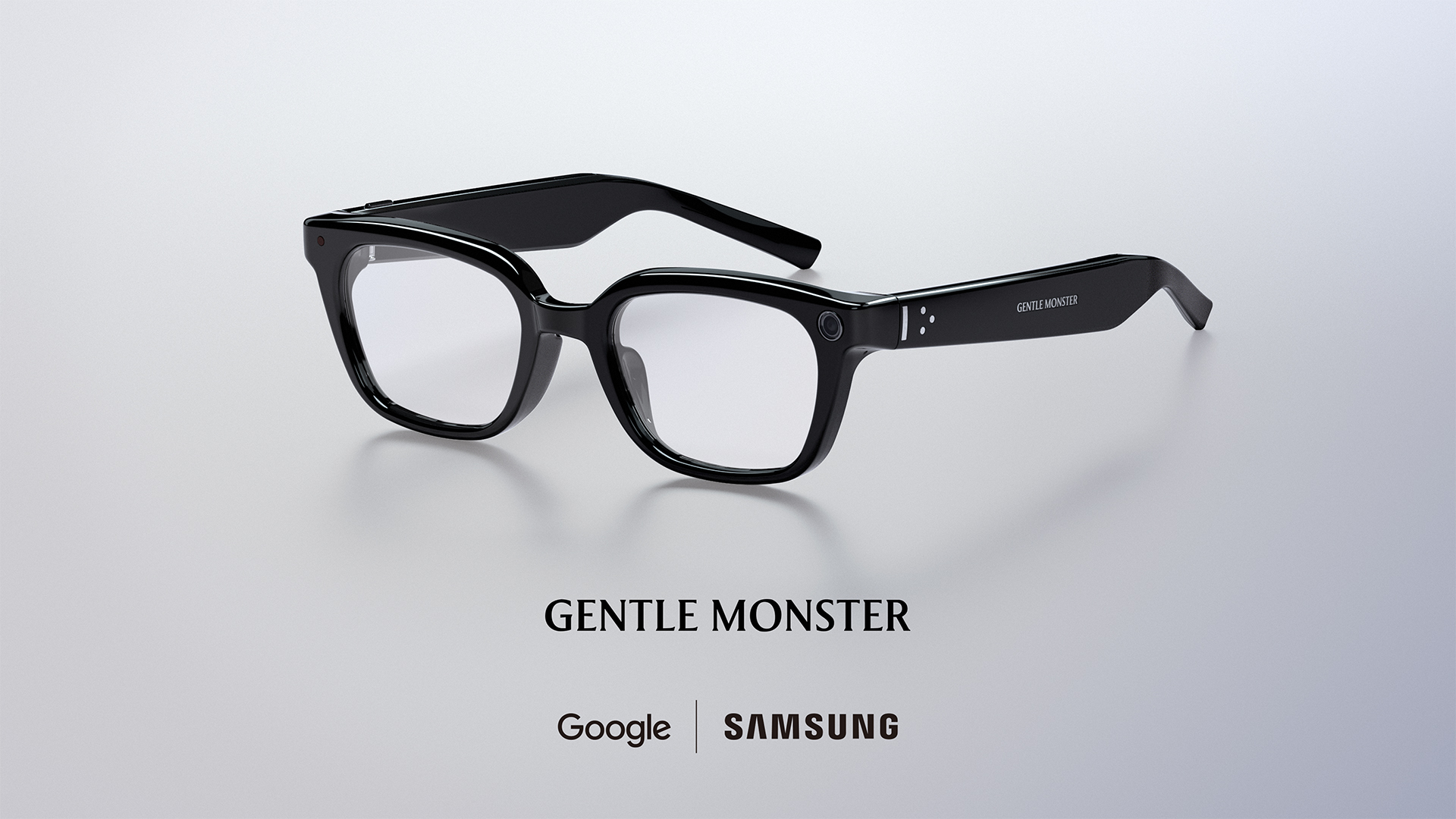
The hardware controls are conventional in a way I mean as a compliment. There is a camera up front with an LED activity indicator, a capture button on the right arm, open speakers rather than anything that goes in your ear, and a physical privacy toggle on the arm. That toggle matters more than it sounds. Meta has spent months fighting about its own privacy light, and Samsung arriving with a switch you can find by feel is a deliberate contrast, not an accident of industrial design.
On the software side, Gemini is the interface rather than a feature, exactly as expected. Samsung demonstrated live translation, message summarization, live visual sharing during a call, and a whiteboard capture flow that drops what the camera sees straight into Samsung Notes. Call handling ties into the Galaxy Watch. All of it is Gemini Live plus vision, which is the same stack the Spotify teardown pointed at two weeks ago.
Two brands, two very different bets
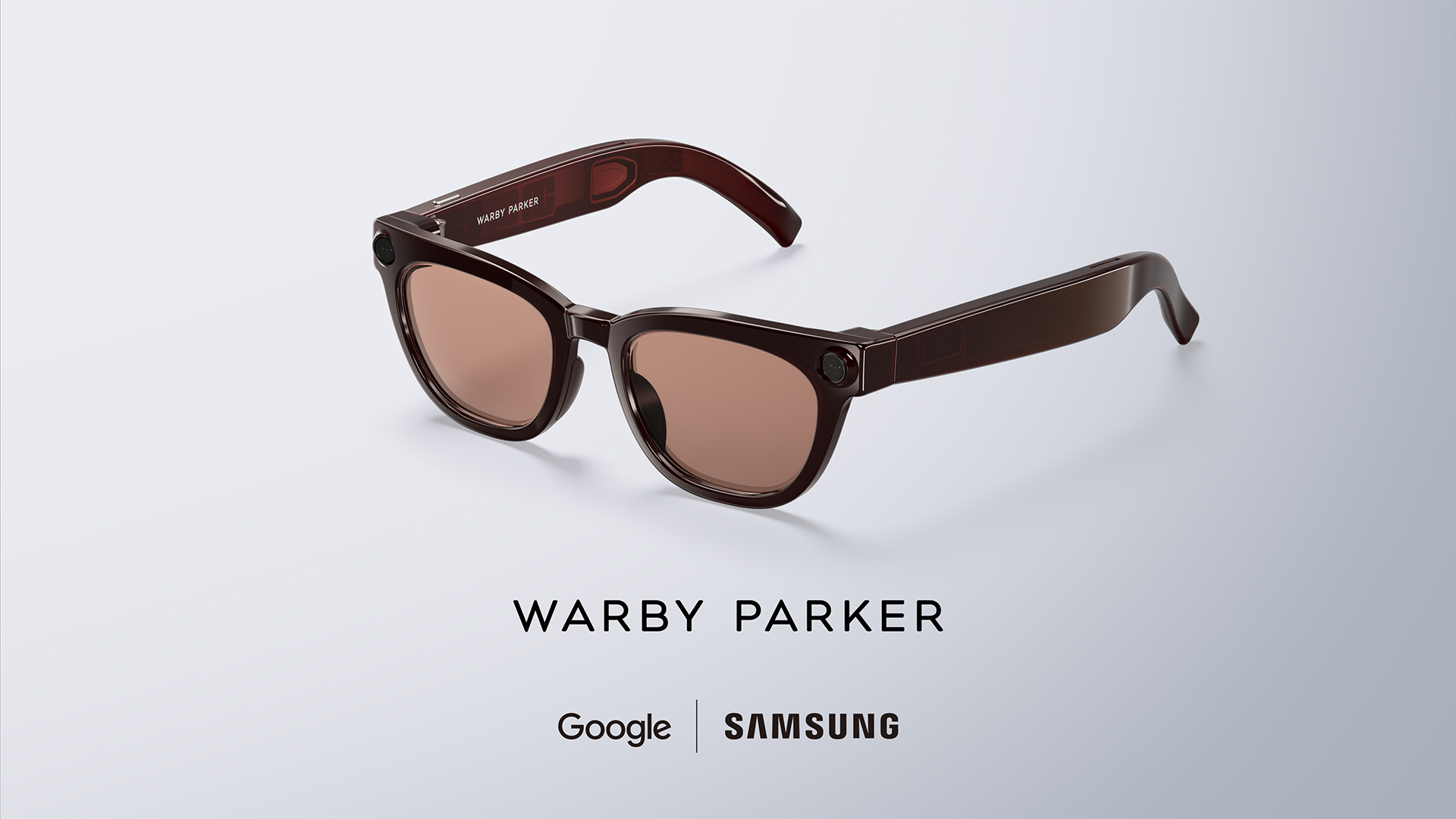
The Gentle Monster and Warby Parker split played out precisely the way the I/O demo suggested. Gentle Monster brought a heavy, glossy, unmistakably fashion-first frame. Warby Parker brought something nobody would look at twice on a train. Both partners showed additional designs beyond the pairs Google put on stage in May, which suggests the fall launch is a range rather than one SKU per brand.
Advertisement
This is Samsung's real structural advantage and I do not think it is being taken seriously enough. Meta has EssilorLuxottica, the largest eyewear company on earth. Samsung answered with the trendiest eyewear label in Asia and the most frictionless direct-to-consumer optical retailer in America. Gentle Monster is already expanding hard into North America and Europe. Warby Parker runs hundreds of US stores where a person can walk in, get an eye exam, and walk out with prescription lenses in a frame they tried on. Distribution and prescription fulfillment are the two things that actually decide this category, and both partners were built for exactly that.

Now the part that did not land
Press at the event were allowed to handle the glasses. They were not allowed to put them on. Gizmodo's Raymond Wong, who got closer to the hardware than most, came away describing the plastics on both the Warby Parker and Gentle Monster frames as feeling cheap, scratching easily, and collecting fingerprints. That is one person's tactile impression of pre-production units and it deserves to be weighted accordingly. It is also the only independent physical assessment anybody has, because Samsung would not let a single reviewer wear them.
No price. No date beyond "fall." No weight. No camera spec. No IP rating. No word on whether the display-equipped model lands alongside these or trails a year behind. For a product going on sale in roughly three months, that is a lot of blank space.
The developer question is still open
Here is the one I actually cared about, and the one nothing today addressed.
The Jetpack XR bet has always been that one codebase targets the Galaxy XR headset, wired display glasses, and audio-only eyewear, with capability tiers surfaced through the runtime instead of a separate SDK per form factor. That is an elegant design. It only works if a developer can read a manifest, flip a flag, and know with certainty whether their app surfaces on audio-only frames, degrades to a voice-only experience, or opts out entirely.
Unpacked is a consumer event and consumer events are not where SDK documentation lands. Fair enough. But Samsung's press materials went out today with nothing in them for developers, and Google published no glasses-specific guidance alongside the reveal. Anyone shipping on Galaxy XR who wants to know whether their existing app has a story on this hardware woke up this morning in exactly the position they were in yesterday. With a fall ship date, the window to build something that exists on day one is closing quietly.
Scoring the preview
Snapdragon AR1: correct. Audio-only for the 2026 SKU: correct. Warby Parker as the everyday frame and Gentle Monster as the fashion frame: correct. Fall shipping: confirmed, without a date attached. The $379 to $499 band everyone has been repeating since spring: still a rumor, because Samsung said nothing at all about money.
The SDK capability story, which I argued mattered more than the color of the frame: not addressed.
The fair read on today is that Samsung ran a naming and positioning exercise rather than a launch. It planted a flag on the word eyewear, locked in two retail partners with real storefronts and real optical infrastructure, put a strong battery figure into every headline written about the event, and bought itself two more months before it has to commit to a number.
That timing is not a coincidence. Meta Connect is September 23. Announcing a price today would hand Meta a target to undercut from a stage two months from now. Announcing a battery figure instead sets the bar on the one spec a competitor cannot fix with a discount. Whether that reads as disciplined or simply late depends entirely on what Samsung eventually prints on the price tag. That is the announcement that matters, and it is still unwritten.
Advertisement