
Android XR's first year belonged to Samsung's Galaxy XR, so nearly everything on its Google Play shelf was designed around two things a headset gives a developer: a display that can render black, and a field of view wider than any pair of glasses offers. XREAL's AURA gives up both when it ships, and on October 22 Owlchemy Labs, the Google-owned studio behind Job Simulator, showed what it builds for hardware without them.
ArOctober 22, 2026
Owlchemy Prices Hyper Visor at $1.99 for XREAL AURA's Launch, a Tenth of What Job Simulator Costs
By Jordan Kuo
Staff Writer, VR.org
Advertisement
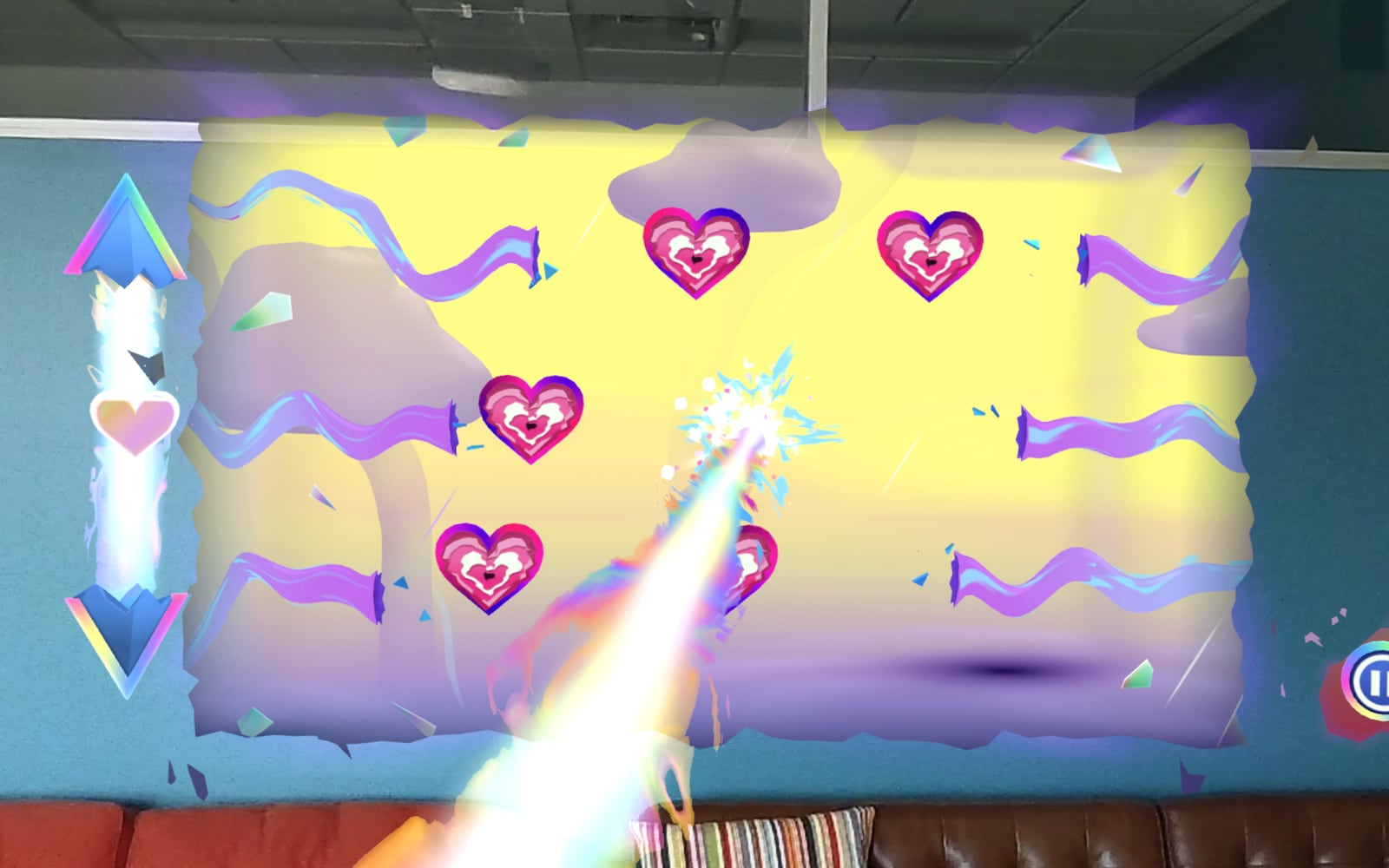
The game is Hyper Visor, which Owlchemy's announcement calls "an original XR arcade blaster" and prices at $1.99 on the Google Play Store. Its premise is the hardware itself. The player puts on "a mysterious pair of living shades" that reveal fractures hidden in their own room, then fires "an energy stream straight from their hands" through eight levels, each with its own targets, challenges and a boss standing in front of a rift. Road to VR, reporting the reveal, called it "decidedly more 2D-based than a fully immersive game," and Owlchemy's press screenshots bear that out: every level is a torn-edged rectangle hung on a wall, with the room visible on all four sides of it.
"XREAL Aura is essentially a pair of shades, which makes XR far more approachable for anyone who may have been hesitant to put on a headset before," Andrew Eiche, Owlchemy's chief executive, said in the release. He made the same case through what he calls the cafe test in a Game Developer interview recorded at Gamescom, and Evan Marcus took that interview apart here last week, agreeing that the headset is the barrier and arguing that the barrier, more than any studio's choice of genre, explains this year's layoffs. Hyper Visor is a product built on the half of that argument he agreed with.
What does "launch title" mean when the hardware has no date?
As of Thursday morning, Hyper Visor was not on Google Play. Owlchemy's developer page there listed four apps: Job Simulator and Vacation Simulator at $19.99 each, plus Inside[JOB] and Dimensional Double Shift, both free. The release says all four come to AURA at launch alongside the new game, and its subhead puts Hyper Visor's own availability at "when XREAL Aura launches." That date has not been set. When XREAL named the $1,279 and $1,499 prices on October 7 it said only that shipping begins before the holidays in the United States, Canada, Japan and South Korea, and the AURA product page still says Fall 2026.
Advertisement
Owlchemy has finished builds against someone else's window before. Job Simulator debuted on the HTC Vive in 2016 and, according to the studio's tenth-anniversary release, has since passed 6 million installs. Inside[JOB], a free mixed reality "interactive playground" built exclusively for Android XR, arrived with Job Simulator and Vacation Simulator as Galaxy XR launch titles last fall. A launch title is a finished build parked behind a date the developer does not control, and for a Google studio shipping on a Google platform through a partner's glasses, the date belongs to XREAL.
The price is the stranger decision. Anyone who shipped a game on the early iPhone App Store remembers how fast $0.99 and $1.99 became what a small game was expected to cost, and how hard it was to climb back once a storefront's buyers had learned the number. Owlchemy is now running both models on one Android XR shelf, premium ports of its older VR games at $19.99 beside a new original at a tenth of that, on glasses whose installed base so far is a reservation list. XREAL said in August that AURA had passed 10,000 reservations. If every one of those people bought Hyper Visor on day one, the gross would be $19,900 before Google Play's fee. A studio with Google behind it can treat that as a showcase budget. An independent team pricing its first glasses game should want a much bigger denominator before copying it.
Designing for a display that only adds light
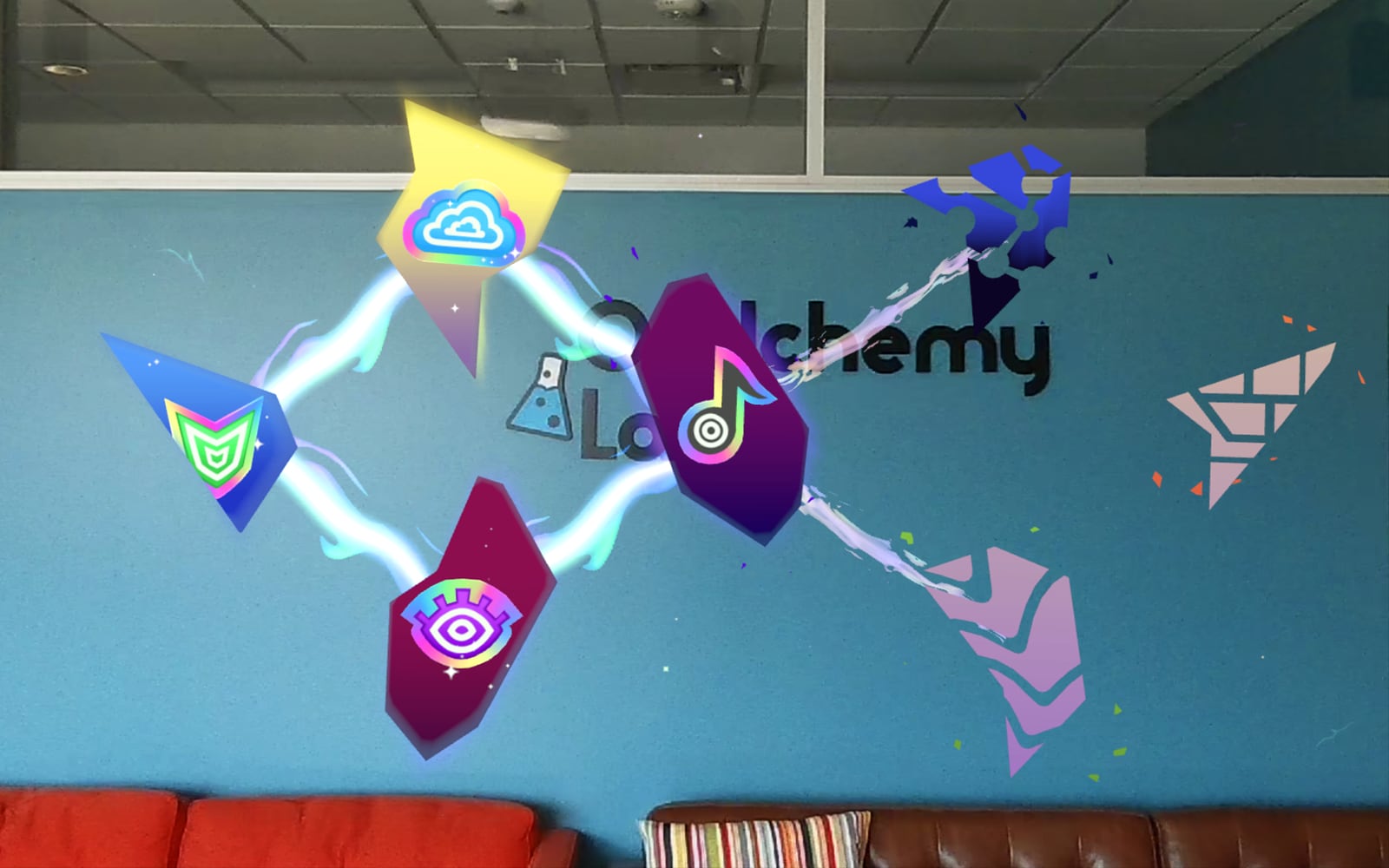
The lesson that does transfer is in the screenshots. AURA's 70 degree view is optical see-through: the wearer looks at the room through the lenses, the image from its Sony micro-OLED panels is combined into that view, and a display built that way can add light to the room but cannot take any away. Anything a game renders as black reaches the eye as whatever sits behind it, unless the electrochromic lens is darkened, which XREAL rates at five levels blocking up to 99.9 percent of outside light. Every rift in Owlchemy's press images is filled with saturated color, yellow, magenta, pink and deep blue, rather than dark space, and the playfield stays inside a frame that fits in a forward view instead of wrapping around the player. The release does not say whether that came from the optics or from the art direction. Either way, it is the shape a designer arrives at when the display cannot show darkness at full transparency and the image stops at 70 degrees.

Google Play sees none of this. Its distribution guide lists XR headsets and wired XR glasses as targets for immersive apps, reached by declaring the same android.software.xr.api.spatial or android.software.xr.api.openxr feature, and it describes no manifest feature that tells a see-through display from a headset. Job Simulator, built for an opaque display in 2016, will reach AURA owners through the listing Galaxy XR owners already use. The release names only AURA for Hyper Visor, but nothing in that model keeps a game drawn for an additive display away from Galaxy XR, where its colors would land on a panel that can show black, unless the developer excludes the device itself. If you have shipped Android apps through the fragmentation years, you already know this pattern, in which the manifest says compatible and the QA matrix disagrees.
For a studio deciding in the next six months whether AURA belongs in its plans, Hyper Visor says less about demand than about scope. Eight levels, one wall, hands only, and a price that asks almost nothing of the buyer. It is a bet sized to a device nobody owns yet, and that may be exactly the right size for one.
Advertisement