
I have never worn a VR headset in public. Not on a plane. Not in a coffee shop. I have owned them since 2016, and I have never once put one on where a stranger could watch me do it.
GamingOctober 13, 2026
Rec Room Was the Kind of Game Owlchemy's CEO Says VR Studios Should Have Made
By Evan Marcus
Co-Founder, VR.org
Advertisement
So when Andrew Eiche, who runs Owlchemy Labs, the studio behind Job Simulator, says VR hardware is only now starting to pass what he calls the cafe test, he is talking about me. Game Developer published its conversation with him this morning, held at Gamescom in August, and he makes two arguments in it. The first one is right. The second, about why so many VR studios have cut people this year, is half right, and the wrong half matters to the people who lost those jobs.
Would you wear it in a cafe?
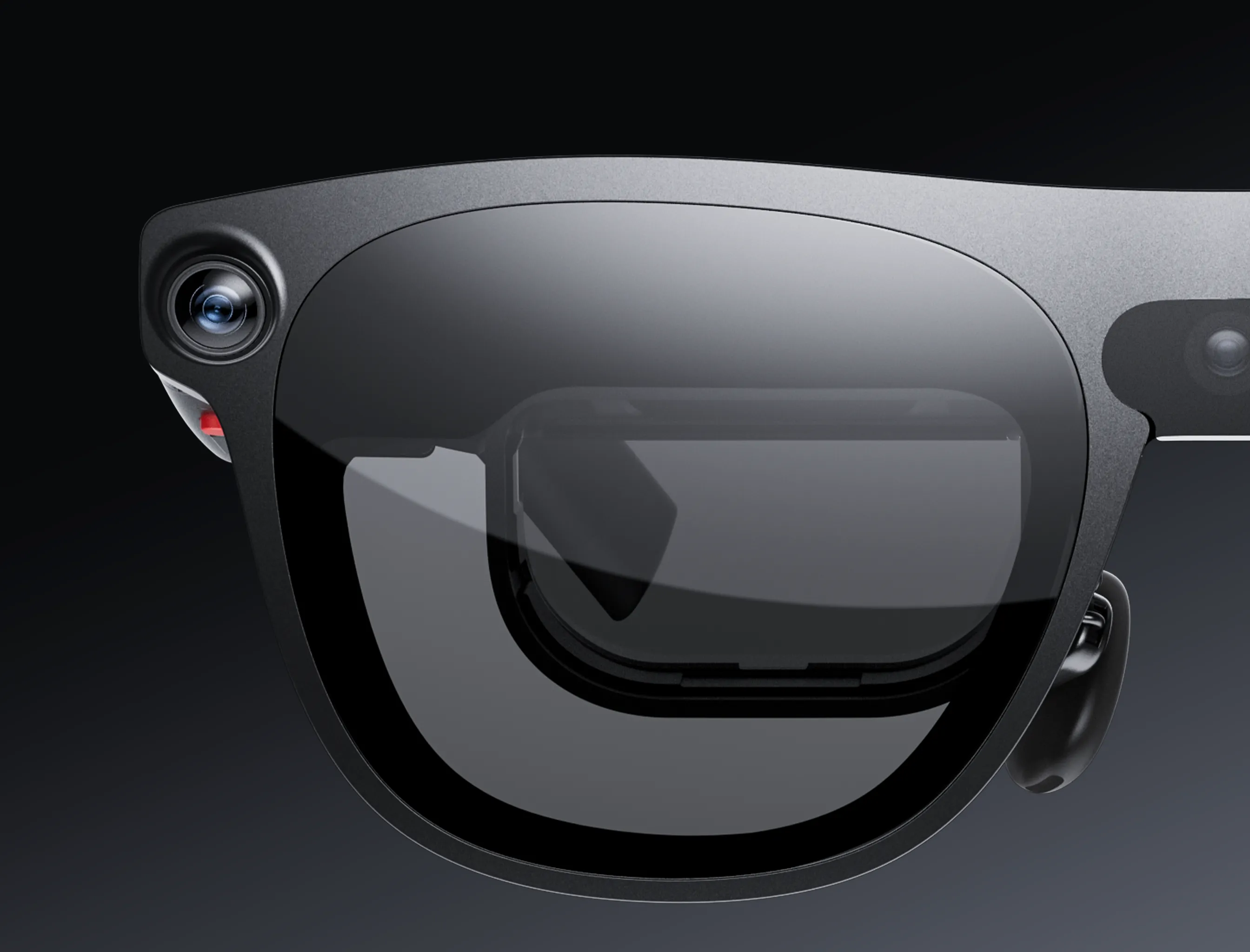
"We haven't found our form," Eiche told Chris Kerr. He thinks the headsets we treat as finished may turn out to be "equivalent to Nokia flip phones or the Motorola Razr," and he has a test for when that changes. "That headset, the Aura, is finally starting to pass the cafe test. Like, would you wear it in a cafe? Would you wear it out in public? You start to think 'okay, yeah, maybe. I don't look like a bug.'"
Know who is talking. Kerr notes that Google owns Owlchemy. It has since 2017. The other half of that sentence is that XREAL's AURA runs Google's Android XR, and Owlchemy's current game ships on it. He also said this in August, before AURA had a final price. Jordan had the number last week: $1,279, with 95 grams on your face and everything else in a puck at the end of a cable.
None of that makes him wrong, and I do not think he is. My Quest 3 starts arguing with my face inside an hour, and nobody is carrying 515 grams of white plastic into a coffee shop. The best sentence in the interview is his: "I love the big immersive headsets, but not everybody has to watch every movie in IMAX." I would sign that.
He calls today's hardware "the Nintendo Entertainment System of VR" and says of the people playing on it, "Our audience is young, right? But they will age up." His proof is his father: "my dad got so addicted to Balatro, he was playing it before a doctor's appointment." Presumably on a phone, in a waiting room, which is the cafe test, and it took video games about four decades and a different device to pass it.
"An enormous strategic error"
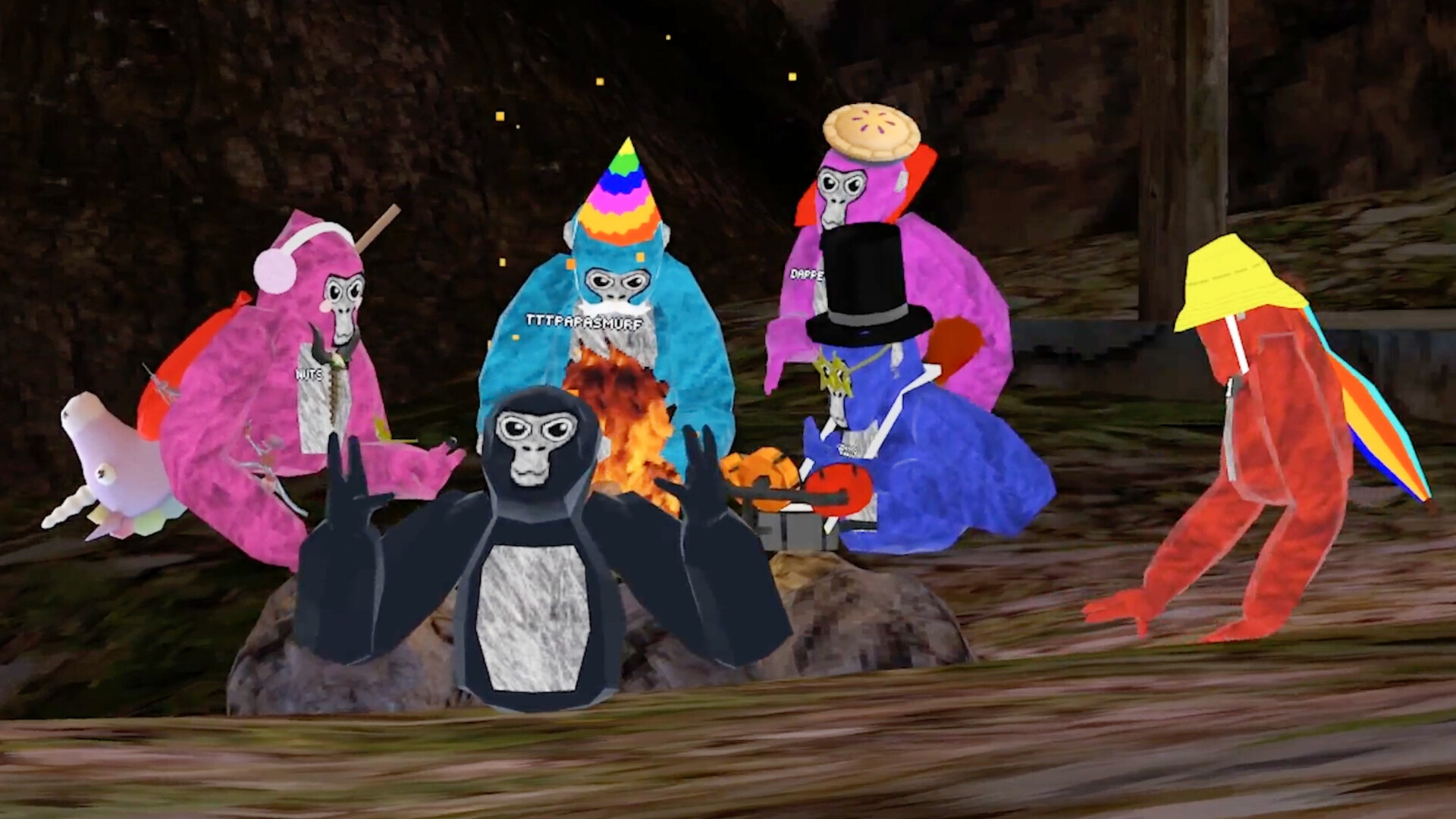
Then Kerr asks about the layoffs. By his account, Eiche thinks the big players, Meta among them, are shedding people because they misjudged the market, and the quote is not gentle: "[Those companies] are cutting the talent because they made an enormous strategic error, which was they had all the data that showed what was popular, right? What was popular was social games with lots of embodiment. Gorilla Tag and Animal Company."
About what is popular, he is right, and you do not need anyone's internal dashboard to check. On Meta's store this morning Animal Company (also on Steam) showed 219,613 ratings and Gorilla Tag (Steam) showed 173,403. Both are free on Quest.
Some of this year's casualties fit his story, too. On a single day in January, Meta closed Sanzaru, Twisted Pixel and Armature, every one of them known for a big single-player game. Survios reportedly laid off most of its developers in May. Expensive games, sold once.
Advertisement
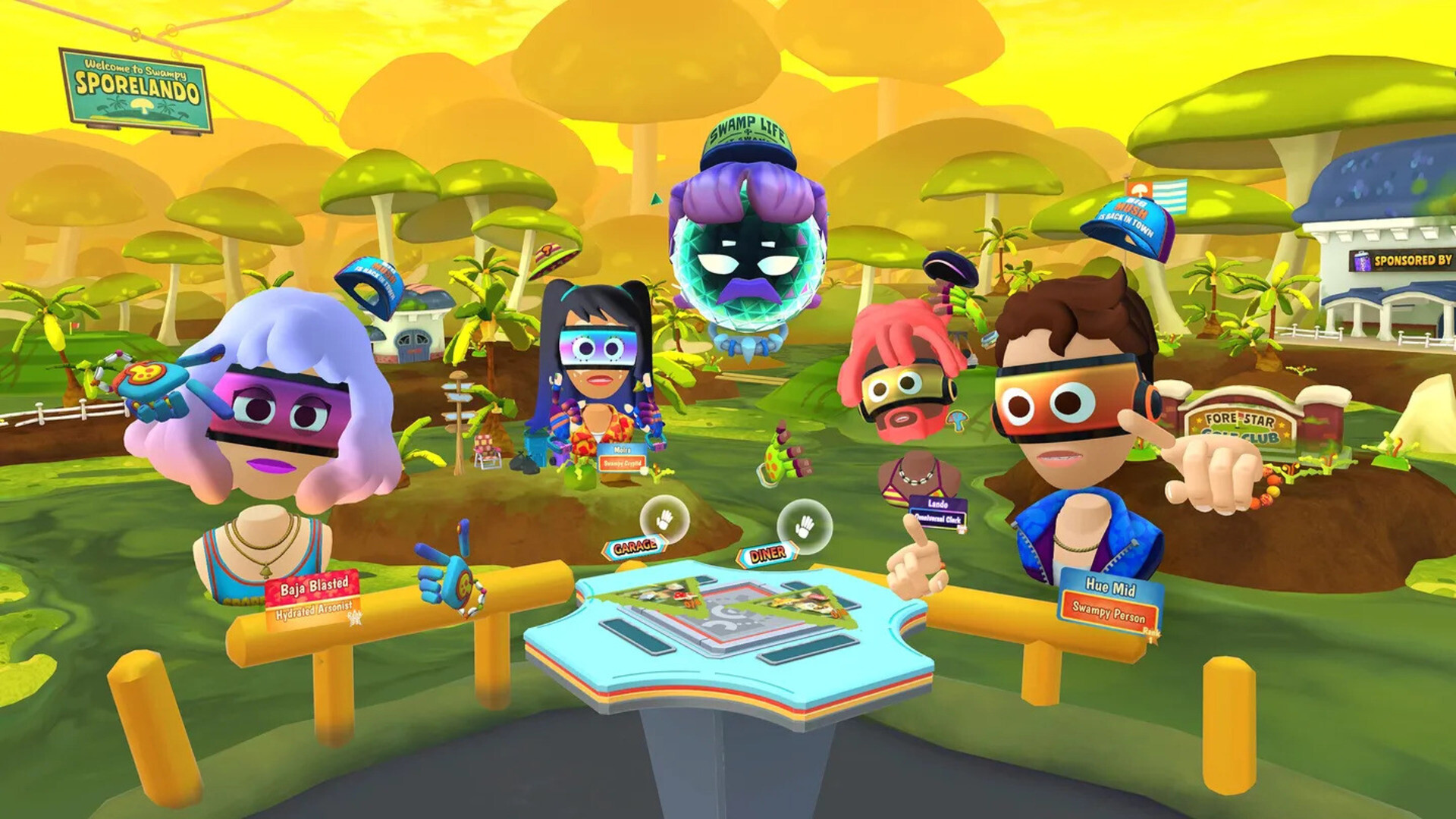
Now the other half. Rec Room was free and social, and about as embodied as a game gets: you ran around as a cartoon and threw dodgeballs at strangers. Investors valued it at $3.5 billion in 2021. It went dark on June 1. A Township Tale put up to eight Quest players in one persistent village and ran for eight years before its servers went off on July 20, Ultimechs has been free since 2022 and loses its multiplayer on October 20, and Polyarc, a studio known for single-player games, did what Eiche prescribes and shipped Glassbreakers: Champions of Moss, an online squad-against-squad VR game, last November. The studio closed in September.
And then there is the game I have put hundreds of hours into. Walkabout Mini Golf (also on Steam) is friends standing around a green with putters in their hands, talking. If that is not a social game with lots of embodiment, nothing is. Mighty Coconut is cutting ten more people anyway, and when Lucas Martell explained why, he did not mention genre: "without a steady stream of new players coming into VR and Walkabout, the scale at which we've been operating is no longer sustainable."
New players. That is Eiche's first argument walking into his second one and knocking it over. If the headset is the bottleneck, a studio can read every chart correctly and still run out of customers. Rec Room read the chart. Rec Room more or less was the chart.
What Owlchemy's own players asked for
His evidence that the approach works is Dimensional Double Shift, Owlchemy's free co-op game. "In every metric: monthly actives, daily actives, and total sessions. Every metric. We were higher last month than we have ever been in this game's history," he says, and then: "The reason why is we're meeting the audience with what it wants."
I believe him. I also notice that the comparison is with the game's own past, and that revenue is not on the list. I run a small studio myself. Active users do not make payroll. Owlchemy's game is free, it sells $4.99 add-on packs, and its parent company is Google; most independent studios could not give a game away for two years while they found out.
The public numbers are thin. Owlchemy said in January that the game had passed a million downloads. On Meta's store today it shows 2,058 ratings. Ratings are not players, and the game is also on Android XR and Steam, but on the one shelf where all three sit side by side, Animal Company has about 107 ratings for every one of Dimensional Double Shift's.
So what did meeting the audience look like once the interview was over? Owlchemy's blog answers that. On September 14 the studio added controller support to a game it had launched hands-only, because, in its words, "one request has come up again and again: Controller support." The same day it promised a single-player mode for the first half of 2027 and said Job Simulator and two more of its games were headed to Steam Frame, Dimensional Double Shift appeared on Steam on September 30, and back in August it had already announced a flat-screen Job Simulator with another studio (I wrote about its Kickstarter), explaining that "keeping Job Simulator contained entirely within a Virtual Reality was... unrealistic."
Controllers. A way to play alone. A 440-gram headset from Valve, and a version with no headset at all.
I like that Owlchemy said yes to every one of those. Job Simulator, which I have played, was wearing a Top Seller badge on Meta's store this morning at $19.99, ten years after it launched as a single-player game for two tracked controllers. But none of that is the lesson Eiche hands everyone else. It is closer to what Polyarc did when it rebuilt its VR series for a flat screen this summer, and that did not save Polyarc.
Eiche may be building the right game for the hardware that finally leaves the house. Hands, short sessions, friends, no price tag. If AURA and Meta's glasses sell, Owlchemy is standing where the new players will land, and I hope it works. But the people who lost their jobs at Rec Room this year did not lose them because nobody there could read a chart. They built what the chart said. There were not enough headsets on enough faces to pay for it, and that is not a strategy problem.
It is the cafe.
Advertisement