
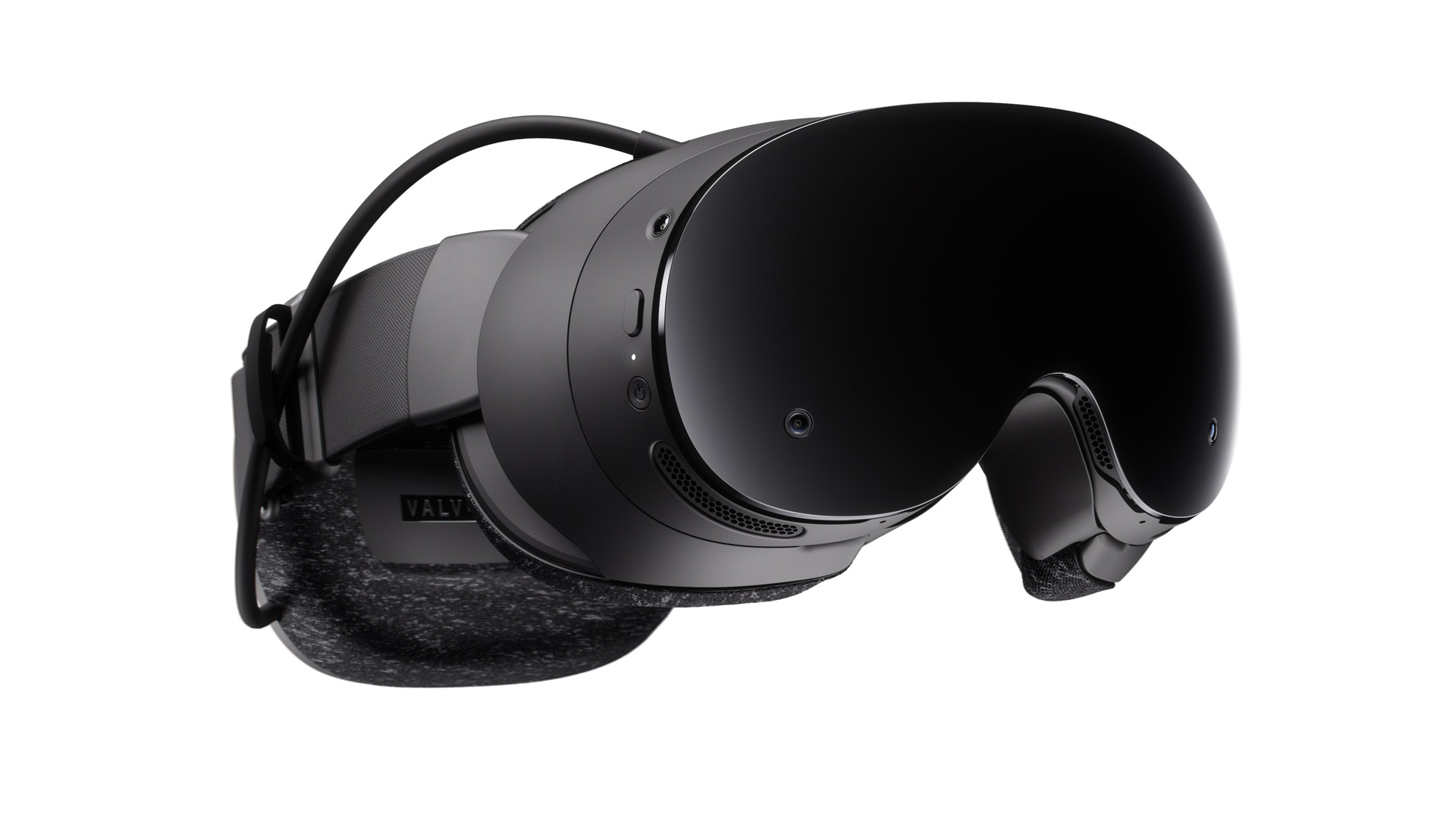
Valve's compatibility programs leave a paper trail in public. Every app on Steam carries a metadata record, and when Valve's compatibility team finishes testing a title the verdict lands in that record as a category number plus a set of result tokens, which is why Steam Deck Verified ratings have been readable in raw app data since 2022. Steam Frame runs on the same plumbing. On July 9, Valve added a steam_frame_compatibility block to The Lab, the free 2016 demo collection that shipped alongside the original Vive and still serves as Valve's introduction to room-scale VR, and started running it through the process.
SoftwareAugust 7, 2026
Valve's Own VR Showcase Is Rated Unsupported on Steam Frame While a Fan Mod Clears Verified
By Jordan Kuo
Staff Writer, VR.org
Advertisement
That record has been edited seven times since. Read in order, it is the clearest look anyone outside Valve has at what certifying a VR title for standalone hardware actually takes, and it does not flatter the company.

Category 3 down to category 1
The block opened at category 3, with a tested build ID of 7242747, which is The Lab's public build from 2021, and four result tokens that all read as passes. The default controller configuration was fully functional. The glyphs matched the device, the interface text was legible, and the default configuration was performant.
On July 29 that collapsed. Valve cut the category from 3 to 1 and replaced all four tokens with a single one, #SteamFrame_TestResult_UnsupportedGraphicsPerformance. The Frame's scale mirrors the Deck's, where 3 is Verified and 1 is Unsupported, and in this case the token names the tier out loud.
So Valve tested its own VR showcase on its own headset and concluded the software does not run well enough to carry a badge. Not Playable, which would at least mean it works with caveats. Unsupported, the same tier Valve hangs on games that do not run on the hardware at all.
Then the runtime kept moving
What happened next is the part worth attention, because an ordinary certification failure ends there and waits on the developer to ship a fix. Valve did not wait. It started changing the runtime underneath the game.
On August 3 the recommended_runtime field moved from proton-stable to proton-experimental. Two days later it moved again, to proton-experimental-arm64, and the test timestamp updated alongside it. Steam Frame runs a Snapdragon part, so arm64 is the native path, and pointing a title at an experimental ARM Proton build is not a store-facing setting any user will ever see. It is Valve checking whether its own translation stack can close a performance gap the application is never going to close on its own, because nobody is going to reopen a ten-year-old demo reel and rewrite its renderer.
The debug flags in the same record point the same way. The block carries fdm_debug set to enable and rpo_debug set to enable,enable_doublewide_to_multiview_ubo, both added across July 21 and 22, replacing the plain on and off toggles that had been there since the block was created. Read those strings literally and they describe render path surgery: a density map governing where the GPU spends its pixels, and a conversion of stereo rendering from a doublewide target into a multiview uniform buffer. If you have shipped a VR title you already know that multiview conversion is one of the biggest single wins available on mobile-class silicon, and that it is normally a change the application makes rather than one the platform makes on the application's behalf.
Valve has said nothing about any of this, so the reading is inference rather than roadmap. It fits the strategy laid out here on Monday, though, when Lepton and FEX went public on Steam. The answer to the Frame's content problem was never going to be funded ports. It is layers, and now apparently per-title tuning underneath the layers.
A 2004 mod passed the test a 2016 demo failed
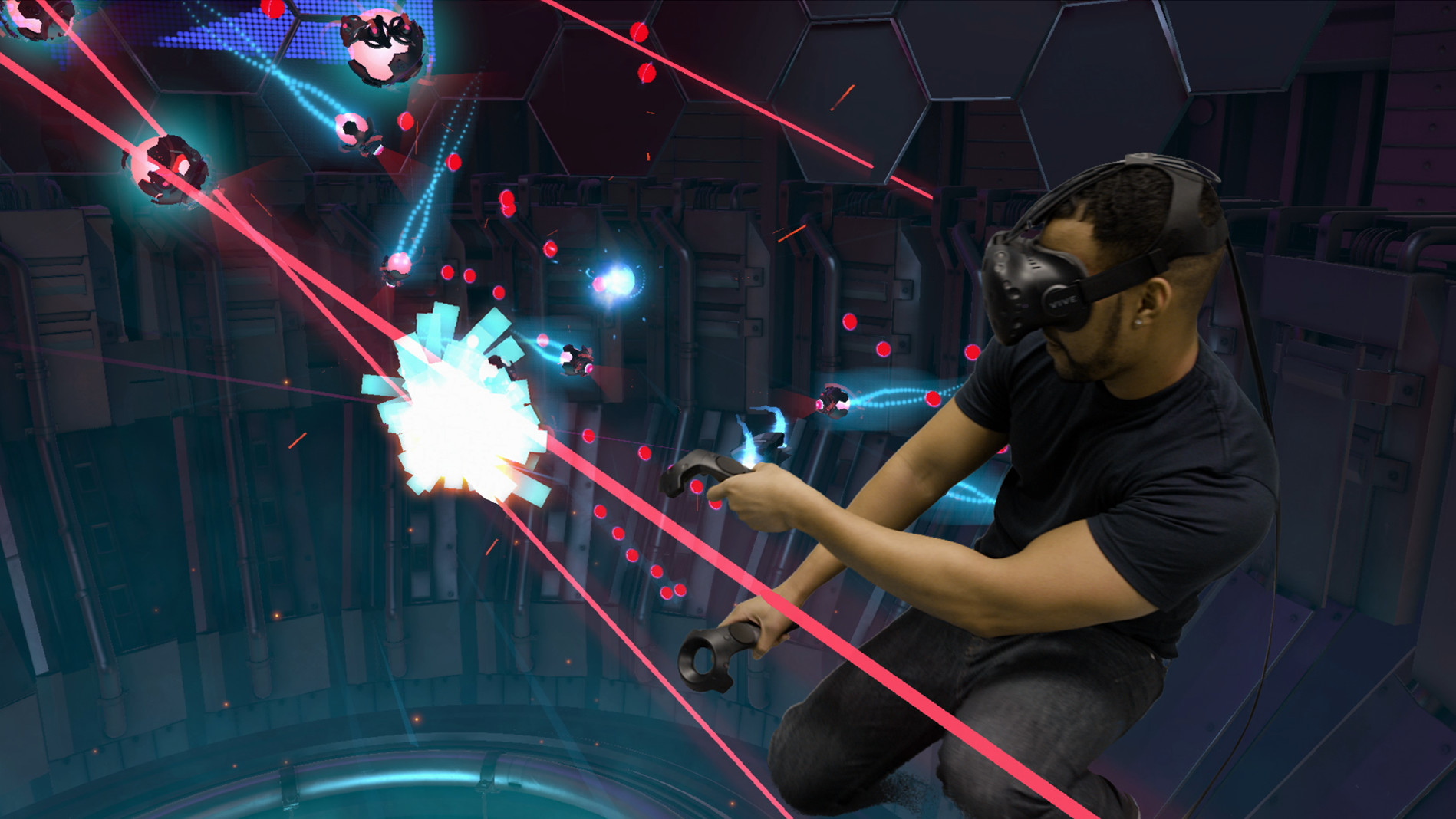
Six days after The Lab fell to Unsupported, Half-Life 2: VR Mod cleared Verified. A free community mod of a 2004 shooter, maintained by volunteers, running through a bundled dxvk build because Source renders in Direct3D 9, hit a bar that Valve's own flagship VR demo currently does not.
Advertisement
The gap stops being mysterious as soon as you look at what each project has been doing with its time. The mod team spent months on frame timing, chose performance settings carefully, and finally shipped eye-tracked foveated rendering to get over the line. The Lab was built for a 2016 desktop GPU driving a 1080x1200 panel per eye over a tether, and has sat essentially untouched since its 2021 build. No foveation. No motion vector output. Nobody optimizing it. The bar, now 72 fps at 1728x1728 per eye, does not grade on heritage.
What the Alyx record shows, and what it does not
Half-Life: Alyx keeps getting mentioned in the same breath as all of this, and the record there is thinner than the enthusiasm around it suggests. Alyx has no steam_frame_compatibility block at all. It has not been tested.
What it does have is a previous_release branch added on August 1, pointing at build 8694564 from May 2022, which is the same build the public branch is already on. Adding a rollback snapshot that mirrors the current release is what a team does shortly before pushing a new one, so reading it as update preparation is fair. There is also an August 3 change whose contents are not publicly visible, and the app has private branches enabled, which means work is happening that outsiders cannot inspect.
None of that is a Steam Frame port, and precision matters here because a widely shared post this week described the Alyx change as a prerelease branch under private testing. The branch is called previous_release, which is a different thing entirely. One is a snapshot of what already shipped. The other would be a build of something new.
If Valve does intend to certify Alyx for the Frame, the tell will be exactly the one The Lab produced: a steam_frame_compatibility block appearing in the app record with a category and a tested build ID attached. That has not happened. When it does, it will be visible to anyone watching, the same day it lands.
What it says about launch
Valve has a headset that has cleared the FCC, a curated shelf of Verified titles, a certification standard it quietly relaxed in the spring, and its own decade-old VR demo sitting at Unsupported on the newest compatibility axis in the store. Those facts do not contradict each other. Together they describe a platform being assembled out of translation layers and per-title runtime tuning instead of ported software, which is cheaper and considerably stranger than what Valve did with the Index and Alyx, and more fragile in ways that will only show up under load.
The Lab is the case worth watching, because it is the one title where Valve is both platform holder and developer, with nobody else to blame for the frame times. If proton-experimental-arm64 is enough to walk it back up the scale without a line of the game changing, that is the strongest evidence yet that the layer strategy works. If The Lab is still sitting at Unsupported when the Frame ships, that is a different signal, and a much louder one.
Advertisement