
Valve did not sell me a headset this week. It sold off its old one, put dates on the queue for its new one, published the new one's pinout, and left the panel for something sharper sitting in its own source code. Busy five days for a company that mostly talks through Steam posts.
XrOctober 16, 2026
This Week in VR: Valve Sells Off the Index, Dates the Frame Queue and Leaves a Higher-Resolution Panel in Its Code
By Evan Marcus
Co-Founder, VR.org
Advertisement
The Index, sold without its other half
The Index was the headset I stood in line for. Its page on Steam is now headed "Valve Index Sunset," and Alex went through what is left: the headset at $399.20, which is 20 percent off a $499 price that had not moved since 2019, plus a left controller and a tether. That is the whole list. No base stations. No right controller. An Index tracks off boxes you mount in the corners of the room and does nothing without them, and HTC still sells the SteamVR Base Station 2.0 at $229 apiece. Most rooms want two.
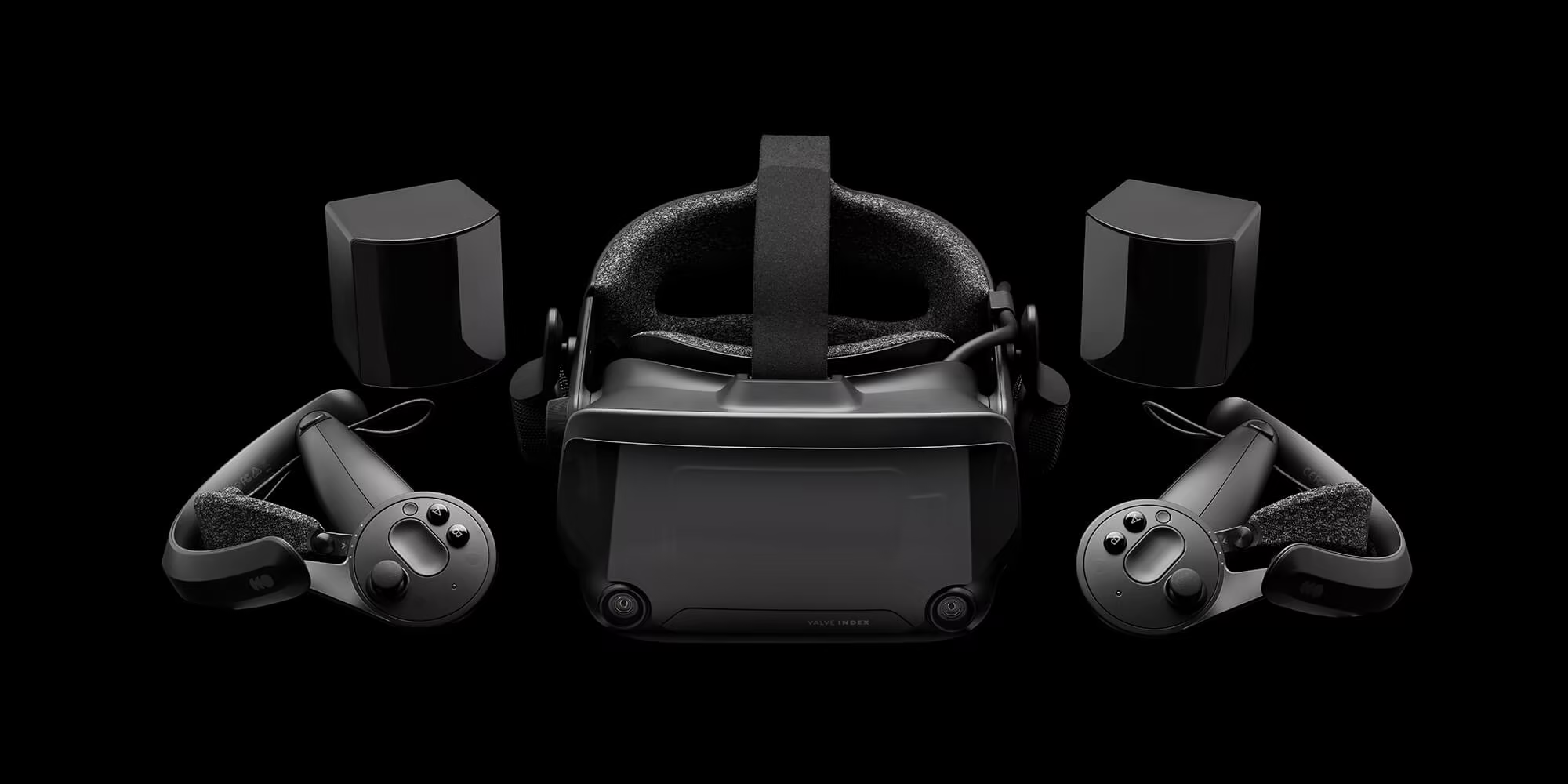
So it is a deal only if you already own the rest, which in practice means an Index owner whose headset finally gave out, or somebody who kept two base stations and a working right controller in a closet after selling the headset years ago, and for either of those people Valve says nothing changes and the headset "is still supported on Steam and SteamVR."
A window for the queue, nothing for the waitlist
Valve's October 9 update finally attached timing to the Steam Frame queue, and I covered it Monday. Log in with a reservation and the product page gives you one of two answers, "by December, or in 2027." When the purchase email lands, you have 72 hours. People in the 2027 group get more detail by January. The waitlist got no date at all, because by Valve's own description it only starts moving once a region's reservations have been worked through, and Valve has not said how long the US reservation queue actually is. Mine said waitlist, 1TB, nothing else.
Same day, Valve put up the Frame's CAD files and the electrical document for the front expansion port, both for non-commercial use. Alex counted the pins. Forty-four of them, a single PCIe Gen 4 lane that shares pins with the left camera, and a 6-watt power budget. Plug in anything Valve has not approved and the warranty is gone.
Plano
Then the code. A panel codenamed Plano turned up in deckard-linux, the public mirror of the kernel that runs SteamOS on the Frame, at 3,552 by 3,840 pixels per eye. That is the resolution of the micro-OLED panels in Samsung's Galaxy XR, and it is the number that went around. Alex read the driver instead. The one mode Valve has switched on sends the panel 1,776 by 1,920 per eye and has the panel scale it up, which works out to fewer pixels than the LCD Frame on sale today. Full resolution "requires MIPI overclocking." The 100, 110 and 120Hz entries are marked "not working." The word OLED never appears in the driver.
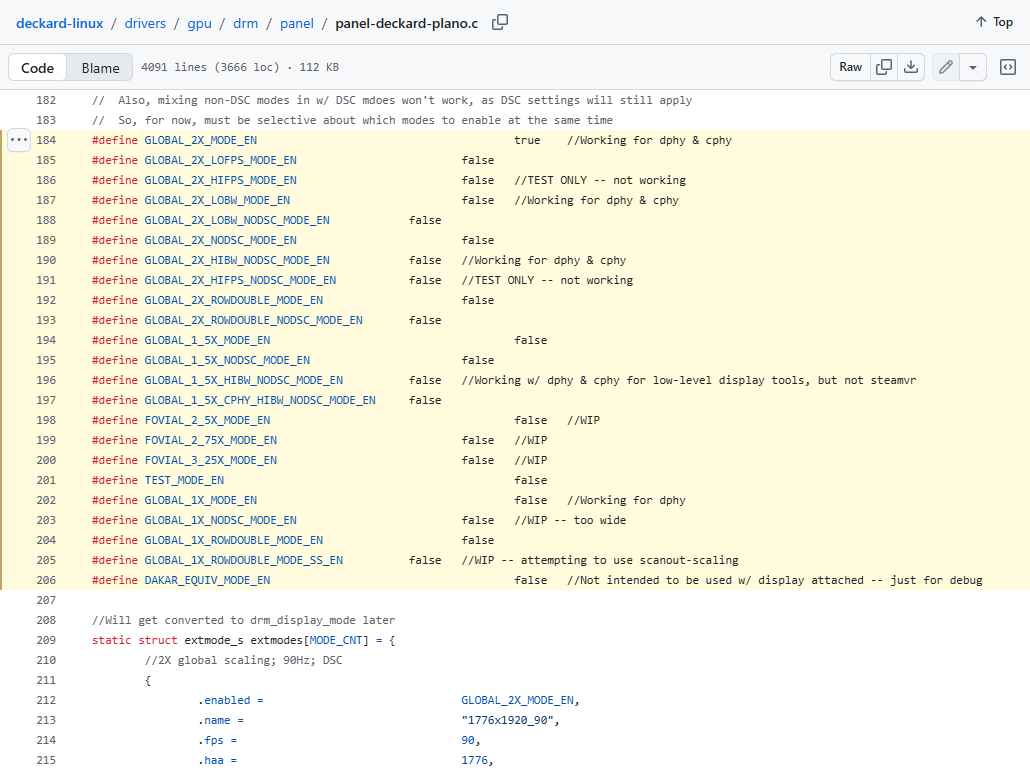
If you are on the waitlist like me and wondering whether to hold out for this instead: hold out for what? There is a file. No product, no date. Alex also ran down the week's other Frame hardware story, a strap with hot-swappable batteries and BMR speakers like the Index had, and found Valve had already confirmed it to PC Gamer in September. No price or date on that one either.
For anybody who does have a Frame, Nina explained why SideQuest 1.4.0 ships Flatpaks: an x86_64 build for the Steam Deck and an aarch64 build for the Frame, which runs on an ARM chip. The release also dropped the USB cable from Quest setup. It came out October 6. Most of the coverage showed up a week later.
Glasses that kept listening
Meta told Android Authority on Tuesday that a bug letting Ray-Ban Meta glasses save conversations nobody asked them to hear "has been resolved," and that owners can delete their voice logs whenever they like. Sam's piece today is about that second part. He pulled Meta's voice privacy notice country by country. In the UK, Ireland and Germany, the notice lets you switch voice recording storage off and keep using Meta AI. In the US, Canada and Australia, recordings are stored by default with no switch to stop it, so you either delete them afterward or turn off voice activation altogether. Same glasses, same bug. What happens to the audio depends on where you live.
Advertisement
He also found a new paragraph in Micron's annual report that says AR glasses are driving demand for low-power memory. The same paragraph last year did not mention glasses. And XREAL put out the 1 Pro+ on Thursday at $599, the One Pro's price, with a 1,200-nit display and a redesigned nose pad.
One game going dark
Ultimechs loses online multiplayer on Tuesday. Resolution Games gave it twelve days' notice, and the same day the game and its Spectator client come off Steam and the Horizon Store. Free since 2022. A VR Master League season. A Steam page that went quiet in October 2023 and then, on October 8, posted its own ending. The people I keep thinking about are the league players, whose balance patches were tuned on their own match data and who are now getting the same twelve days as somebody who installed it once in 2022 and never opened it again. If you still have people to play it with, this is the weekend.

It made my Tuesday column, too. Andrew Eiche, who runs Owlchemy, told Game Developer that studios cutting staff made "an enormous strategic error" by ignoring what the data said about social games. I think he is half right. Rec Room was free and social and went dark on June 1, and Ultimechs follows it on Tuesday. His other test, whether you would wear a headset in a cafe, I fail outright. I have never put one on in public.
Something running instead of ending: Phasmophobia's Crimson Eye goes through November 1, the first one on Kinetic's rebuilt VR body, and Double XP started Thursday. Your friends can join from a flat screen.
Your Favorites are coming with you
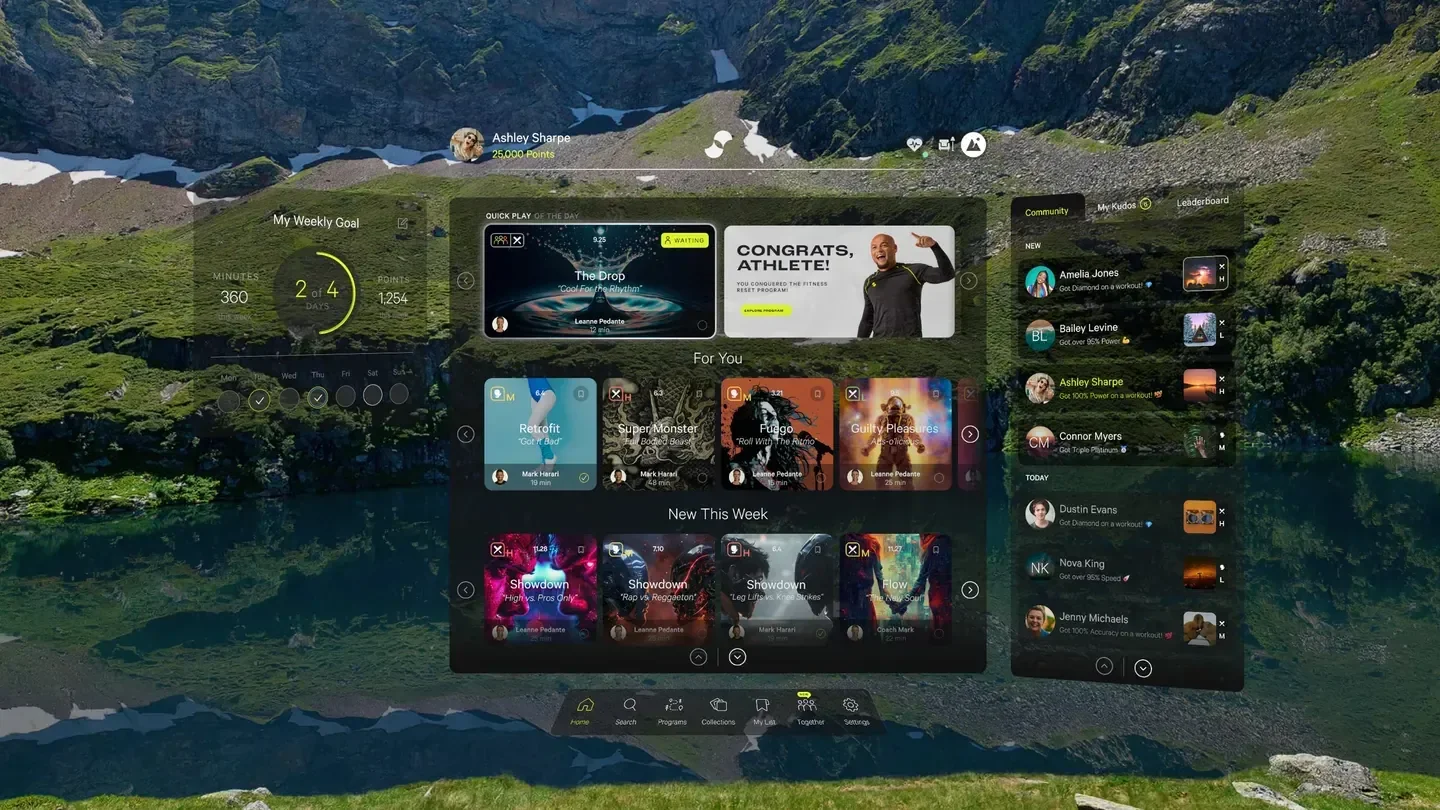
In August I told anyone still on Supernatural to write down their My List, because the new company's FAQ said Favorites would not make the move. It still said so on October 11, in the Wayback Machine's copy. The live FAQ now says "your streaks and Favorites (My List) follow later this year." UploadVR reports that early access is coming "soon" and that the $180 Founding Member rate for the first year ends when it opens. That one matters more than it sounds, because a list built up over years of workouts is the sort of thing you do not notice you rely on until it is gone, and it was the one item on the migration list that had been ruled out flat. Meta's version still stops on December 3.
Things to watch
Remnants is out today on Vision Pro: Apple's first immersive horror film, 27 minutes from Ti West, rated PG-13. Sam has the context, which is that it lands eight weeks after Bloomberg reported Apple was shrinking the team that makes these films. He also read Meta's post on ESPN's first immersive college football game, Texas against Oklahoma, live in 180 degrees on Quest last Saturday. The replay is up through tomorrow. Meta has not said what it will cost.
If you have a Vision Pro and a Quest library, Nina went through AVP Play, a Mac app that rebuilds Quest games you already bought to run on Apple's headset. Thirteen games had tested recipes by Saturday. You need a paid Apple developer account. And on the developer side, Jordan found WebGPU in XR Blocks 0.22.0, Google's open-source XR toolkit, but only in the desktop simulator; Google's own notes say the spatial UI does not run on it yet.
Next week
Steam Next Fest runs October 19 to 26. Ultimechs goes offline Tuesday. I will be digging through Next Fest for something to play on the Quest 3 by my desk, since no Frame is headed for that desk anytime soon. And somewhere on Steam, the last Index headsets are going out the door at $399.20 to people who already own the base stations. Good. Somebody should get to finish the set.
Advertisement