
Platforms rarely announce a change of input model in so many words. They ship a device without the old input device in the box and let the store rankings deliver the message, and Meta did both halves of that this week. The headset it showed at Connect on Wednesday leaves its controllers out of the box, and the developer material Meta published the next day explains what that means for anyone who expects to be found in the Horizon Store next spring. If you shipped an app through the years when phones lost their hardware keyboards, the shape of the next six months will look familiar.
XrSeptember 26, 2026
This Week in VR: Meta Builds Its Next Headset Around Hands, iFixit Opens a Steam Frame, and Supernatural Keeps Your Streak
By Jordan Kuo
Staff Writer, VR.org
Advertisement
A $1,299.99 headset, controllers sold separately
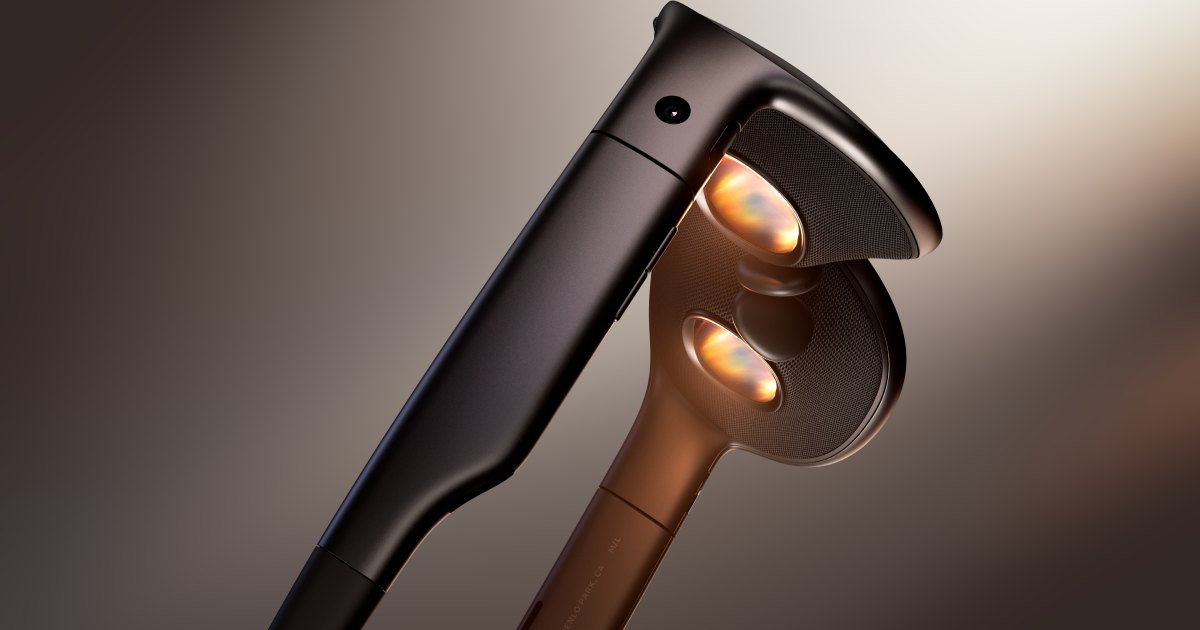
Alex had the launch facts on Wednesday night: Meta VR Glasses, the device reported for months as Project Phoenix, cost $1,299.99, go on sale in spring 2027, weigh about 100 grams on the face and hand compute, battery and storage to a roughly 300-gram puck on an optical tether. The field of view is 70 by 66 degrees against roughly 110 by 96 on Quest 3, and Touch Plus controllers are an extra purchase, although controllers from an existing Quest 3 or 3S will pair. The hub page keeps the running spec sheet and timeline.
The developer side landed Thursday, and Nina went through it. Meta's developer blog recap says the Store will put hand-tracked titles first for VR Glasses owners who do not have controllers, which turns hand tracking from an accessibility setting into a discoverability requirement. The v207 SDKs and IWSDK 1.0 are out now, and the second VR Start competition puts $1 million behind the same idea, with a line in its official rules that reads like a platform requirement: "Your experience must be fully usable with hands, end-to-end." Meta's own announcement counts "more than 75 games at launch that you can play solely with hand gestures."
First-party content is already moving to match. Beat Saber gets a Flux mode in spring 2027 that swaps the sabers for hand tracking, and Evan asked whether it is still Beat Saber once the rumble in your hand is gone. In a piece published alongside this one, he also takes on whether 100 grams makes headsets obsolete, and his answer, as someone who owns a Quest 3, is no.
The part of Wednesday that matters most for developers building on glasses rather than headsets is still unresolved. The Wearables Device Access Toolkit supports none of the new pairs yet, and publishing remains closed, which leaves all three tiers Meta showed, from the camera-free Ray-Ban Meta Audio at $349 through the $449 Gen 3 to a Ray-Ban Display now sold in five more countries, without a public path for third-party apps.
The content that is supposed to sell it
Meta's announcement describes the device as a personal cinema, a courtside seat, a workspace and a gaming console, in that order, and the partnerships announced around it followed the same ranking. Sam set Meta's promise of more than 100 live immersive sports events a year, with MLB, NBC Sports, TNT Sports and UFC, against the ten live immersive games Apple aired before it cut its immersive video team. On Friday he followed Meta's $149.99 hearing enhancement unlock back to an FDA 510(k) clearance, K254044, granted on July 13, ten weeks before Connect put a price on it.
Advertisement
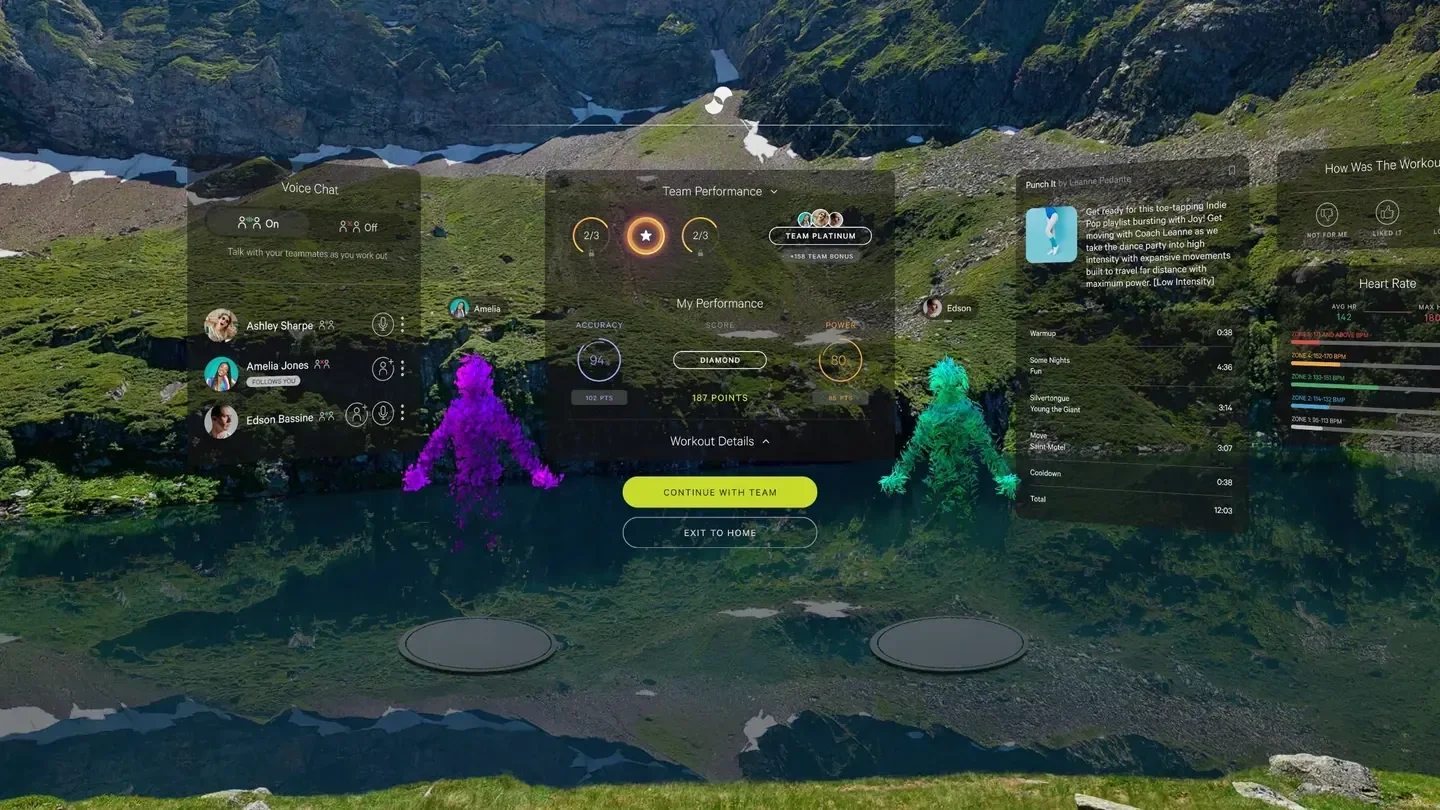
Late Friday, UploadVR reported that the independent Supernatural launches in October on Quest headsets and will be a day-one title on VR Glasses, and that workout history transfers from the old app with "every point, streak, and badge intact." That settles the open question from August, when Supernatural's head of fitness would not promise that anyone's history would survive the move. Pricing is $19.99 a month or $199.99 a year, with a $180 founding rate for the first year.
Steam Frame, week two
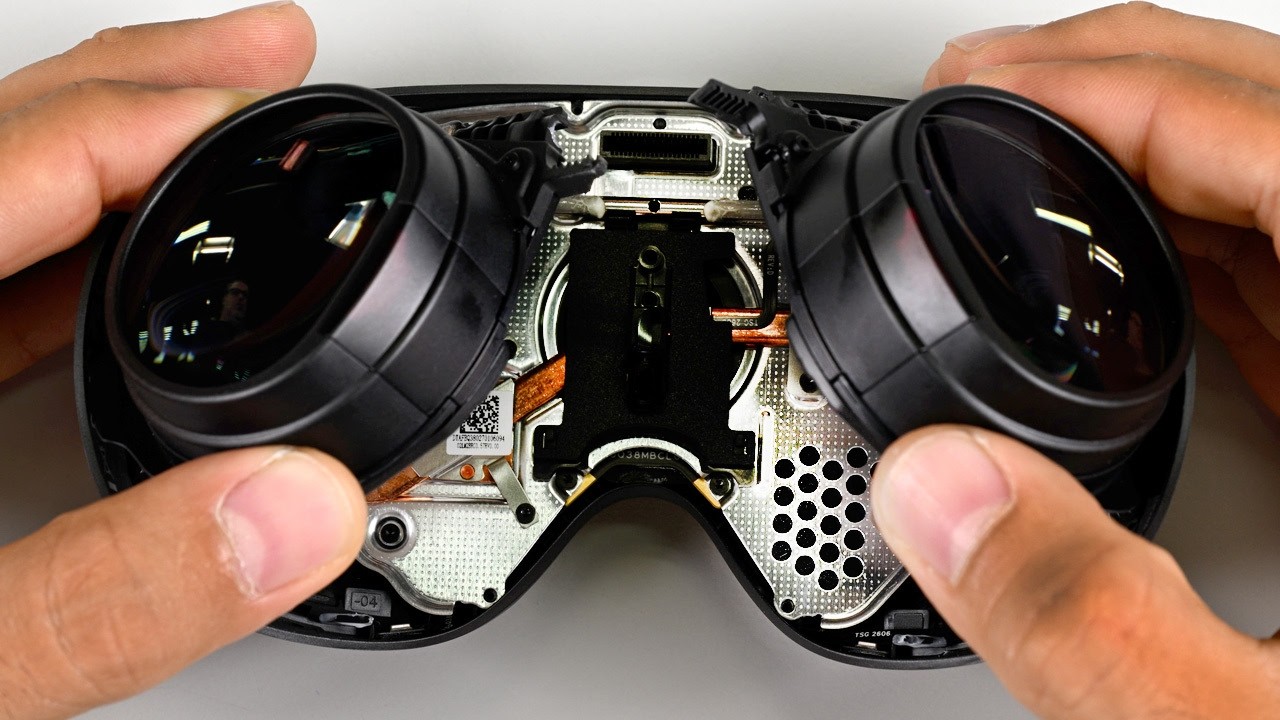
Valve's Steam Frame spent its second week on sale getting patched, opened and resold. SteamOS 0.3.0, the first public update since the September 14 launch, runs to twelve lines, led by substantially faster charging while the headset sleeps and a fix for a garbled microphone bug, and it includes a Playable tier rule that no longer demands 1440p, which is the line anyone chasing certification should read twice. iFixit's teardown found replaceable foams, a modular nose bridge and magnetically mounted lens stacks, then a glued 20.9 Wh battery the company will not stock and a fan buried behind the optics, all of which Alex walked through on Thursday. And reservations turned up on eBay at $1,750 for 256GB and $2,000 or more for 1TB, even though Valve's program terms say the right to buy cannot be transferred.
A recall that is really about heat
The Consumer Product Safety Commission recalled the INMO Air3 smart glasses on Thursday: about 1,643 units in the US and roughly 120 more in Canada, sold through Amazon, INMO's own site and Kickstarter between December 2025 and August 2026 for $900 to $1,300. The notice says the left temple "can overheat during extended use," and INMO has received ten reports of overheating, including a burning sensation on the face and the left side of the ear. Android Authority reports that the free repair is a system update to version V3.16, applied online.
A fix delivered as software says where the thermal limit on glasses like these actually lives, which is in a power policy somebody tuned and that every app on the device runs underneath, whether its developer knows it or not. Meta's answer for VR Glasses is architectural instead. UploadVR describes the frame as fanless and passively cooled, with no onboard computing at all, not even a tracking coprocessor, because the Snapdragon sits in the puck. Anyone building for glasses that keep their processor in the frames should treat thermal headroom as the budget most likely to shrink in a firmware update, since that is exactly how this one was fixed.
Elsewhere this week
Mixed Reality Link added a Meta avatar camera, a passthrough camera and the headset microphone to the Windows device list for Quest 3 and 3S, just as support for the last Windows Mixed Reality headsets runs out in November. Into the Radius 2 slipped to October 8 on PS VR2 after Sony's final certification stage flagged issues. Demeo x Dungeons & Dragons: Battlemarked reached Xbox on the same morning its $9.99 third campaign, Twilight's End, came out. URXR One closed its Kickstarter at $1,288,712, with glasses due in mid-October and nothing shipped yet. Apple's new chief executive, John Ternus, answered the Vision Pro question by pointing at surgeons. And the week opened with Sam's check of every Connect promise since 2023, which found that all five products announced with both a price and a date shipped on schedule. VR Glasses have a price and a season.
For a team planning a spring 2027 release, the practical reading of the week is short. Make it work with hands alone and test it inside a 70-degree view. The first people to buy Meta's most expensive headset will not own a controller unless they decide to buy one, and the Store is going to sort your app accordingly.
Correction, September 29, 2026: This roundup said the independent Supernatural launches in October and that workout history transfers from the old app, settling the question from August. Neither holds. UploadVR, the source, has since corrected its report: the official launch window on Quest is fall 2026, not October. The "every point, streak, and badge intact" line came from Meta's press release, and Supernatural Health later told UploadVR that carrying over existing progress is something it is working on, without confirming it for launch, so the question from August is still open.
Advertisement